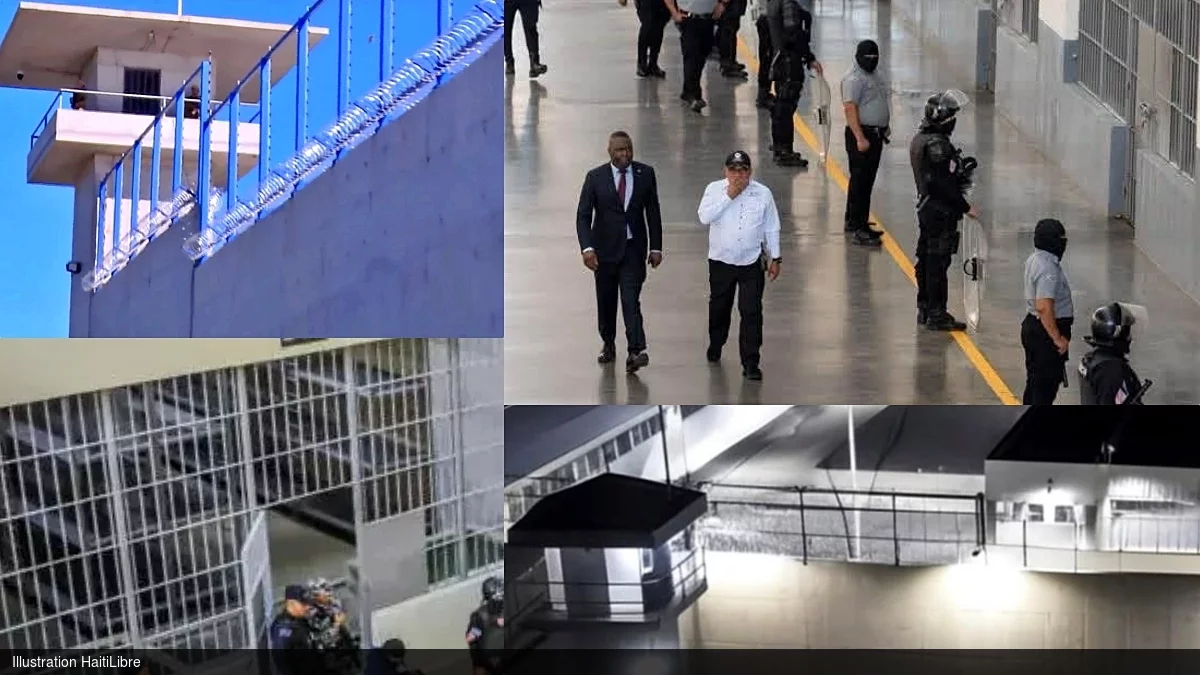
On November 25, 2026, Haitian Minister of Justice and Public Security Patrick Pélissier formally unveiled a landmark bilateral cooperation agreement that will see El Salvador support the construction of three dedicated prison facilities on Haitian territory, following the minister’s recent official diplomatic trip to the Central American nation. During his visit, Pélissier toured the widely documented Terrorism Confinement Center (CECOT), the massive maximum-security correctional complex that has emerged as the flagship symbol of Salvadoran President Nayib Bukele’s sweeping, high-profile anti-gang crackdown that has drastically reduced violent crime rates across El Salvador in recent years. The new prison construction partnership marks the latest major expansion of deepening security cooperation between the two Caribbean and Central American nations, coming on the heels of an ongoing deployment of Salvadoran military personnel to Haiti to support local law enforcement and international stabilization forces in their battle against heavily armed, territorial gangs that have seized large swathes of Haitian urban and rural territory in recent years. Pélissier has emphasized that the Haitian government is pushing for an accelerated timeline for the project, with groundbreakings for the first of the three new correctional facilities scheduled to launch in the immediate near term. All three prisons will be designed and built by a specialized Salvadoran construction firm with extensive experience delivering high-security penitentiary infrastructure, though the Haitian government has opted not to release a full set of project details to the public at this stage. No total estimated cost for the three-facility build has been disclosed, and officials have not confirmed whether El Salvador itself or third-party international donor partners will contribute to project financing. The names of the specific Salvadoran construction enterprise and technical teams tapped to lead the work have also been kept confidential, and no public clarification has been offered on whether Salvadoran correctional authorities will hold any direct operational, administrative or security oversight role over the new prisons once they are fully completed and operational. This culture of deliberate, high-level confidentiality also extends to the overarching bilateral security compact governing the ongoing deployment of Salvadoran military troops to Haiti, the full text and exact operational terms of which have never been released for public scrutiny by either the Port-au-Prince or San Salvador administrations.