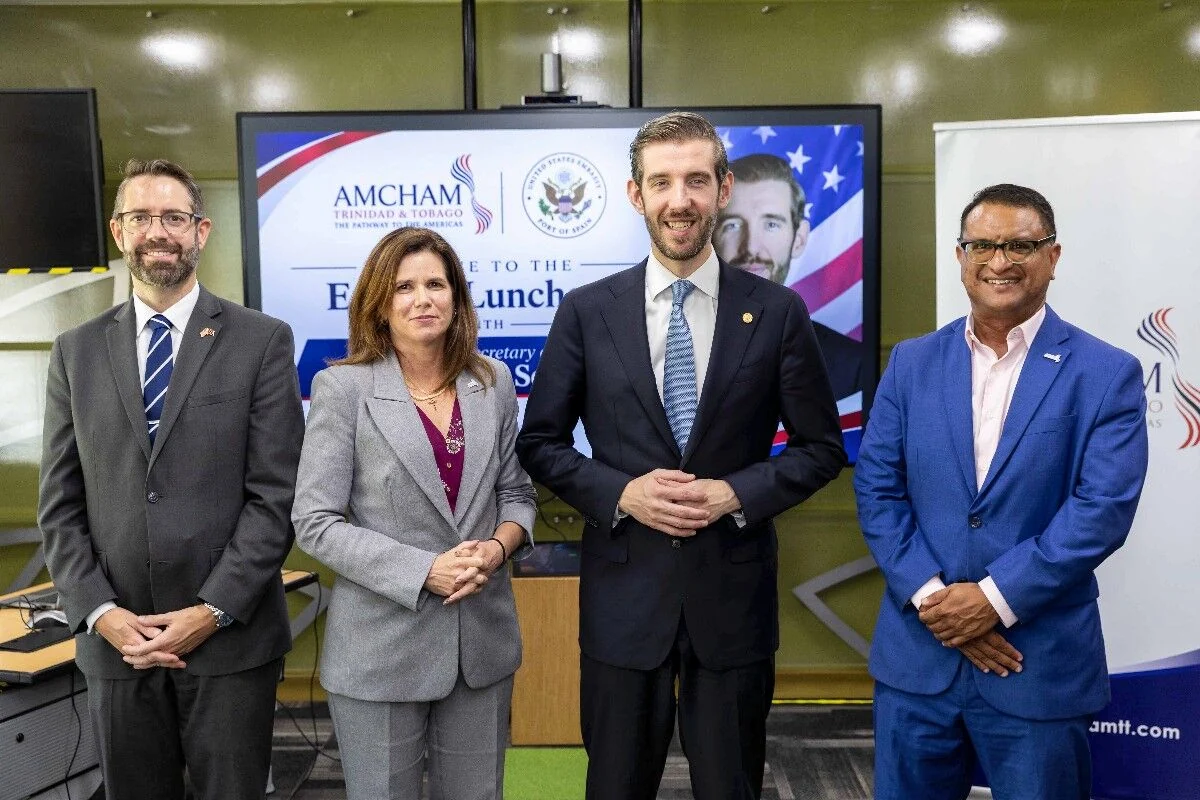
Port of Spain, Trinidad and Tobago – The American Chamber of Commerce of Trinidad and Tobago (AMCHAM T&T) is advocating for ongoing, structured high-level engagement between U.S. government representatives and Trinidad and Tobago’s domestic energy sector, as the Caribbean nation works to resolve persistent natural gas supply bottlenecks, shore up the global competitiveness of its local industrial ecosystem, and draw in targeted new foreign direct investment. The formal appeal was delivered during a specialized Energy Luncheon hosted by AMCHAM T&T, where keynote attendee Juan Pablo Segura, U.S. Assistant Secretary of State for Western Hemisphere Affairs, publicly unveiled a pipeline of planned U.S. investments in the twin-island nation totaling an estimated $5 billion.
In an official public statement following the event, AMCHAM T&T President Anna Henderson emphasized that the energy sector remains the unshakable backbone of Trinidad and Tobago’s long-term economic advancement, industrial competitive edge, and ability to court global capital. “These targeted, in-person conversations are invaluable because they give frontline energy operators the space to share unfiltered, on-the-ground perspectives on the industry’s most pressing hurdles, the capital upgrades needed to expand reliable natural gas supply, and the untapped high-growth opportunities on the horizon,” Henderson noted. “At AMCHAM T&T, our core mission is to convene the right stakeholders and create direct access to top-level decision-makers, to drive substantive, action-oriented dialogue and deepen the mutually beneficial bilateral ties between Trinidad and Tobago and the United States.”
AMCHAM T&T Chief Executive Officer Nirad Tewarie underscored that the energy sector’s trajectory carries ripple effects across every segment of the national economy, even as the country simultaneously advances its national energy transition agenda. Tewarie explained that the sector’s near- and long-term outlook directly impacts the long-term viability of existing industrial operations, the robustness of Trinidad and Tobago’s broader industrial base, its capacity to attract new high-value investment, and its ability to unlock inclusive, sustained economic expansion for local communities. “These complex, interconnected challenges cannot be resolved in silos; they demand intentional, collaborative dialogue and a shared commitment to developing practical, implementable solutions that deliver tangible benefits for all stakeholders,” Tewarie stated. He added that AMCHAM T&T remains dedicated to elevating its member companies’ on-the-ground perspectives through high-profile engagements like the luncheon with Segura and U.S. Embassy representatives, to help build a more resilient, competitive, and sustainable national energy landscape.
U.S. Embassy Chargé d’Affaires Philip Kern reaffirmed that the United States highly values its decades-long bilateral partnership with Trinidad and Tobago, with the energy sector standing out as a core area of shared economic priority for both nations. Kern noted that the AMCHAM-hosted gathering created a rare, unmediated opportunity for U.S. government officials to hear directly from local industry leaders, gain nuanced insight into the sector’s unique opportunities and constraints, and strengthen the commercial partnerships that underpin ongoing cross-border collaboration. The invitation-only luncheon was hosted at the bpTT Corporate Box at Port of Spain’s Queen’s Park Oval, and brought together U.S. State Department officials and private sector stakeholders spanning every segment of Trinidad and Tobago’s upstream and downstream energy value chain. Official discussions at the event centered on a wide range of priority topics, including Trinidad and Tobago’s projected natural gas supply and demand trajectory, current supply chain and production constraints, ongoing policy and operational initiatives to boost domestic gas output, the long-term competitiveness of the Point Lisas Industrial Estate, and strategies to attract new energy-intensive industries to set up operations in the country.