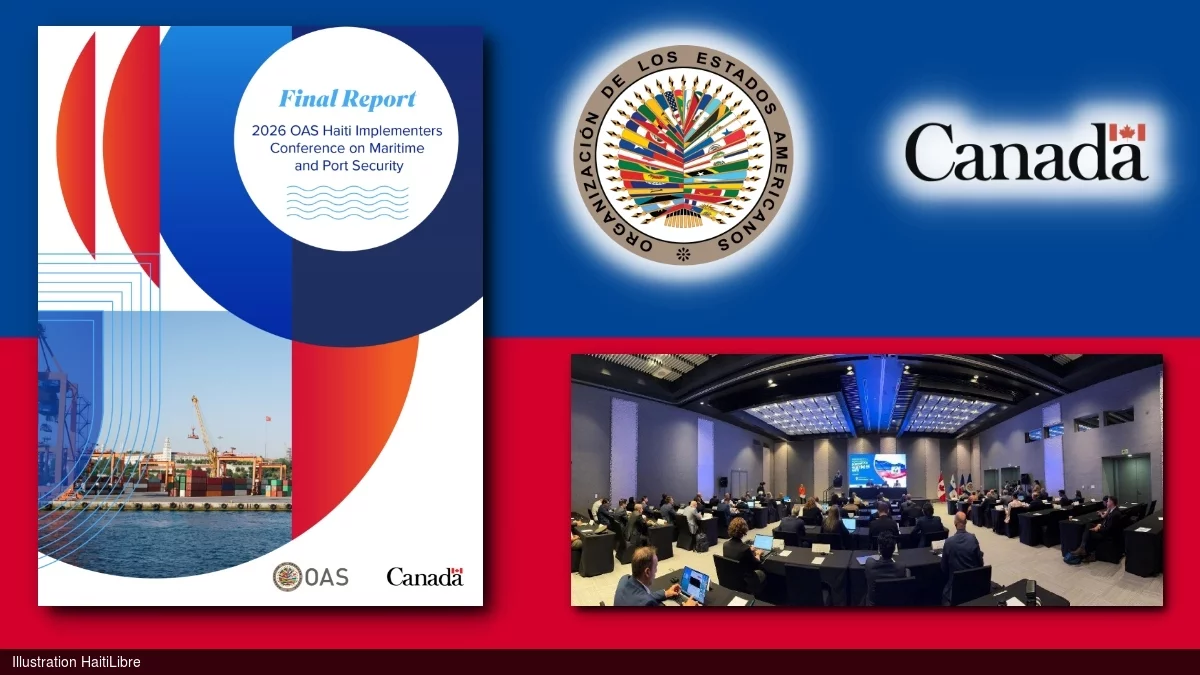
Released November 25, 2026, a landmark 51-page report from the Secretariat of the Inter-American Committee against Terrorism (CICTE) – funded by the Government of Canada’s Anti-Crime Capacity Building Program (ACCBP) – lays out a structured roadmap to transform Haiti’s high-risk port and maritime ecosystem into compliant, secure hubs aligned with global International Ship and Port Facility Security (ISPS) Code standards. The findings emerged from a high-stakes OAS multi-stakeholder conference that brought together representatives from 11 OAS member states, 1 OAS observer nation, 12 multilateral and international organizations, OAS internal departments, and private sector, regional agency, and academic subject matter experts. Pre-conference surveys of participating implementing partners, which collected data on ongoing projects, planned interventions, and collaborative priorities, directly shaped the targeted, on-the-ground focus of deliberations. The analysis zeroed in on the Port-au-Prince port complex, covering the APN terminal, Port Lafito, and Varreux terminal, identifying four critical, under-modernized pillars driving pervasive vulnerability. First, physical and perimeter security remains dangerously inadequate, with armed gangs operating mere steps from port entry gates, rendering existing fencing and access controls nearly useless. Second, failing lighting and video surveillance systems cannot deliver the required 24/7 monitoring coverage across port facilities. Third, on-site security personnel lack standardized training and operate under disjointed, non-unified command structures, creating critical response gaps. Fourth, large swathes of adjacent land controlled by criminal gangs demand an immediate shift from passive, defensive vessel protection to proactive, active security protocols. The report also catalogs deep-seated institutional constraints facing every Haitian agency tasked with maritime and port governance: the National Port Authority (APN), which manages infrastructure and ISPS compliance, faces unrelenting gang incursions near its gates, internal corruption, and no stable, long-term funding streams. The Armed Forces of Haiti (FAdH), mandated to protect strategic national infrastructure, remains in a fragile rebuilding phase crippled by severe budget and logistical shortfalls, including shortages of patrol vessels, drones, and secure communications radios, plus limited trained personnel. The Haitian Coast Guard, operating under the Haitian National Police (PNH), is responsible for patrolling 1,700 km of national coastline and countering cross-border trafficking, but relies on an aging, undersized fleet with no dedicated budget line, forcing it to operate exclusively on a reactive, response-only basis. The General Administration of Customs, which processes more than 180,000 shipping containers annually, lacks modern cargo scanning technology and still prioritizes tax collection over detecting hidden narcotics and illegal weapons, creating massive gaps in interdiction capacity. Even with almost no resources – no integrated surveillance center and no high-speed patrol boats – the Anti-Narcotics Trafficking Brigade (BLTS) has pulled off major, high-impact weapons and drug seizures at port sites. The PNH, meanwhile, is stretched thin securing port entry points and the connecting corridors leading to urban population centers, while also patrolling the porous 92 km land border shared with the Dominican Republic. The Haitian Maritime and Navigation Service (SEMANAH), which regulates maritime traffic and coastal environmental protection, gained Haiti accession to the International Maritime Safety Organization (IMSO) in November 2025, clearing the path for a planned Maritime Surveillance, Search and Rescue Coordination Center (CROSS), but currently lacks both modern technical equipment and skilled specialized staff, even as it oversees critical inland waterways including Lake Azuéi. To move Haiti away from its current fragmented, reactive security posture, the report proposes a two-phase implementation framework. The immediate Phase 1 “Quick Wins” agenda prioritizes launching a joint task force made up of PNH, GSF, and customs personnel to lock down the immediate perimeters of Port-au-Prince’s port terminals; rolling out a joint PNH-GSF operational protocol to eliminate gang-run extortion toll checkpoints on cargo routes leading to and from ports, plus dedicated escort services for commercial and humanitarian aid shipments; partnering with local coastal communities to map and monitor informal, clandestine landing sites used for arms smuggling; and drafting new legal rules requiring Advance Notice of Arrival (ANOA) for all incoming vessels, alongside launching a digital single window platform to enable seamless inter-agency data sharing. The longer-term Phase 2 institutional reform agenda calls for updating Haiti’s national maritime code to align fully with International Maritime Organization (IMO) standards, translating all ISPS manuals and training materials into French and Haitian Creole for local accessibility, launching a National Maritime Training Academy to roll out standardized “train-the-trainer” upskilling programs for all security and regulatory staff, and establishing a self-sustaining dedicated port security fund financed by small, earmarked port user fees to cover ongoing equipment maintenance, patrol vessel operations, and infrastructure upgrades, reducing the country’s overreliance on volatile international donations. The report’s final strategic recommendations stress that successful land security operations and the delivery of life-saving humanitarian aid for 1.5 million internally displaced Haitians are directly dependent on regaining full control of national maritime spaces. Key steps include placing all maritime security initiatives under a single Haitian-led National Maritime Security Strategy to eliminate wasteful duplication of international partner efforts; launching an inter-institutional Port Control Center initially supported by international partners with a full handover to Haitian national authorities; upgrading intelligence and surveillance systems from outdated paper-based record-keeping to a structured, real-time intelligence cycle leveraging radar, satellite tracking, and Automatic Identification System (AIS) data to target high-risk vessels; and rolling out robust anti-corruption safeguards including rigorous personnel vetting, mandatory recurring ethics training, and competitive living wages to reduce staff vulnerability to bribes and criminal infiltration. The full 51-page final conference report is available for public download at haitilibre.com/docs/2026-OAS-HAITI-IMPLEMENTERS-CONFERENCE—Final-Report.pdf.