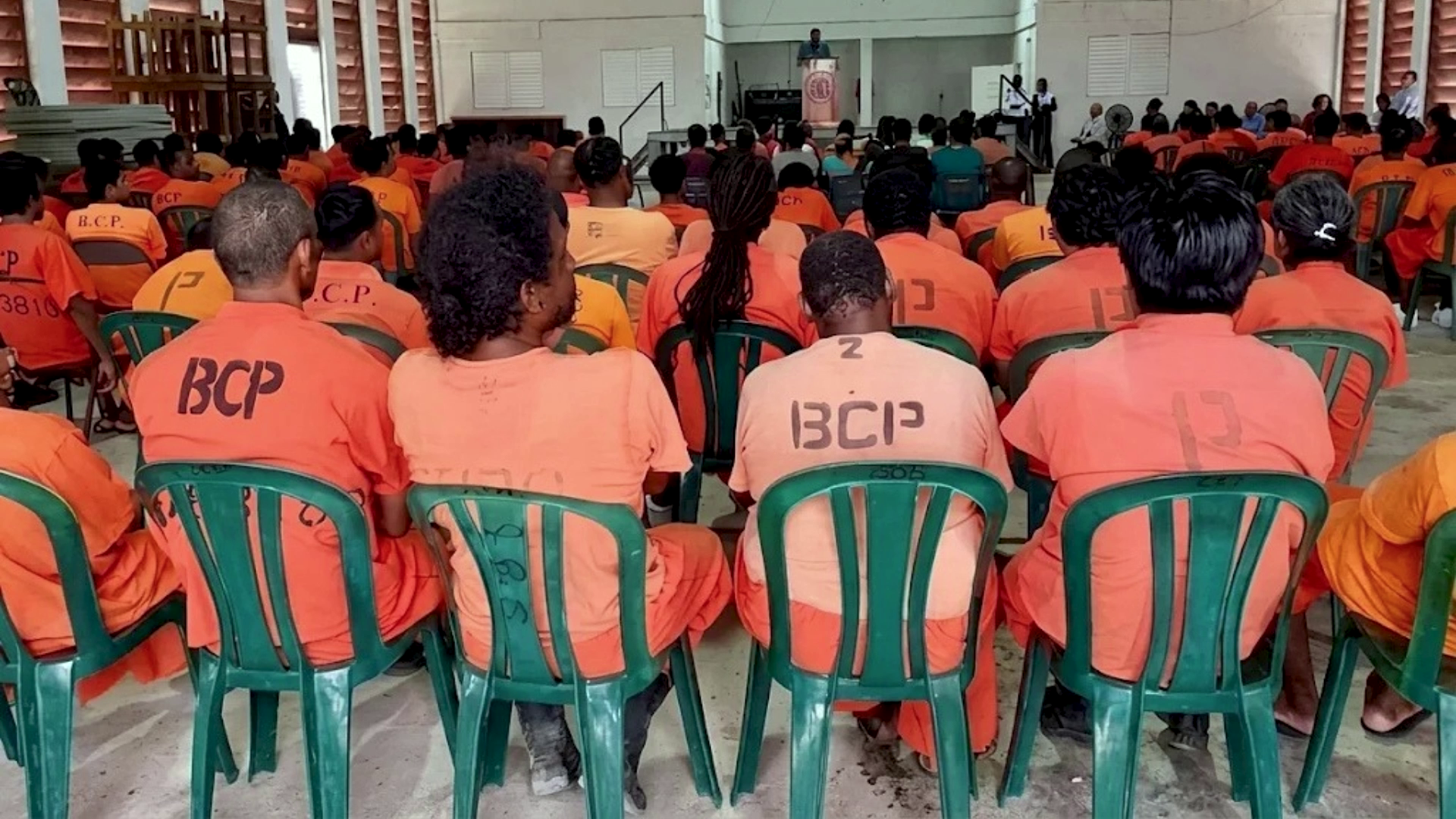
As of November 18, 2026, a long-dormant clause in Belize’s electoral legislation has sparked a cross-party policy reckoning over the democratic rights of incarcerated people, forcing major political blocs to balance constitutional obligations, practical operational hurdles, and public sentiment ahead of upcoming electoral cycles. At the center of the debate is Section 7(b) of the Representation of the People Act, a standing legal provision that explicitly grants voting eligibility to inmates serving custodial sentences of less than 12 months, which has never been formally enforced to date. Leading human rights advocacy group Justice for Humans has launched a formal campaign to push authorities to implement the long-overlooked rule, putting the country’s two dominant political parties, the People’s United Party (PUP) and United Democratic Party (UDP), under public pressure to outline official stances on the divisive democratic reform. Tracy Panton, leader of the official opposition, laid out her preliminary personal stance in a public statement this week, emphasizing that Belize’s foundational legal principle of “innocent until proven guilty” demands that unconvicted remand detainees awaiting trial retain full access to the ballot, regardless of their current custodial status. Panton clarified that while she personally endorses expanding structured voting access for non-convicted inmates and short-sentence prisoners, she will first conduct full internal consultations with her party’s rank-and-file membership and senior leadership before releasing a formal, binding party position, to ensure any official stance aligns with the organization’s core values and broad membership consensus. Independent prison welfare nonprofit the Kolbe Foundation, which has decades of on-the-ground experience supporting incarcerated populations in Belize, has already submitted a detailed, actionable set of operational recommendations to the national Elections and Boundaries Commission to outline a feasible, secure framework for in-prison voting. The foundation’s proposal covers every step of the electoral process for eligible inmates, including streamlined voter registration documentation protocols, clear rules for establishing residential eligibility for polling division assignment, strict guidelines to guarantee full political neutrality inside correctional facilities during election periods, tailored election-day logistics, robust security protocols to prevent disruptions or fraud, a clear implementation timeline, and a transparent process for finalizing verified lists of eligible incarcerated voters. The unfolding debate has sparked widespread public discussion across Belize about the boundaries of democratic participation, with advocates arguing that expanding voting access for eligible inmates upholds the country’s commitment to universal human rights, while critics have raised questions about resource allocation and potential operational risks to election integrity.