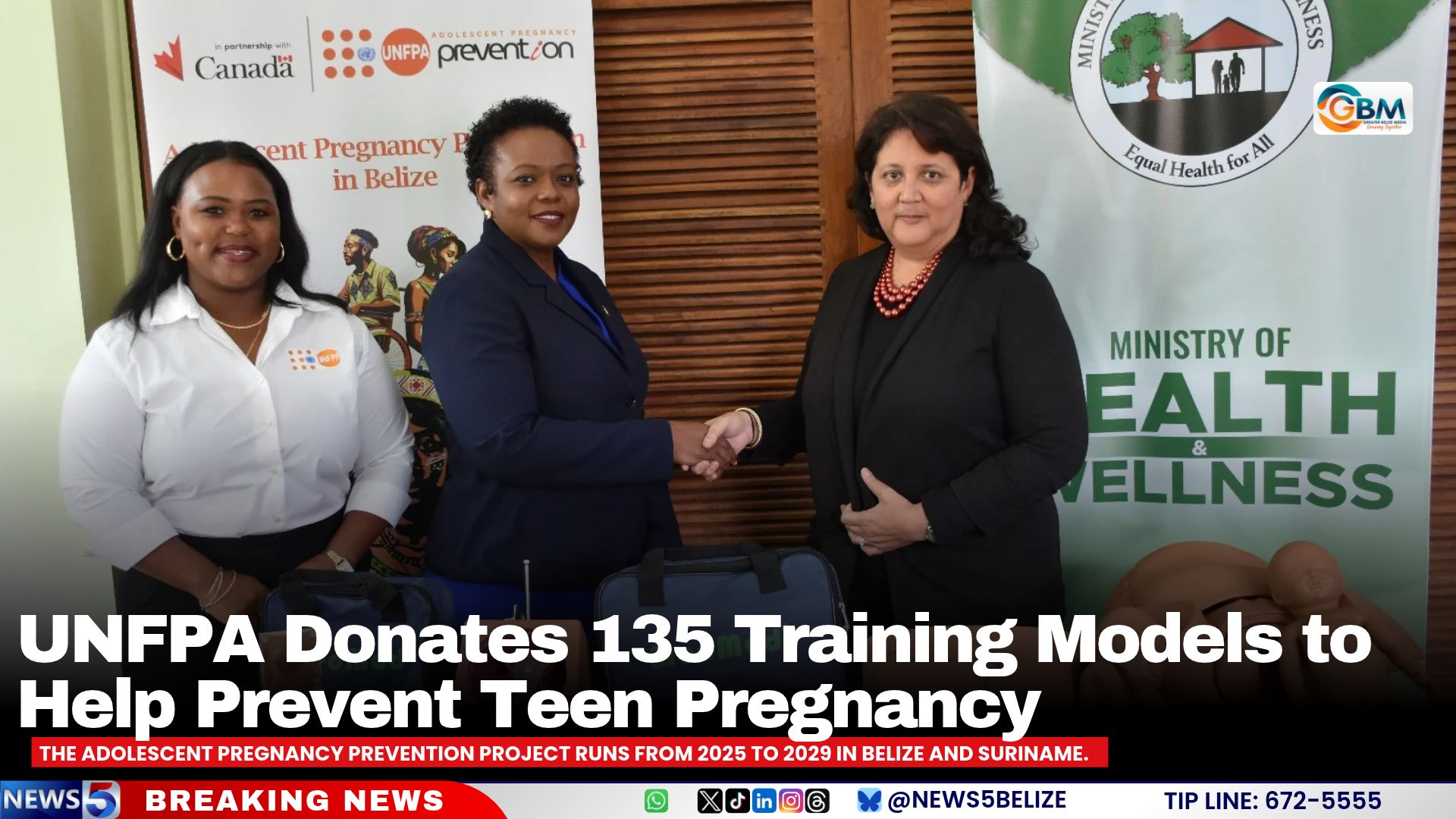
On November 18, 2026, the United Nations Population Fund (UNFPA) formally handed over a batch of 135 specialized anatomical training tools to the national Ministry of Health and Wellness, a targeted donation designed to elevate the competency of frontline health care workers in delivering youth-centered sexual and reproductive health services. This equipment transfer falls under the framework of the ongoing Adolescent Pregnancy Prevention Project, a five-year initiative bankrolled by Global Affairs Canada that spans 2025 through 2029 across two Caribbean nations, Belize and Suriname. The donated inventory covers a full spectrum of hands-on training resources: 30 wearable female contraception simulators, 30 practice arms pre-fitted with subdermal contraceptive implants, 15 interactive childbirth education stations, 30 demonstration models for male condom application, and 30 detachable breast examination simulators. UNFPA program coordinators noted that these purpose-built training tools will allow medical personnel to repeatedly practice the administration of long-acting reversible contraceptive procedures in a low-risk, simulated environment. This hands-on practice is set to ensure that when young people access formal sexual and reproductive health services, they receive care delivered by skilled, confident providers that adheres to strict safety standards. The overarching objective of the training rollout is to drive measurable reductions in preventable adolescent early pregnancy rates. Beyond clinical skill building, the broader 2025-2029 project is specifically tailored to tackle the deep-rooted, systemic drivers of adolescent pregnancy in marginalized Indigenous and tribal communities across the two participating countries. Additional core components of the program include expanding access to health service points designed to be welcoming and non-judgmental for adolescent populations, and rolling out standardized, age-appropriate comprehensive sexuality education curricula for local youth.