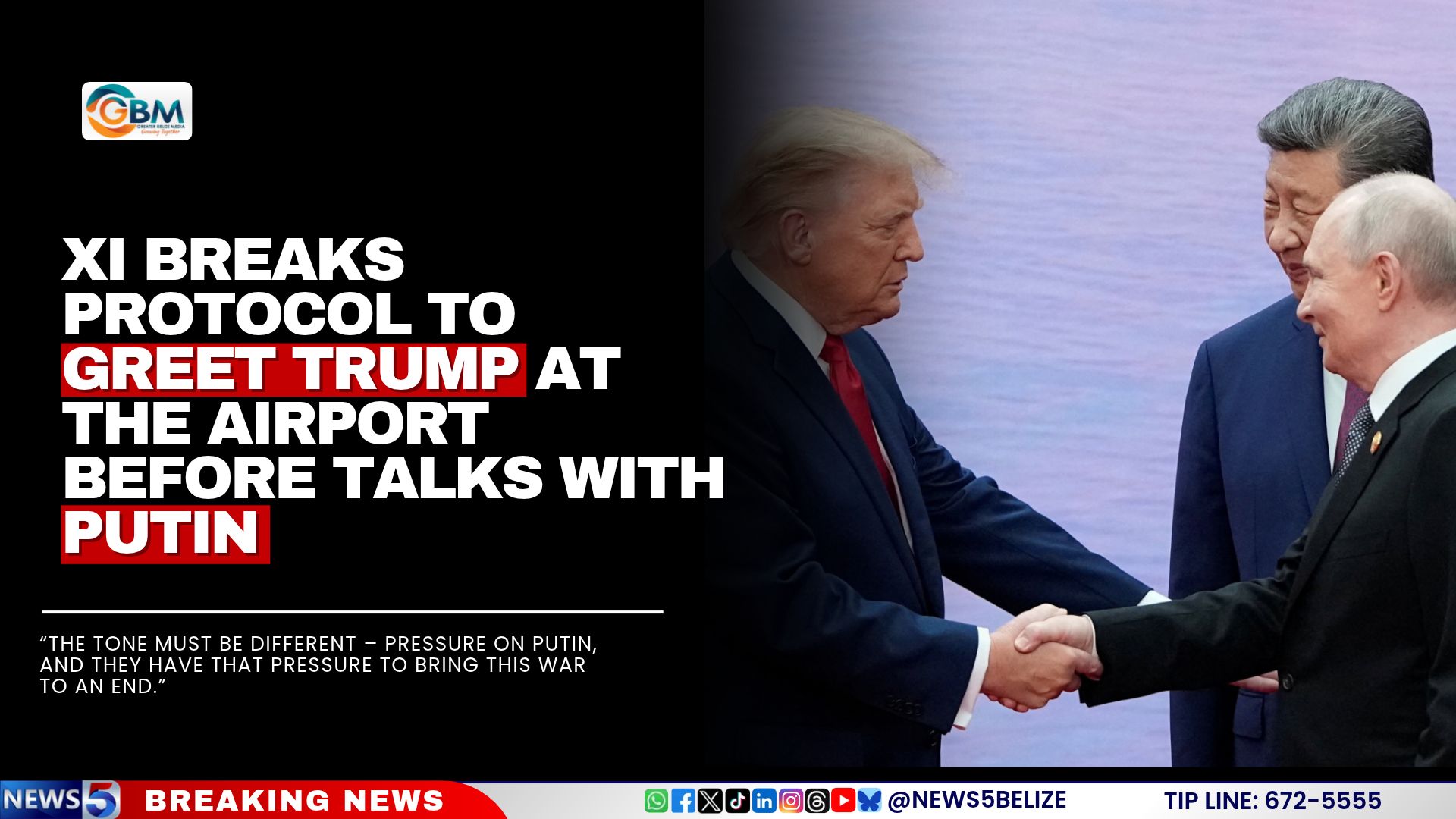
On November 18, 2026, a striking break from longstanding Chinese diplomatic protocol unfolded at Shenzhen’s international airport, when President Xi Jinping personally welcomed visiting U.S. President Donald Trump on the tarmac, an extraordinary departure from standard procedure that rarely sees China’s head of state receive foreign dignitaries directly at airport arrival points. In brief public remarks following the warm greeting, Xi clarified that the unorthodox reception was a reciprocal gesture, honoring the welcome Trump extended to him during his September 2026 arrival at Maryland’s Joint Base Andrews, as well as the cordial pre-summit handshake the U.S. leader received from Russian President Vladimir Putin ahead of the official family photo at the most recent Asia-Pacific Economic Cooperation (APEC) summit.
This unplanned, high-profile display of diplomatic rapport sets the stage for a historic trilateral gathering between Xi, Trump, and Putin, the first of its kind between the three heads of state, alongside a packed schedule of bilateral engagements that will span two days of high-stakes negotiations. A senior U.S. administration official confirmed to CNN that in addition to the three-way talks, Trump will hold a closed-door one-on-one session with Putin on November 19, with a sprawling agenda that includes long-stalled nuclear arms control frameworks, ongoing de-escalation efforts for the Iran war, and – contrary to earlier guidance from U.S. diplomatic staff that Ukraine would be excluded from formal discussions – Trump has publicly committed to bringing up the two-year-long conflict in Ukraine directly with the Russian president. The last in-person bilateral meeting between Trump and Putin, held in Alaska in August 2025, concluded without any tangible breakthroughs to advance peace negotiations for the Ukraine war.
The prospect of major global security decisions being made without Ukrainian representation has sparked urgent pushback from Kyiv. Ukrainian Foreign Minister Andrii Sybiha issued a formal public statement emphasizing that no binding agreements related to Ukraine’s sovereignty or territorial integrity can be made in the absence of Ukrainian delegates, and called on both the United States and China to leverage their respective diplomatic and economic leverage to apply targeted pressure on Russia to end the ongoing conflict. “The tone of these negotiations cannot be business as usual,” Sybiha stressed. “Both nations hold the necessary leverage to compel Putin to the negotiating table, and they must use that leverage to bring this devastating war to a just, lasting end.”
For his part, Putin has struck an optimistic tone ahead of the high-level discussions, with Russian state news agency TASS quoting the Russian president as stating he anticipates “considerable potential benefits” for regional and global stability stemming from the multi-party Shenzhen talks.
Prior to landing in Shenzhen on Wednesday, Trump completed a series of separate bilateral stops across the Indo-Pacific and Southeast Asia region. In a meeting with Philippine President Ferdinand Marcos Jr. in Manila earlier that day, Trump announced that the two nations are on track to finalize a major, landmark nuclear power cooperation agreement that he described as “something big” for both countries’ clean energy and national security goals. Upon his arrival in Shenzhen, Trump also held separate courtesy bilateral meetings with Mexican President Claudia Sheinbaum and Canadian Prime Minister Mark Carney to advance ongoing trade and cross-border policy discussions ahead of the trilateral security summit.
Xi Breaks Protocol to Greet Trump at the Airport Before Talks With Putin