On November 11, 2026, a heated public debate has erupted in San Pedro Town, Ambergris Caye, over the Government of Belize’s proposed new airport development project, pitting Prime Minister John Briceño’s proactive infrastructure planning vision against widespread calls from local tourism stakeholders to prioritize long-unaddressed basic resident needs first.
At the center of the dispute is a fundamental question: should authorities allocate resources to explore a second airport for the popular caye, or redirect all available public funds to upgrade existing underperforming local infrastructure, including deteriorating road networks, overstretched healthcare facilities, outdated waste management systems, and other critical public services that local residents and tourism operators say are already at breaking point?
Prime Minister Briceño has publicly reaffirmed his administration’s commitment to advancing the airport assessment, pushing back against critics who argue the project is a misplaced priority. He clarified that the initiative remains firmly in the preliminary feasibility stage, with technical support from the Inter-American Development Bank (IDB), which has appointed an independent consultant to conduct full due diligence on the project’s viability, cost projections, and long-term operational value. Briceño also pushed back on circulating unsubstantiated claims that the project carries a $600 million price tag, dismissing the figure as entirely unsubstantiated and criticizing media outlets that have repeated the unvetted number as engaging in irresponsible reporting.
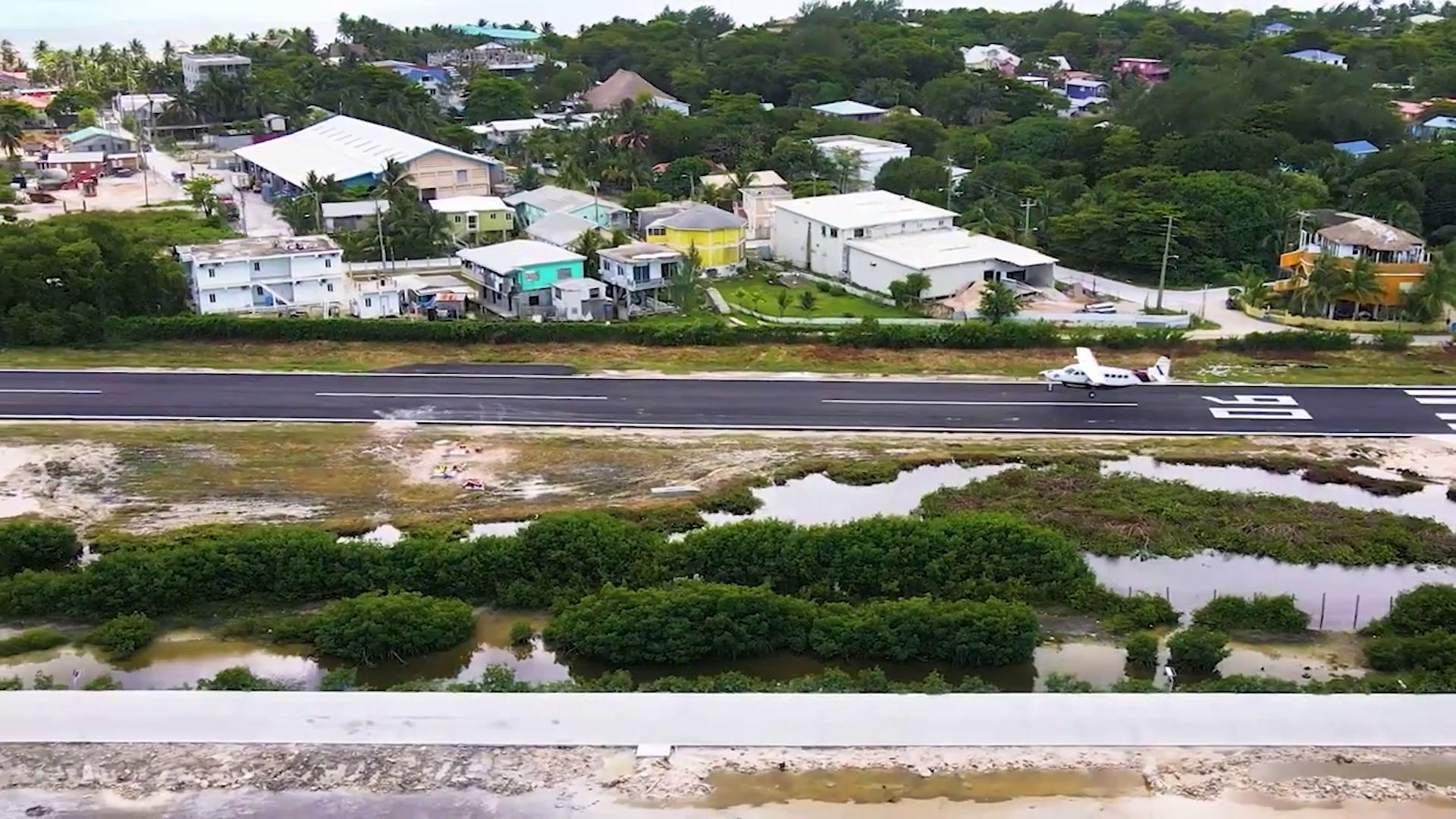
The prime minister outlined the core operational challenges driving the government’s preliminary exploration, noting that the existing municipal San Pedro airport cannot have its runway extended due to geographic constraints. Currently, the facility only accommodates small 11 to 12-seater Cessna aircraft, leading to frequent inefficiencies including repeated go-around maneuvers and extended holding patterns over the populated town area as pilots wait for landing slots, a situation Briceño flagged as both operationally risky and a barrier to future tourism growth. He confirmed that the government has already held extensive preliminary consultations with all local air carriers, including Tropic Air, Maya Island Air, and Astrum Helicopters, noting that nearly all airline operators had previously expressed support for a public-private partnership (PPP) delivery model for the new airport, leaving him surprised by recent public pushback from one airline owner who had never raised objections during prior closed-door discussions.
However, the prime minister’s framing of rising air traffic demand as a core justification for the project is contradicted by official visitor arrival data. Pre-pandemic 2019 saw 170,800 visitors arrive in San Pedro, a figure that dropped to 158,500 in 2025, with 2026’s full-year visitor projections on track to fall even further, casting additional doubt on the government’s claims of urgent growing air traffic demand. Local tourism stakeholders have repeatedly emphasized that without first fixing the island’s failing core public services, any new airport would only amplify existing quality of life issues for residents and fail to deliver the promised economic benefits for the local hospitality sector. Briceño has committed to hosting upcoming formal consultation sessions with San Pedro’s business community, local hotel association, and resident groups to share full findings from the IDB feasibility study once the assessment is finalized.