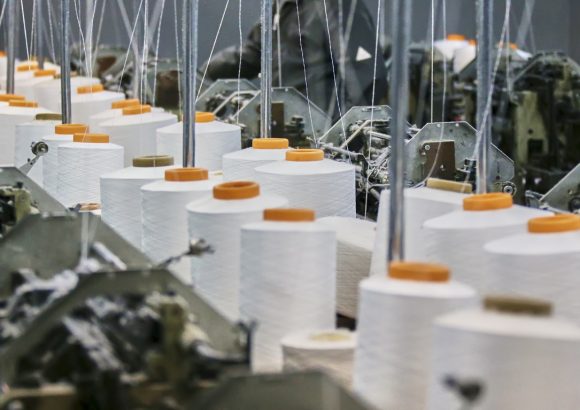
Santo Domingo, Dominican Republic — The Dominican Textile Industry Association (Aditex) has formally submitted a policy proposal to national regulatory and procurement authorities, calling for mandatory end-to-end identification and traceability frameworks for all school uniforms procured via public sector contracts, to crack down on widespread misrepresentation of imported foreign garments as domestically manufactured products. Aditex leadership has flagged growing industry alarm that low-cost finished uniforms shipped primarily from Asian manufacturing hubs are being fraudulently submitted to fulfill public tenders that explicitly require 100% local production, a loophole that the group says is eroding the viability of the domestic textile ecosystem. The targeted proposal requests the National Institute of Student Welfare (Inabie), the government body that oversees public school uniform distribution, to enter into a formal inter-agency coordination agreement with the General Directorate of Customs (DGA) to enforce compliance across both import oversight and public contract fulfillment workflows, aligned with each agency’s existing statutory remit. The association emphasized that standard printed origin labels are no longer a reliable verification tool, as many overseas manufacturers can affix “Made in the Dominican Republic” tags during their own production processes before the garments are shipped into the country. To address this gap, Aditex is advocating for a layered verification system that combines mandatory standardized labeling with random on-site production facility inspections, full batch-level traceability tracking from raw material input to finished garment, and auditable paper trails that document every stage of the manufacturing process. Industry analysts aligned with Aditex note that these structured oversight measures will close existing loopholes in public school uniform contract monitoring, ensure that every tender awarded for local manufacturing actually delivers tangible domestic production activity, and safeguard thousands of formal, legally registered jobs in the Dominican Republic’s formal textile sector that are at risk of displacement by underpriced, mislabeled imports. The association is additionally requesting that its full set of proposed measures first undergo a rigorous independent technical review, then be formalized through official standardized sampling protocols and uniform eligibility criteria applied equally to all public procurement bidders, a step that Aditex argues will drastically boost transparency in the public tender system while delivering long-term support for domestic industrial output and stable local employment.
Textile industry calls to prevent imports of school uniforms made abroad