The year 2026 has opened against a backdrop of cascading extreme weather events across the planet, with record-shattering heatwaves sweeping continents and triggering cascading crises: Western Europe logged its hottest June in recorded history, while concurrent bouts of prolonged drought and raging wildfires strained freshwater reserves, overwhelmed public health systems, disrupted energy distribution grids, and dragged down regional economic output. Taiwan has not been spared from these accelerating climate hazards, facing recurring bouts of unprecedented extreme heat, erratic torrential downpours, and intensifying typhoon activity that threaten long-term social stability, industrial competitiveness, and national disaster resilience. Against this shared global threat, the global climate governance ecosystem has moved past the era of symbolic target-setting and high-level public commitments, entering a new phase focused on tangible, verifiable implementation ahead of the upcoming COP31 summit, where negotiators are prioritizing dialogue, cross-stakeholder consensus, and measurable, trackable outcomes to turn decades of pledges into on-the-ground impact. Though Taiwan is not a formal signatory to the United Nations Framework Convention on Climate Change, it has consistently aligned its domestic climate action framework with the core principles of the Paris Agreement, building on the 2025 submission of its updated 2035 Nationally Determined Contributions to roll out coordinated, cross-agency initiatives spanning green industrial transformation, circular resource management, climate adaptation infrastructure, and equitable just transition policies, while forging collaborative partnerships with international stakeholders to co-develop practical, scalable climate solutions.
In line with the Paris Agreement’s binding requirements, Article 4 mandates all parties to iteratively strengthen their mitigation roadmaps to meet stated NDC targets, while Article 13’s Enhanced Transparency Framework establishes uniform standards for consistent, auditable reporting to track progress on climate action. To fully align with these global norms, Taiwan formally approved its third-phase greenhouse gas reduction action program this year, covering six high-emission sectors for the 2026–2030 period: energy, manufacturing, residential and commercial buildings, transportation, agriculture, and environmental management. The framework includes 20 flagship mitigation initiatives, granular annual emissions reduction targets, and 63 standardized performance metrics, embedding national decarbonization goals directly into sector-specific regulatory policies to enable continuous annual monitoring and third-party evaluation. The latest official national greenhouse gas inventory data shows that Taiwan’s net emissions in 2024 were 6.59% lower than 2005 baseline levels, even as real GDP recorded steady, sustained growth over the same period, with carbon dioxide emission density dropping by 48.59% – a clear demonstration that Taiwan has successfully begun decoupling economic expansion from fossil fuel-related carbon emissions. For transparency reporting, Taiwan adheres strictly to the assessment frameworks developed by the Intergovernmental Panel on Climate Change and the Paris Agreement, regularly publishing all required public documents including its NDC submissions, biennial transparency reports, and annual national emission inventory reports in full compliance with global standard practices. This clear, sector-specific mitigation pathway and open, transparent reporting system will allow Taiwan to continuously measure progress and translate high-level climate commitments into tangible, verifiable results.
To accelerate its green industrial transition, Taiwan launched official carbon fee collection earlier this year, establishing carbon pricing as a core policy instrument to drive industrial decarbonization. The collection system is integrated with voluntary emission reduction incentive programs and preferential rate structures that actively encourage private enterprises to embed decarbonization considerations directly into long-term capital investment and daily operational decision-making. In its first year of implementation, the carbon fee has already generated NT$4.97 billion in dedicated revenue, all of which is channeled into the centralized Greenhouse Gas Management Fund earmarked exclusively for emission reduction projects and climate adaptation initiatives. The fund provides targeted low-interest loan credit guarantees and direct interest subsidies to optimize operational conditions for transitioning enterprises, while newly promulgated Regulations Governing Subsidies for Greenhouse Gas Reduction Technologies and Climate Change Adaptation offer direct financial support for the development of cutting-edge emission reduction technologies and community-level adaptation measures. Through this combined mix of targeted subsidies, preferential financing, and shared risk mitigation mechanisms, Taiwan’s policy framework is designed to mobilize far larger volumes of private capital to support the broader national net-zero transition. In the upcoming next phase of policy rollout, Taiwan will progressively launch its formal cap-and-trade platform, the Taiwan Emissions Trading System (TW-ETS), creating a diversified carbon pricing ecosystem where the existing carbon fee and the new emissions trading scheme operate in parallel. In a major international validation of Taiwan’s regulatory framework, the United Kingdom recently formally recognized Taiwan’s carbon fee as a qualifying carbon pricing scheme under its Carbon Border Adjustment Mechanism, allowing eligible Taiwanese exported products to claim applicable carbon price deductions, marking a critical milestone in aligning Taiwan’s domestic carbon pricing system with global international regulatory regimes. Beyond carbon and energy management, Taiwan’s industrial net-zero strategy prioritizes full lifecycle resource efficiency: this year, legislators completed amendments to the Resource Circulation Promotion Act and the Waste Disposal Act, shifting regulatory focus from traditional end-of-pipe waste treatment to full-product lifecycle governance. The government has identified eight priority sectors for circular economy development: food production, plastics, textiles, healthcare, construction, electronics, non-metallic inorganic resources, and specialized circular industry services. Currently, 69 publicly listed Taiwanese enterprises operating in the circular economy space generate over NT$1 trillion in combined annual revenue, proving that a large-scale, commercially viable green circular industrial base has already begun to take shape. Taiwan continues to roll out supporting policies including digital product passports, source plastic reduction mandates, and industrial material reuse programs, leveraging legislative reform, cross-industry collaboration, and digital innovation to accelerate progress toward full resource circularity and zero waste targets. These initiatives will reduce national reliance on imported virgin raw materials, lower overall industrial carbon footprints, and strengthen national resource security, global supply chain resilience, and Taiwan’s long-term green industrial competitiveness.
Aligned with Article 7 of the Paris Agreement, which establishes the global collective goal of expanding adaptive capacity, strengthening climate resilience, and reducing overall climate vulnerability, negotiators at COP30 adopted the Belém Adaptation Indicators to translate the Global Goal on Adaptation into measurable, actionable targets. Taiwan is fully aligning its domestic adaptation work with these global priorities, systematically integrating climate risk assessment frameworks into all levels of national and local governance to bolster preparedness for extreme events including record heatwaves and catastrophic torrential rainfall. In response to rapidly escalating extreme heat risks, Taiwan developed a new cross-ministerial adaptation strategy this year built around a 40°C extreme heat scenario, strengthening coordinated preparedness across public health, energy distribution, transportation networks, occupational safety, and targeted support for at-risk vulnerable populations. Following instructions from President Lai Ching-te, Taiwan also established a national-level Urban Forest Promotion Committee to launch the flagship National Green Canopy Programme, positioning urban forestry as a core component of national climate resilience infrastructure. The initiative integrates LiDAR remote sensing, 3D digital twin modeling, and granular microclimate monitoring data to accurately map urban heat hotspots and identify gaps in tree shading coverage, creating a connected, resilient terrestrial green network that advances both climate adaptation and public health outcomes. Taiwan is now drafting a dedicated urban forests act that will establish professional arborist certification systems for protected tree conservation, while promoting high-value, sustainable circular utilization of domestic wood resources. The policy framework will actively mobilize corporate ESG investment and encourage local community stewardship, launching regional demonstration zones that leverage private sector expertise and emerging technologies to boost urban resilience against extreme climate events and natural disasters.
The preamble to the Paris Agreement explicitly enshrines the principle of prioritizing a just transition for the global workforce, ensuring the creation of decent work and high-quality new green jobs for all communities affected by decarbonization policies. In recent years, UNFCCC negotiations have expanded formal discussions on the energy, industrial, labor, and social equity dimensions of the net-zero transition, with negotiators at COP30 advancing formal just transition cooperation mechanisms to strengthen international collaboration, technical assistance, capacity building, and knowledge sharing, ensuring that the unique needs and development opportunities of all demographic groups are fully addressed during the decarbonization process. Taiwan has positioned the “leave no one behind” principle as a core foundational element of its national net-zero transition strategy, establishing formal just transition governance foundations through the existing Climate Change Response Act. To ensure equity is embedded into all carbon reduction policy implementation, Taiwan has launched structured multi-stakeholder consultation processes across its six priority sectors: energy, manufacturing, residential and commercial buildings, transportation, agriculture, and environmental management. By collecting wide-ranging public feedback and requiring each sectoral authority to systematically review and respond to submitted input, the government has significantly improved cross-ministerial coordination and collaborative action. In the coming months, Taiwan will consolidate all sector-specific policy recommendations to draft a unified national just transition action plan, creating a formal national-level policy framework to ensure broad public participation remains a central component of all net-zero policy planning and execution. This year, Taiwan has allocated resources from the Greenhouse Gas Management Fund to integrate cross-sectoral capacities and deliver targeted support for workers, industries, regions, and marginalized groups disproportionately affected by the decarbonization transition, advancing green-collar talent development programs, low-carbon transition support for small and medium-sized enterprises, targeted assistance for vulnerable populations, local community participation initiatives, and inclusive transition governance structures.
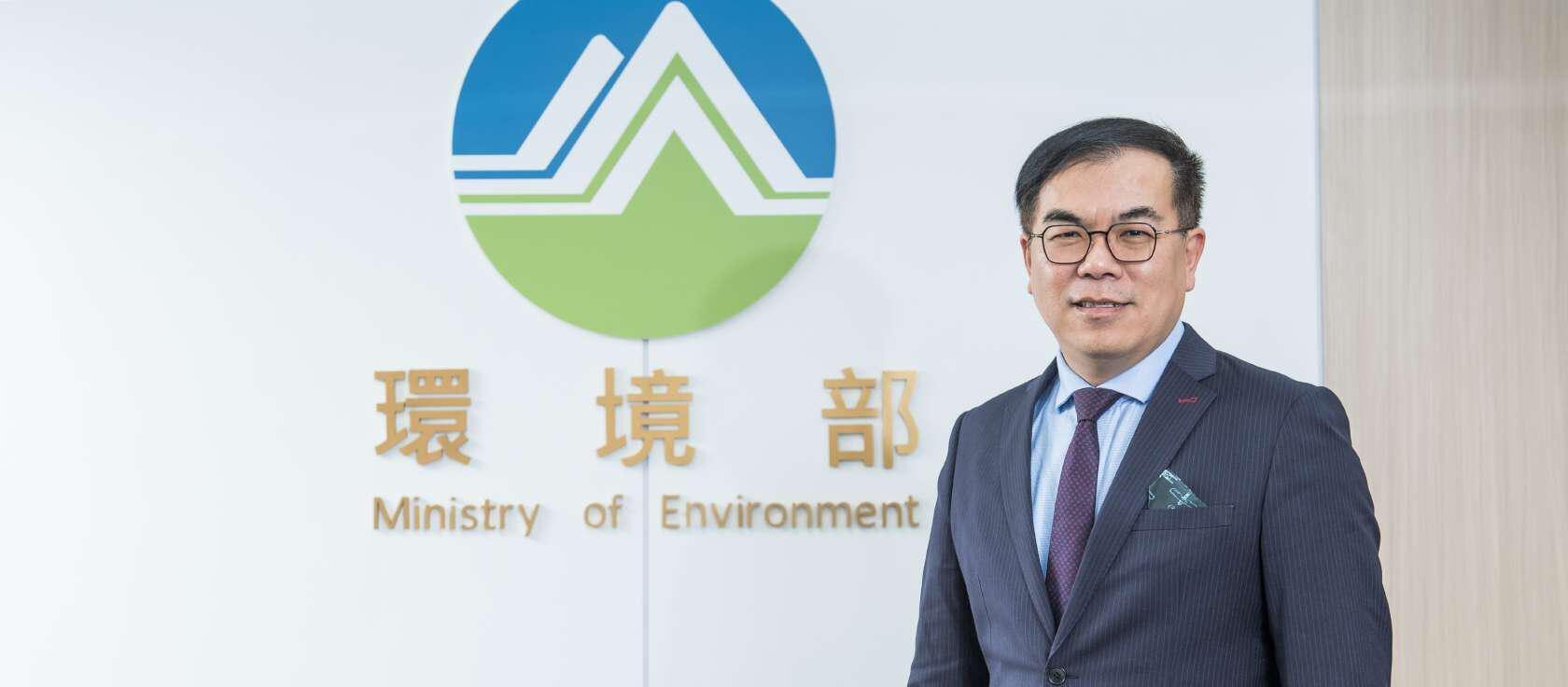
Article 6 of the Paris Agreement encourages voluntary international cooperation to raise collective ambition for climate action while advancing sustainable development on the foundations of environmental integrity, full transparency, and strict avoidance of double-counting of emission reductions. As these international cooperation frameworks move from negotiation to active implementation, global climate collaboration has expanded beyond high-level policy dialogue to include tangible joint mitigation projects, technology sharing partnerships, capacity building programs, and green climate investment, all critical pathways to accelerate full implementation of the Paris Agreement’s goals. Taiwan is advancing pragmatic, action-focused climate diplomacy to contribute to these global efforts: last year, it signed a landmark memorandum of understanding on Paris Agreement cooperation with diplomatic ally Paraguay, and the two countries are currently advancing 12 joint action plans for environmental governance, delivering tangible global climate action through technology sharing, youth climate dialogue, and bilateral circular economy exchanges. Host nation Türkiye has framed the upcoming COP31 summit as the “COP of the Future”, emphasizing that public commitments represent only a statement of intent, while consistent, on-the-ground execution represents real global trust. As global climate governance enters this critical new phase focused on practice and measurable outcomes, Taiwan will continue to deepen its global partnerships through pragmatic, results-oriented engagement, delivering concrete contributions and sharing its accumulated net-zero transition experience with global stakeholders. Taiwan is actively seeking broader international support for its meaningful, substantive participation in UNFCCC processes and global climate governance efforts, holding the firm conviction that meeting the Paris Agreement’s ambitious goals requires the full participation of every stakeholder that has the capacity and willingness to contribute to collective climate action. Taiwan stands ready to collaborate with all nations to turn shared climate commitments into tangible real-world action, and jointly build a more resilient, sustainable, net-zero global future. The content is contributed by Peng Chi-ming, Taiwan’s Minister of Environment.