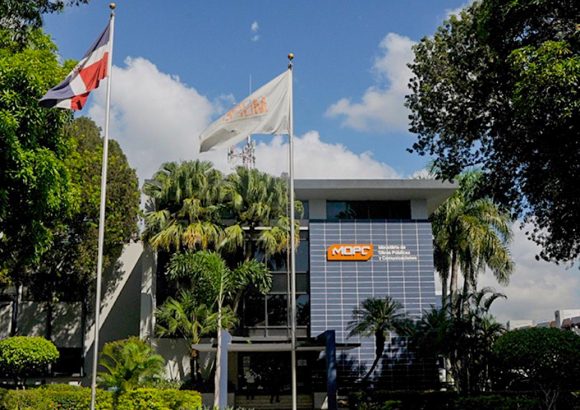
Santo Domingo, Dominican Republic – The Ministry of Public Works and Communications (MOPC) has unveiled a scheduled series of overnight traffic adjustments on the high-traffic Las Américas highway, connecting the capital Santo Domingo to the country’s eastern coastal regions and Las Américas International Airport, to facilitate critical construction work on a new pedestrian overpass. The phased closures will roll out across two consecutive nights this week, specifically Wednesday and Thursday, to minimize disruption to peak daytime commuter volumes. The first phase of restrictions will activate at 10 p.m. on Wednesday, when the service road stretch spanning between Manolo Tavárez Justo and Máximo Gómez streets is partially shut down to allow crews to position and secure three structural support beams for the pedestrian bridge located at the highway’s 12-kilometer marker. This partial closure will be fully lifted by 6 a.m. on Thursday to restore unobstructed access for morning rush hour travelers. A second, more extensive closure will commence at 10 p.m. that same Thursday, as crews move to install two additional support beams for the same overpass. During this 8-hour window, all main carriageway traffic will be carefully diverted to the highway’s northern service road, with no full shutdown of the entire corridor planned at any point. To ensure seamless, incident-free execution of the construction and traffic diversion plan, MOPC’s on-site technical teams will coordinate closely with cross-agency partners including the National Institute of Land Transit (Intrant), road safety enforcement body Digesett, the joint Military and Police traffic commission, as well as the project’s contracted construction and independent supervision firms. MOPC officials emphasized that the targeted infrastructure upgrade is designed to long-term enhance the structural integrity of the Las Américas highway corridor, reduce potential collision risks between pedestrians and fast-moving motor vehicle traffic, and deliver a far more reliable, secure travel experience for the tens of thousands of daily commuters, airport travelers, and regional freight operators that rely on the key artery.