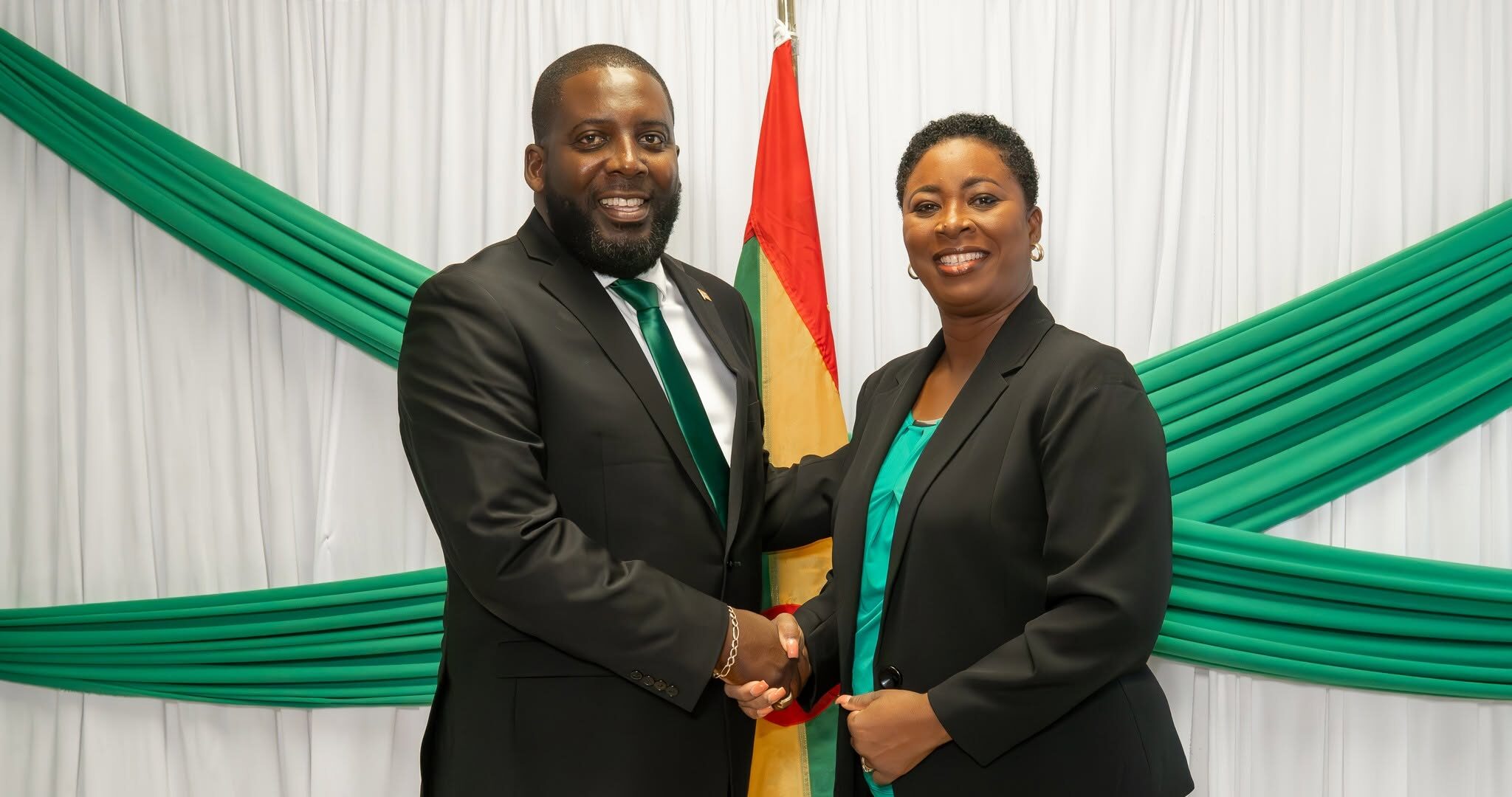
Grenada’s 5 November 2024 general election delivered a historic, crushing blow to the long-established New National Party (NNP), which secured only 1 of the country’s 15 contested parliamentary constituencies, marking one of the most lopsided electoral setbacks in the party’s decades-long history. Under the leadership of Emmalin Pierre, the first woman to helm the NNP, the party managed to hold only the St George North West seat, where incumbent Dr Adrian Joseph successfully defended his position. The result represents a staggering collapse from the NNP’s 2022 electoral performance, when it retained 6 constituencies after ceding government control to the National Democratic Congress (NDC). Four years on, sitting Prime Minister Dickon Mitchell steered the NDC to a dominant 14-seat landslide, leaving the defeated NNP grappling with urgent, unresolved questions about its leadership structure, campaign strategy, and eroded connection to the island nation’s electorate.
Pierre’s ascent to the NNP’s top leadership was framed as a landmark milestone for the party’s legacy, but translating that internal historic moment into a viable path back to government proved an insurmountable hurdle. Even Pierre herself failed to win her targeted St Andrew South East constituency, losing out to rival candidate David Andrew, a result that underscores the full scale of the NNP’s rout. The party entered the 2024 race with a sprawling 464-point manifesto branded the “Better Grenada Plan”, laying out sweeping policy pledges spanning tax reform, healthcare access, agricultural development, education investment, infrastructure upgrades, and job creation. Key proposals included cutting personal and corporate income tax rates from 28% to 25%, doubling the personal income tax-free threshold from EC$3,000 to EC$6,000, and rolling out 24-hour emergency healthcare services across every parish. While the pledges were ambitious, the NNP failed to provide voters with clear, actionable breakdowns of how these costly initiatives would be financed and implemented, leaving widespread public doubt about the feasibility of its agenda. Analysts noted that a credible election manifesto is far more than a catalogue of campaign promises: it serves as a public blueprint for how a party intends to govern if elected, a benchmark the NNP failed to meet in the eyes of most voters.
Several of the NNP’s high-profile campaign pledges also drew targeted scrutiny for misalignment with broader national priorities. Pierre, for instance, vowed to eliminate value-added tax (VAT) on all sugar products within the first 90 days of an NDC administration, framing the policy as a quick measure to ease household cost-of-living strains. Critics pointed out, however, that the proposal failed to account for longstanding public health guidance: the World Health Organisation has repeatedly issued warnings about the severe health risks of excess free sugar consumption, while regional public health agencies are already straining under the massive economic and social burden of treating preventable noncommunicable diseases linked to high sugar intake. While the policy was distinct from calls to tax sugar-sweetened beverages to reduce consumption, the NNP’s sugar VAT cut proposal exposed a clear disconnect between the party’s cost-of-living messaging and evidence-based public health goals, leaving many voters questioning the rigour of its policy development process.
Beyond policy gaps, the NNP’s campaign was marred by stark contradictions between its public branding and on-the-ground conduct. The party ran heavily on slogans of collective love, national unity, and cross-community togetherness, yet multiple senior party figures and supporters undermined that messaging with divisive, personal attacks on opponents. Longtime NNP figure Clarice Modeste publicly referred to Prime Minister Mitchell as “dunce”, while former NNP Prime Minister Dr Keith Mitchell dismissed the sitting leader as both a “conman” and a “little boy” during campaign events. Rank-and-file NNP supporters also repeatedly engaged in hostile, abusive online exchanges with political rivals, even as they shared public posts advocating for national unity. While robust policy debate and rigorous oversight of sitting governments are core to healthy democratic function, unconstructive personal slurs add no tangible value to conversations about national development. The clear gap between the party’s unifying public messaging and its members’ hostile conduct eroded its credibility significantly, at a moment when it was asking voters to place their full trust in its leadership to run the country.
The NNP’s historic defeat has also sparked an important constitutional conversation about the structure of Grenada’s parliamentary opposition. With Dr Adrian Joseph as the party’s sole elected representative, he is the de facto leading candidate to take on the formal role of Leader of the Opposition, but the position is not automatically granted by virtue of winning a single seat. Under Article 66 of the Grenadian Constitution, the Governor-General is legally mandated to appoint the Leader of the Opposition based on identifying the parliamentary member who commands the support of the largest bloc of legislators opposed to the ruling government. The appointed Leader of the Opposition also holds formal, legally enshrined responsibilities under Article 24 of the constitution, including advising the Governor-General on the appointment of three opposition-nominated senators. Even with the NDC holding a dominant 14-seat majority in parliament, Grenada’s democratic system relies on a functional, well-resourced opposition to conduct rigorous scrutiny of new legislation, government spending, and executive policy, a role that will carry extra weight given the ruling party’s overwhelming parliamentary advantage.
In the immediate aftermath of the election, the NNP faces a steep, multi-year path to rebuilding its public support, a process that will require far more than simply highlighting perceived shortcomings in the NDC’s governing record. Party leaders must conduct a full, unflinching audit of why its 2024 campaign messaging failed to resonate with most voters, whether it presented a credible, practical alternative to the sitting government, and what structural, personnel, and strategic overhauls are required to reconnect with the electorate. A strong, credible opposition is a core pillar of Grenada’s democratic health, regardless of which party holds executive power. But a party’s legacy of past electoral success and prior governing experience offers no guarantee of future political relevance, just as a campaign’s promises of transformative change do not automatically translate to proven ability to deliver results. The 2024 electorate has delivered a clear, unambiguous verdict at the ballot box, leaving the NNP with a full five-year parliamentary term to reflect on the public’s feedback and chart a viable path forward. Whether the party’s leadership is willing to listen sincerely to the concerns voters raised this cycle will ultimately determine whether this historic landslide defeat becomes a catalyst for meaningful renewal, or the starting point of a prolonged, steady political decline.