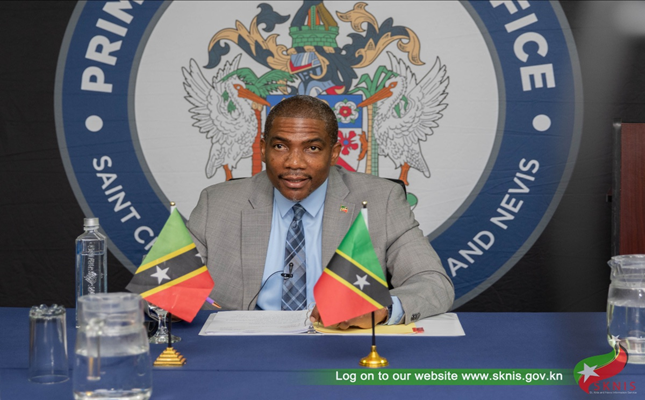
Basseterre, Saint Kitts – November 6, 2026: As cascading global economic strains fueled by persistent international conflicts, persistent global supply chain bottlenecks, and cross-border market volatility continue to push up cost of living across small island developing states, the administration of Saint Kitts and Nevis has rolled out a sweeping suite of targeted financial interventions to insulate local households from undue financial hardship, top government officials confirmed this week.
Delivering remarks during the November 5, 2026 taping of the public affairs program *The Roundtable*, Prime Minister and Minister of Finance Hon. Dr. Terrance Drew laid out his administration’s core governing philosophy amid widespread global economic uncertainty, framing state intervention as a non-negotiable duty to the nation’s residents. “Sometimes the government has to absorb the lash to protect our people,” Dr. Drew explained, drawing on the folksy analogy of a mother hen shielding her chicks from harsh weather to illustrate that state leadership cannot pass the full weight of external global shocks onto ordinary working families.
Since taking office, the Drew administration has rolled out a series of policies designed to lift household disposable income directly for workers across all income brackets. These measures include an 8% across-the-board salary hike for all civil servants, plus the introduction of a mandatory 13th month of pay for public sector employees that has been disbursed annually without interruption from 2022 through 2025. For low-wage private sector workers, two successive adjustments to the national minimum wage have set a statutory floor of no less than EC$500 per week for all staff working a standard 40-hour work week, lifting earnings for thousands of low-income households.
The government’s targeted support programs have also delivered direct, immediate relief to vulnerable residents. In 2025 alone, the Budget Boost Wallet initiative disbursed EC$36.6 million in direct, unrestricted financial aid to roughly 23,000 registered beneficiaries, giving recipients dedicated funds to cover critical costs including utility arrears, grocery purchases, and essential household supplies. To further ease cost-of-living pressures in the first half of 2025, the government also temporarily slashed the standard value-added tax rate from 17% down to 13%, reducing costs for all consumer goods and services across the board. As of June 2026, the state has also allocated more than EC$80 million in targeted electricity subsidies to prevent steep global energy price spikes from driving up household power bills to unaffordable levels.
Dr. Drew acknowledged that these large-scale relief measures require tough budget tradeoffs and unprecedented public spending commitments, but emphasized that prioritizing citizen well-being is the core function of responsible, accountable governance. “Even though things are challenging, we never left our people behind,” the Prime Minister affirmed, noting that targeted state intervention is far more equitable than forcing local families and small businesses to absorb the full brunt of external economic disruptions entirely on their own.