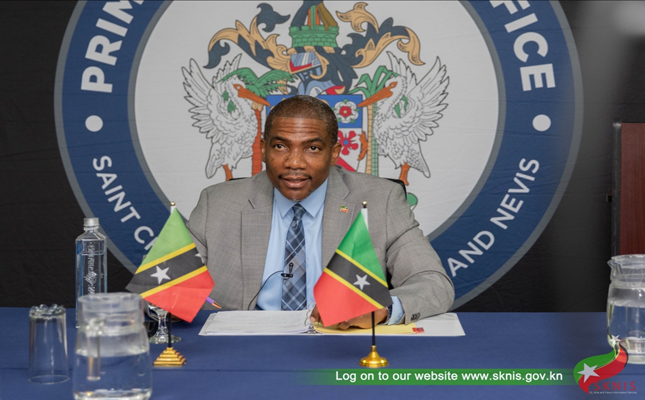
Basseterre, St. Kitts – November 5, 2026: In a media roundtable held Thursday, Prime Minister Hon. Dr. Terrance Drew outlined how his administration’s proactive, multi-year push to wean the Federation off overreliance on its Citizenship by Investment (CBI) programme has positioned the small island nation to navigate mounting external pressures targeting the revenue stream without economic disruption. When Drew took office in 2022, he inherited an economy where CBI contributions made up nearly 70% of the national budget, a concentration he immediately flagged as a critical systemic risk to long-term fiscal stability. In his first weeks in office, Drew publicly predicted the CBI ecosystem would become the single most complex policy challenge of his tenure, and launched a deliberate, phased diversification roadmap anchored in the administration’s overarching Sustainable Island State Agenda. Two years later, in October 2024, the government formalized the Sustainable Economic Expansion and Diversification initiative, prioritizing high-growth, resilient sectors including sustainable tourism, climate-smart agriculture, low-carbon construction, and renewable energy development to replace lost CBI revenue. As of 2026, the administration is on track to bring CBI’s share of total public revenue below 20% by the end of the year, with an even more ambitious target of driving that figure under 10% by 2027. To smooth the transition, Drew confirmed the government has been negotiating targeted bridging financing to avoid gaps in public service funding during the shift. Beyond revenue diversification, the administration has rolled out targeted structural upgrades to strengthen national competitiveness: ongoing geothermal energy development in Nevis and large-scale solar deployment across St. Kitts are driving down exorbitant regional energy costs, while upgrades to national water infrastructure and full digitization of core public services are lowering operational barriers for local and international businesses. “We took deliberate, incremental steps year after year to cut our CBI dependence, so when the pressure on this programme arrived, we were not caught flat-footed or panicking,” Drew told assembled journalists. “There will no doubt be short-term growing pains, but we built this plan from our first day in office to insulate our nation’s critical public investments from volatile swings in any single revenue source.”
Early Move to Diversify Has Put St. Kitts and Nevis in a Stronger Position to Weather CBI Pressure, Says Prime Minister Drew