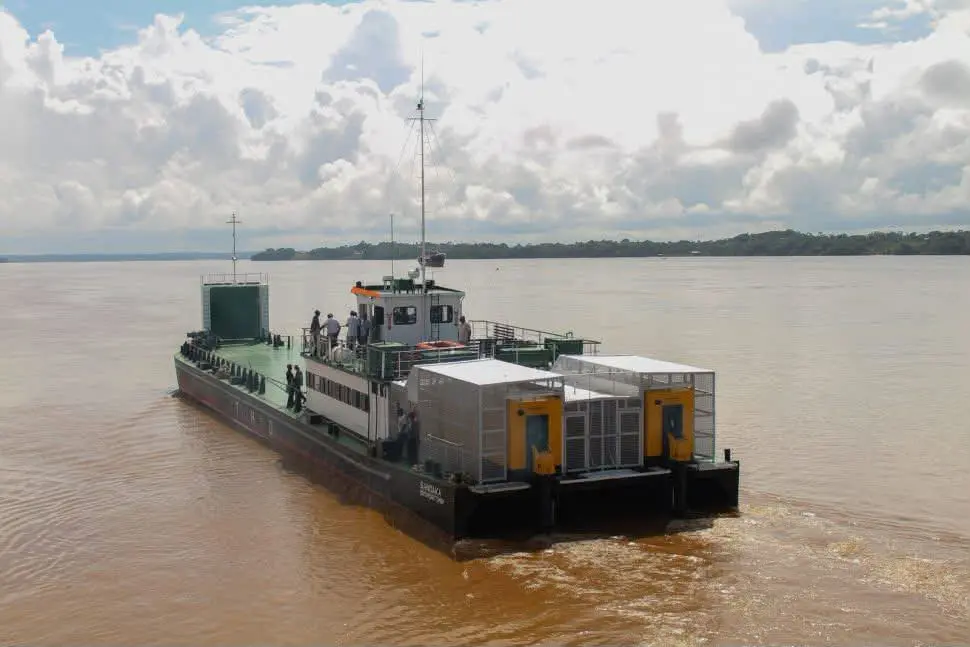
Georgetown, Guyana – November 5, 2026: Officials from Guyana and Suriname have finalized a bilateral arrangement to maintain uninterrupted cross-border passenger and cargo transit along the vital Corentyne River route, as the long-serving MV Canawaima ferry heads for extensive drydock repairs after years of flagged safety gaps.
Under the joint agreement, Guyana will deploy the MB Sandaka, a dedicated utility barge, to operate regular crossings between Guyana’s Moleson Creek terminal and Suriname’s South Drain stelling starting November 7, 2026. The temporary service will fill the gap left by the MV Canawaima, which is scheduled to enter full repair works starting September 7, though Guyana’s Ministry of Public Works has not yet released a formal timeline for the ferry’s return to active service.
The intergovernmental coordination process involved targeted negotiations between the two nations’ respective public works ministers, alongside joint technical reviews by Guyana and Suriname’s maritime regulatory bodies, to ensure the temporary barge service meets all cross-border safety and operational standards for both human passengers and commercial freight.
The move comes after a high-profile incident earlier in 2026, when Suriname’s Maritime Authority ordered the MV Canawaima to suspend all operations immediately due to systemic, widespread safety compliance failures. The ferry was temporarily permitted to resume limited runs just days after the order to resolve a crisis that left hundreds of travelers stranded at terminals on both sides of the border, but it never received the full scope of critical structural and mechanical repairs it required.
First launched in 1998 as part of a European Union-funded infrastructure initiative, the MV Canawaima has served as the primary, year-round transit link across the Corentyne River for nearly 30 years. As surging oil and gas development drives unprecedented cross-border economic activity in Suriname, the Surinamese government has already publicly outlined long-term plans to replace the aging single ferry with two modern, purpose-built vessels to accommodate growing passenger and cargo demand for the high-traffic corridor.
Guyana, Suriname agree to substitute vessel for Corentyne crossing as Canawaima goes into drydock