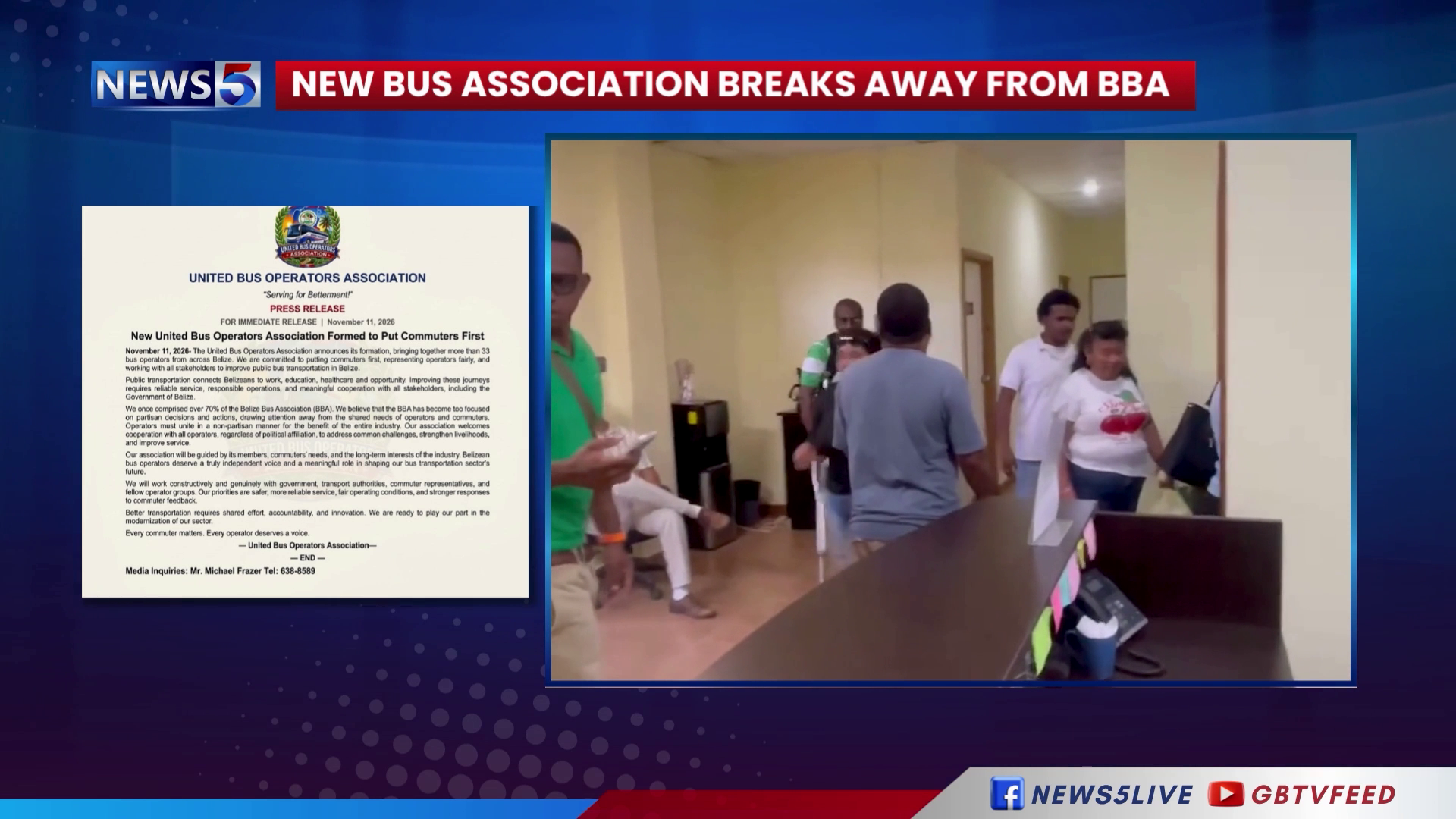
On November 5, 2026, a major rift has emerged in Belize’s public bus industry, as more than 30 independent operators formally broke away from the longstanding Belize Bus Association (BBA) to establish the United Bus Operators Association (UBOA), a new advocacy body centered on prioritizing commuter needs rather than partisan political interests. The schism unfolds at a pivotal moment, just days after the Senate passed the landmark Public Transportation Investment Bill 2026, which lays the regulatory groundwork for the government’s planned National Bus Company and sweeping sector-wide modernization reforms.
UBOA founding member Michael Frazer explained that the breakaway followed months of unmet attempts to raise operational and financial grievances within the BBA, citing a total lack of transparent, collaborative consultation processes that left many smaller and mid-sized operators feeling disenfranchised. “We reached out repeatedly via calls, written messages, and scheduled formal meetings to resolve our concerns, but none of our feedback was ever meaningfully addressed,” Frazer shared in a phone interview. “Members began exiting the BBA one by one, until we collectively decided to launch our own association on November 4, rooted in the principle that commuter welfare, not internal industry politics, will guide every decision we make.” Frazer added that the new group’s core priority is securing targeted government financial support to replace the country’s aging, dilapidated bus fleet, a longstanding public complaint that operators say they have been unable to address on their own due to limited access to capital. The association has pledged full transparency with the travelling public as it negotiates with regulators, to end the pattern of operators being unfairly blamed for service gaps caused by systemic underinvestment.
For its part, the original Belize Bus Association has pushed back against narratives that it is losing industry relevance, releasing a statement claiming its active membership has actually grown in recent months, and that only a handful of previously inactive former members joined the new UBOA. The BBA noted that all of the sector’s largest, highest-volume operators remain fully aligned with its policy agenda, and that it is finalizing a detailed, comprehensive development plan for public transit in northern Belize that it will formally submit to the Ministry of Transportation in the coming weeks.
Amid widespread public speculation that the split was engineered by political actors to divide the industry, Transport Minister Dr. Louis Zabaneh explicitly denied any government involvement in the formation of the new association. He confirmed that many operators who left the BBA cited concerns that the older group had adopted a partisan political stance that did not reflect the neutral, collaborative approach the ministry has taken with all stakeholders. “We have treated every operator equally, regardless of their political affiliations — one of the largest stakeholders in the upcoming National Bus Company is a senior member of the UDP, and we have extended him full respect and equitable treatment throughout this process,” Zabaneh emphasized. “The government has not taken sides in this rift in any capacity.” The minister confirmed that his department will maintain an open-door policy to engage both associations equally, as long as both groups participate constructively in the ongoing reform process to deliver tangible improvements for Belizean commuters.
As the two industry bodies compete to establish themselves as the legitimate representative of bus operators across the country, both now face a shared public mandate: to deliver actionable, results-focused proposals that translate the ongoing national reform efforts into safer, more reliable, and more comfortable public transit services for millions of daily travellers nationwide.