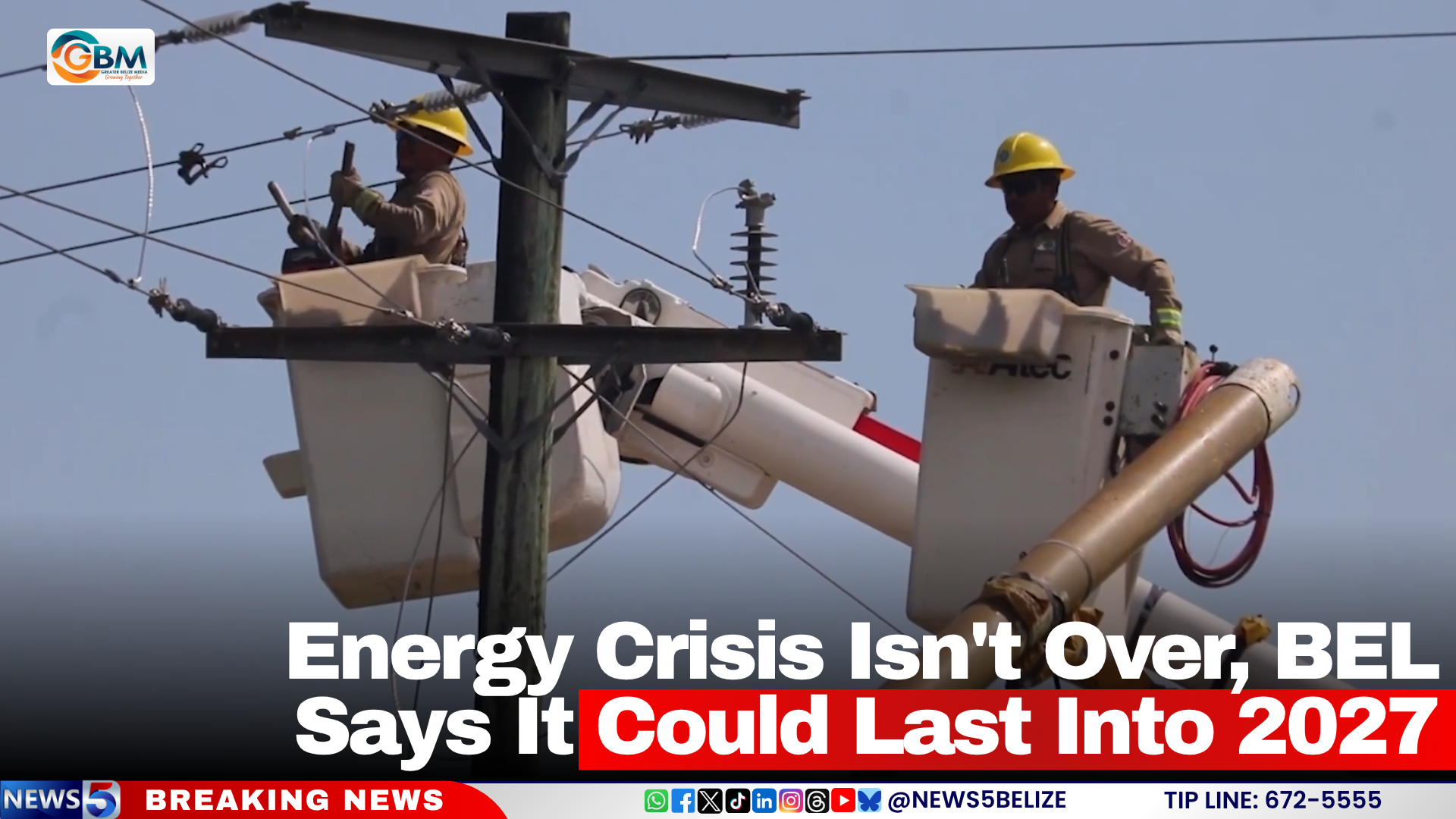
As of November 4, 2026, Belize’s national power utility Belize Electricity Limited (BEL) has issued a stark public update warning that the country’s ongoing energy supply crisis will not be resolved in the near term, with tight grid conditions expected to persist well into mid-2027, and the highest period of strain forecast for the upcoming dry season running March through May 2027.
Sean Fuller, BEL’s General Manager for Finance and Business Support, emphasized that while the utility has sufficient contingency measures in place to avoid unmanageable widespread blackouts over the coming 18 months, the three-month dry season window in 2027 will represent the most challenging stretch for balancing generation capacity with rising national power demand.
The cascading pressures driving the prolonged supply crunch stretch far beyond reduced hydroelectric output, which historically has been a cornerstone of Belize’s domestic power mix. BEL is currently facing formal curbs on electricity imports from Mexico during peak evening usage hours, paired with a 38% surge in the unit cost of cross-border power purchases. To avoid full grid collapse during peak demand periods, the utility has been forced to activate backup diesel generation, which carries a steep operating cost of up to 90 cents per kilowatt-hour – more than double the average retail rate charged to residential and commercial customers across the country.
Prime Minister John Briceño has also noted that earlier deployment of large-scale battery storage infrastructure could have softened the severity of the current crisis, by storing excess power generated during low-demand periods for use during peak hours. To mitigate the extended supply crunch and cut long-term reliance on costly imported fuel and power, BEL is accelerating its rollout of renewable energy infrastructure: a new 14-megawatt solar farm is scheduled to come online as early as December 2026, with a broader long-term roadmap targeting 65 megawatts of total solar generation capacity and 40 megawatts of grid-scale battery storage fully operational by the end of 2027.
Energy Crisis Isn’t Over, BEL Says It Could Last Into 2027