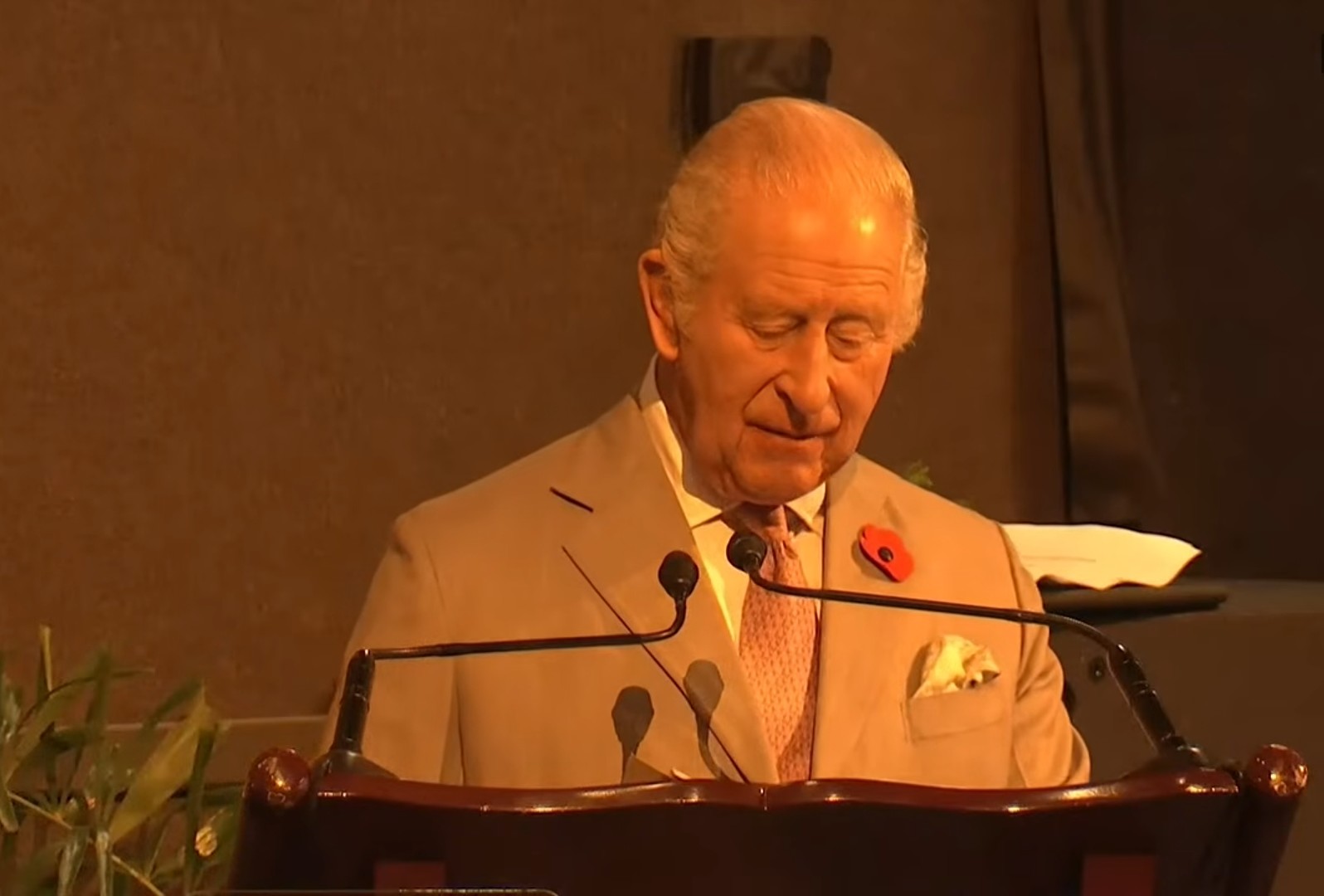
Delivering the official opening address at the 2024 Commonwealth Heads of Government Meeting (CHOGM) hosted in St. John’s, Antigua and Barbuda, King Charles III framed the 56-nation intergovernmental bloc as a forward-looking partnership rooted in the shared responsibility to engage honestly with the complexities of collective history rather than erase or rewrite it. The four-day summit, convened under the official theme “Accelerating Partnerships and Investment for a Prosperous Commonwealth”, coincided with the 45th independence anniversary of host nation Antigua and Barbuda, a milestone the King joined local communities to celebrate two days prior to delivering his formal remarks. Reflecting on his decades-long ties to the Commonwealth, the monarch noted that nearly 30 years had passed since he attended his first CHOGM gathering, a milestone he described as “sobering” as he addressed the assembled heads of government, including St. Vincent and the Grenadines Prime Minister Godwin Friday. He lauded Antigua and Barbuda, one of the world’s smallest sovereign nations, for its outsized global influence, referencing the popular local phrase “small island, big vibes” to illustrate how the bloc’s vast geographic and cultural diversity – seen in recent summits hosted in Kigali, Rwanda, Apia, Samoa, and now St. John’s – is one of its greatest defining strengths. As the symbolic head of the Commonwealth, King Charles emphasized that the multi-generational institution has been a core priority throughout his life, with his longstanding commitments centering on supporting the bloc’s more than 1 billion young people and protecting the fragile shared natural ecosystems that sustain all member states. He also highlighted Queen Camilla’s parallel dedication to the Commonwealth family, notably through her patronage of the Queen’s Commonwealth Writing Competition that amplifies creative voices across member nations. Turning to the sensitive complexities of shared colonial history, the King acknowledged that no living generation can choose or alter the past, which is passed down as a layered, often contradictory inheritance that includes both the achievements and failures, the kindnesses and harms of ancestors long gone. He noted that the passage of time can both clarify and distort public understanding of historical events, yet their impacts continue to shape contemporary life with tangible force. In a notable moment of candour, he explicitly referenced the transatlantic enslavement trade as a “shameful chapter of history” that still casts a long, heavy shadow across Caribbean island nations and many other Commonwealth member states, noting that the atrocities of that era fill him with personal horror and profound, deep-seated sorrow. The King went on to note that history also demonstrates that injustice does not have to be permanent, pointing to the global abolition movement that successfully ended the transatlantic enslavement trade, a campaign in which the British Royal Navy played a central operational role. He outlined a concrete, action-focused path forward for the modern Commonwealth, rooted in targeted collaboration to redress historical inequities: expanding equitable access to education, creating new quality jobs and economic opportunities, boosting intra-Commonwealth trade flows, and rolling out targeted climate resilience measures to protect small island developing states that are disproportionately vulnerable to climate change impacts. Drawing a nautical metaphor resonant with the island host nation, he noted that while no one can control the direction of the winds that carried past generations to their current circumstances, communities retain full agency to adjust their sails to chart a more equitable, prosperous collective future. He closed his address by emphasizing that the 21st century Commonwealth is far more than a legacy of past geopolitical arrangements: it is a dynamic, responsive institution tailored to address the urgent crises of the modern era, with new member states joining in recent years precisely because they recognize the unique, unrivalled value of its cross-cultural, cross-regional partnership model.
King Charles addresses slavery, says history ‘not ours to choose or change’