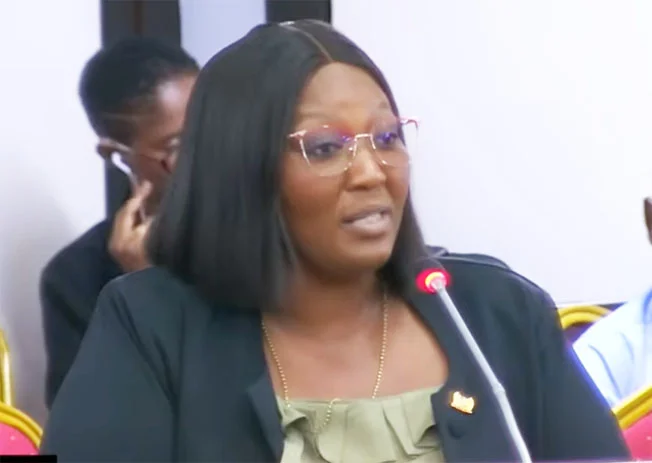
On November 4, local news reports from Suriname confirmed that Minister Diana Pokie of the Ministry of Social Affairs and Housing publicly addressed longstanding administrative failures during a parliamentary session of De Nationale Assemblée on Tuesday, admitting that critical gaps in the country’s outdated social benefits registration framework had resulted in hundreds of vulnerable beneficiaries being incorrectly erased from the national welfare database. The most high-profile cases highlighted by legislators involve disabled children whose monthly support payments were abruptly cut off solely because their parents secured civil servant positions, with no review of the children’s separate eligibility status. The issue was first brought to parliamentary attention by Representative Ronny Asabina of the BEP party, who flagged a wave of complaints from remote inland communities that had been largely overlooked by central government administrative teams. Asabina emphasized that the disabled minors in question hold no public office themselves, and their eligibility for specialized care support is not tied to their parents’ employment status, calling for a full, independent audit of all wrongful benefit terminations to prevent further harm to low-income households. During her formal response to the assembly, Minister Pokie confirmed that nearly all application and record-keeping processes for social welfare schemes still rely on manual, paper-based workflows, which are prone to human error, data misfiling, and cross-system sync failures. She explained that under the decades-old administrative protocol, all beneficiaries under the age of 21 were registered under their parent or guardian’s profile in the civil service payroll system. When a parent was hired as a government employee, the system’s automated default would delete all dependents linked to their old non-civil-servant welfare profile, even if those dependents qualified for independent, dedicated support programs such as the disabled child benefit. Pokie noted that her ministry has already launched preliminary reviews of dozens of reported cases to identify affected families, and the national cabinet has formally approved a sweeping overhaul of the entire social benefits registration and re-registration process, with a specific focus on expanding access and accuracy for residents in hard-to-reach inland districts. Preparations are currently underway to outsource portions of the digitization and field verification work to qualified third-party service providers to accelerate the correction of historical errors. The minister also announced that targeted outreach operations will kick off in the Brokopondo district as early as next week, where on-site teams will ensure eligible beneficiaries receive their overdue payments. Local residents have been instructed to submit all outstanding benefit complaints directly to the district commissioner’s office, and full public lists of verified eligible beneficiaries will be posted locally to increase transparency. The ministry is maintaining ongoing, close coordination with the Brokopondo district commissioner to ensure every error uncovered during the upcoming field checks is corrected immediately, and no eligible vulnerable resident is left without the financial support they are legally entitled to.