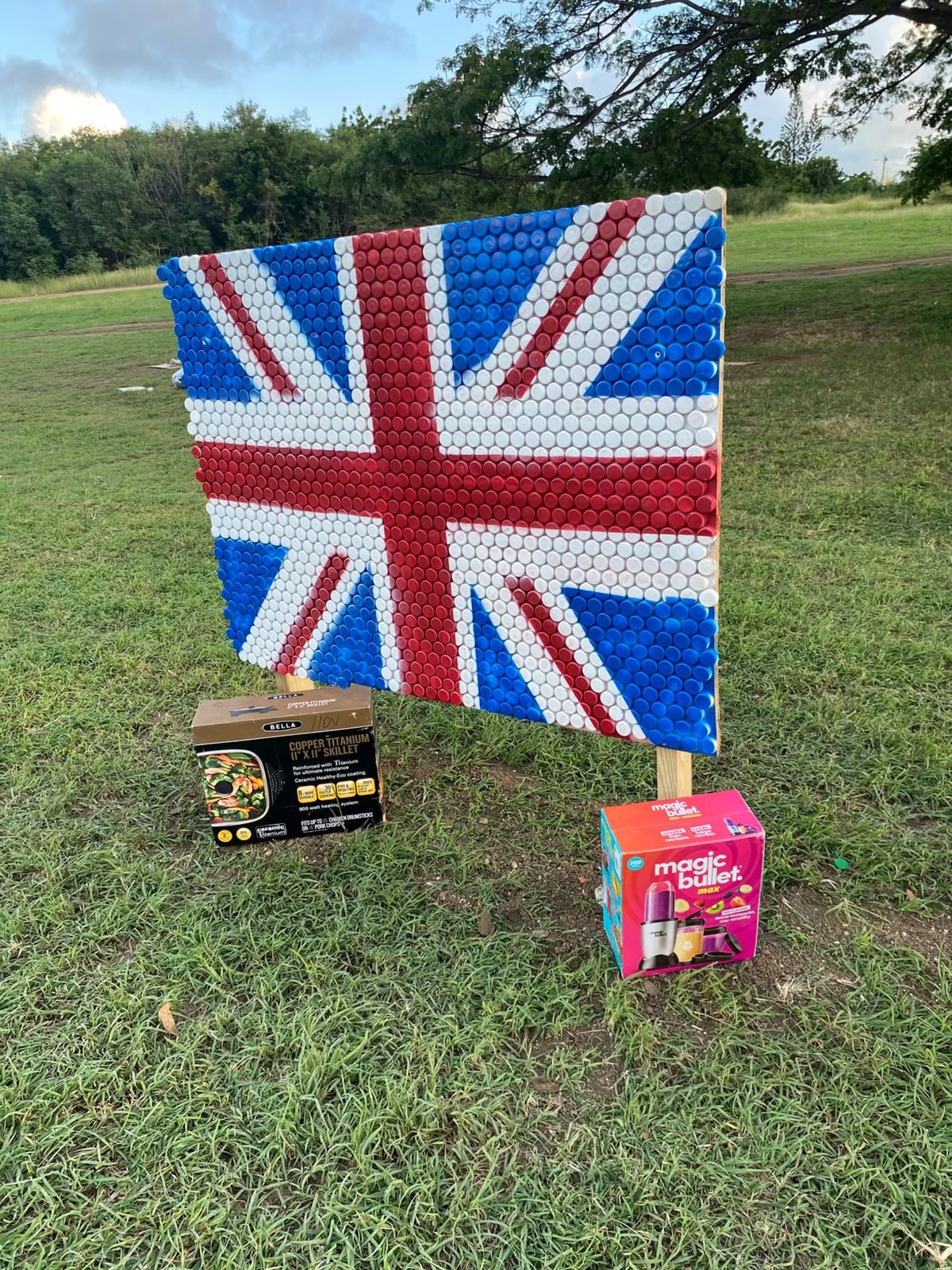
Against the dual milestone of Antigua and Barbuda’s 45th independence anniversary and its upcoming hosting of the 2026 Commonwealth Heads of Government Meeting (CHOGM), local community non-profit Good Humans 268 Inc. has launched a one-of-a-kind public art installation along the Queen Elizabeth Highway, constructed entirely from more than 80,000 collected discarded plastic bottle caps to render the national flags of all Commonwealth member states. The landmark display is the culmination of months of coordinated cross-sector effort, drawing on the hands-on participation of K-12 students, classroom teachers, community volunteers, and supporting local and regional organizations. This flagship installation is the centerpiece of Good Humans 268 Inc.’s long-running Student Community Service Recycling Project, an ongoing program designed to advance actionable environmental sustainability through structured education, neighborhood outreach campaigns, and hands-on waste diversion activities. What originated as a small-scale pilot to teach local youth the fundamentals of responsible waste management has grown into a widely celebrated public exhibition that weaves together national identity, pan-Commonwealth cultural diversity, and a tangible demonstration of what collective community action can achieve. National flags are universally recognized as the most evocative emblems of a nation’s core identity, encapsulating centuries of shared history, hard-won independence, collective struggle, landmark achievements, and the shared aspirations of generations yet to come. For citizens residing on their home soil and those in the global diaspora alike, the sight of their national colors often stirs deep, visceral feelings of belonging and patriotic pride. By reimagining these powerful national symbols using post-consumer plastic waste that would otherwise end up in landfills or marine environments, Good Humans 268 Inc. has paired that symbolic weight with a urgent, accessible environmental message: items routinely dismissed as worthless trash can be reborn as objects of profound cultural, educational, and aesthetic value. The broader school engagement component tied to the project reached 81 educational institutions across every corner of Antigua and Barbuda, connecting directly with 15,896 enrolled students and 1,713 teaching staff. Through in-person school workshops, interactive environmental presentations, hands-on classroom activities, and structured local recycling drives, young participants were guided to draw clear, practical links between their daily consumption habits, the growing global crisis of plastic pollution, targeted climate action, and long-term equitable sustainable development. For the team at Good Humans 268 Inc., the initiative also serves as a proof of concept for how environmental learning can break out of the four walls of traditional classroom instruction. Rather than relying solely on lectures to teach young people about the harms of unregulated plastic waste, the project offered every participant a direct, tangible role in turning discarded materials into a large-scale, publicly visible national landmark. Every single collected bottle cap contributed to the final finished work, reinforcing the core lesson that individual actions, no matter how small they may seem in isolation, can add up to deliver transformative, large-scale positive outcomes. The project holds particular urgency and relevance for Antigua and Barbuda as a small island developing state, where unmanaged plastic waste poses persistent, multifaceted environmental risks: improperly discarded plastic items frequently clog storm drains, pollute inland waterways, wash up on sensitive coastal habitats, and cause lasting harm to fragile marine ecosystems. Safeguarding these natural resources is non-negotiable for protecting the nation’s public environmental health, its world-famous tourism sector, the livelihoods of local small-scale fisheries, overall community well-being, and its long-term economic resilience. Furthermore, the cross-cutting initiative actively advances no fewer than five United Nations Sustainable Development Goals: Quality Education (SDG 4), Sustainable Cities and Communities (SDG 11), Responsible Consumption and Production (SDG 12), Climate Action (SDG 13), and Partnerships for the Goals (SDG 17). By merging hands-on environmental education, vibrant cultural expression, and broad-based community participation, the project offers a replicable model for how targeted, practical local activities can deliver simultaneous progress across multiple interconnected global sustainable development priorities. Beyond its environmental impact, the open-air exhibition stands as a public tribute to international friendship and cross-cultural appreciation across the Commonwealth bloc, a voluntary association of nations bound by shared historical ties that span every inhabited continent and encompass an extraordinary diversity of traditions, histories, languages, and national identities. Each flag on display along the Queen Elizabeth Highway tells the unique, distinct story of the nation it represents, while the full collective installation honors the shared bonds and collaborative partnerships that tie all Commonwealth member states together. The project’s accompanying public engagement challenge offers participants a range of practical prizes, including a Magic Bullet blender, a cast-iron skillet, branded commemorative event t-shirts, and a curated gift basket of female hygiene products. The initiative has drawn formal support from key local partners including the Sandals Foundation, ESFN, Scrub Life Cares, and Yentreb Music, while driving broader public participation in the official lead-up celebrations for Antigua and Barbuda’s 2026 CHOGM hosting. As the installation remains open for public viewing throughout the independence anniversary and CHOGM lead-up period, the Good Humans 268 Inc. team is inviting all community members and visiting guests to appreciate the artwork and share photos of the display across social media, while respectfully honoring the thousands of hours of collective labor that went into its creation. Visitors are explicitly requested not to touch or disturb the flag installations, to ensure the artwork remains fully intact so that all members of the public can enjoy the exhibition for the full duration of the official celebrations. Far more than a one-off artistic achievement or a temporary tourist attraction timed for 2026 CHOGM, the display stands as a powerful demonstration of what communities can accomplish when environmental sustainability is embraced as a shared collective responsibility, when young students are given agency to lead local change, and when cross-sector partnerships turn ambitious, creative ideas into tangible, visible public good. As Antigua and Barbuda marks 45 years of sovereign independence, the sprawling collection of bottle-cap Commonwealth flags serves as a joyful, tangible reminder that national pride can be expressed not only through parades and traditional ceremonies, but also through creative innovation, intentional environmental stewardship, and shared collective responsibility. Every flag on display tells a unique story of national identity, every individual bottle cap represents a small, meaningful contribution from a community member, and every participating volunteer stands as living proof of the extraordinary power of coordinated community action to build a more sustainable, inclusive future for all.
Over 80,000 Recycled Bottle Caps Transformed into Commonwealth Flags as Antigua and Barbuda Celebrates 45 Years of Independence