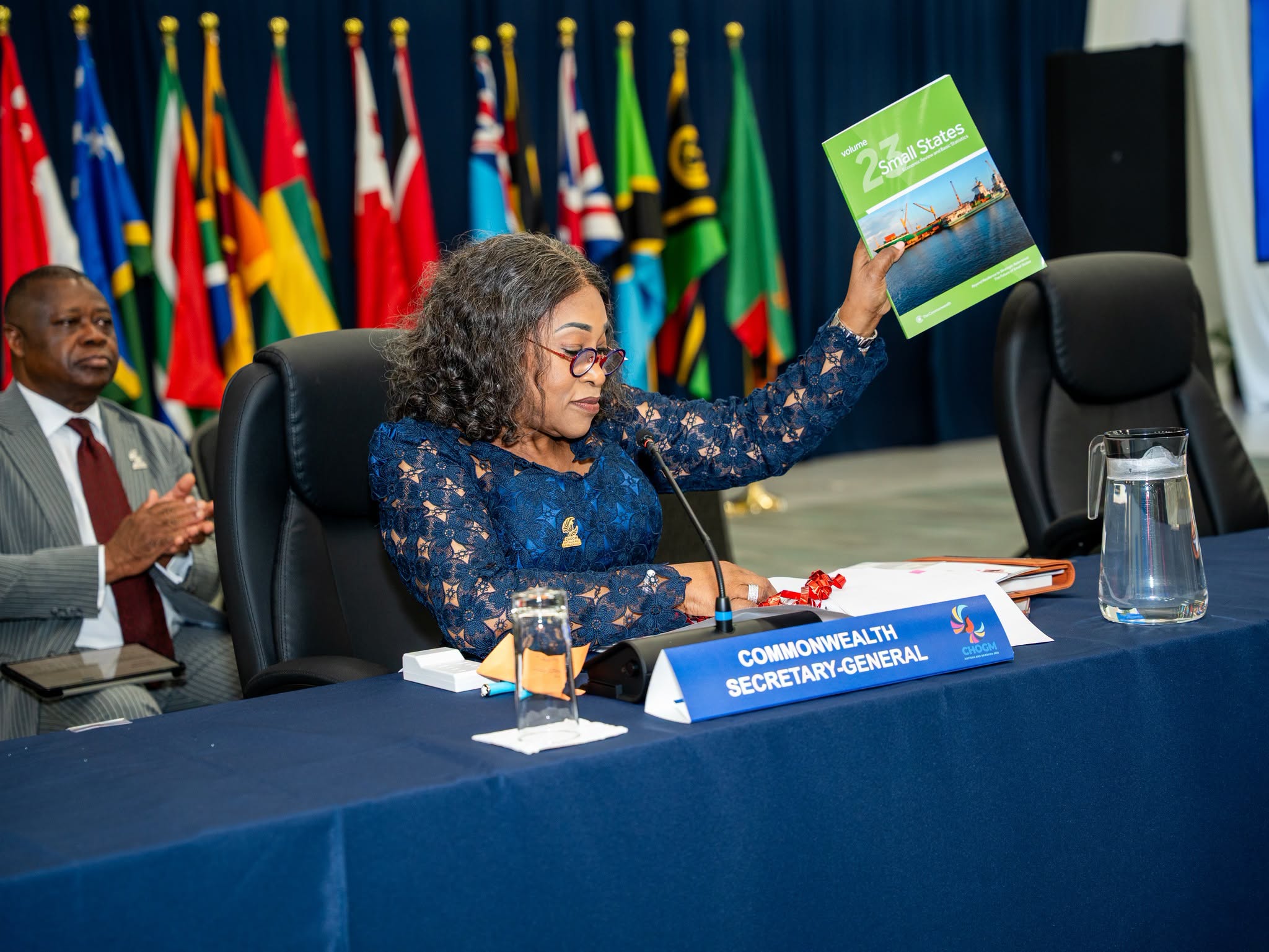
Held on the sidelines of the 2026 Commonwealth Heads of Government Meeting (CHOGM) in St. John’s, Antigua and Barbuda, the landmark Commonwealth Ministerial Meeting on Small States brought together senior government representatives this week to align on actionable cross-sector collaboration, scaled targeted investment, and unified collective action to future-proof more resilient, inclusive economies for small member nations.
Centered on the official theme “Scaling-up Partnerships and Investments for Resilient Small States”, the closed-door ministerial session facilitated targeted dialogue between government leaders, multilateral development stakeholders, and private sector representatives to map out pathways to expand support for both existing and upcoming Commonwealth-led small states initiatives. Attendees also strategized on how to elevate the unique policy priorities of small island and low-population member states within global multilateral governance spaces, while advancing shared resilience building and equitable shared prosperity across the entire Commonwealth bloc.
The meeting opened with a special keynote address from the Prime Minister of Antigua and Barbuda, the Rt Hon Gaston Browne, who laid out a vision to reframe global narratives around small states, shifting the dominant focus away from perceptions of inherent vulnerability to center their underrecognized strategic global value, while calling for deepened cross-Commonwealth partnership and targeted capital inflows to unlock their full economic potential. The gathering was jointly co-chaired by the Hon. E. P. Chet Greene, Antigua and Barbuda’s Minister of Foreign Affairs, Trade and Barbuda Affairs, and H.E. Iruthisham Adam, Minister of Foreign Affairs of the Maldives.
During working sessions, participating ministers highlighted the underleveraged competitive strengths of Commonwealth small states, including their geographically strategic locations, rich endowments of natural capital, skilled local workforces, and fast-growing innovation ecosystems. Discussions emphasized the outsized contributions small states already make to global innovation, cross-border growth, and pan-Commonwealth cooperation, while reinforcing that their on-the-ground perspectives and policy priorities must be centered in global decision-making frameworks rather than sidelined.
Delivering her formal opening address, Commonwealth Secretary-General Hon. Shirley Botchwey noted that Antigua and Barbuda, the smallest nation by population ever to host a CHOGM summit, stands as a living testament to the unbounded potential of small states. “Across our Commonwealth, small states are pioneering groundbreaking solutions spanning climate action, digital innovation, sustainable finance, and the blue economy,” she remarked. “Size is not a limitation – it is a source of unmatched agility. The future of our small member states should never be defined solely by assessments of their vulnerabilities, but by their proven capacity to drive global shared prosperity. The single greatest barrier holding small states back right now is reliable access to affordable, predictable, sufficient development finance, and we have a historic window right now to deepen our partnerships and mobilize the capital required to turn shared ambition into tangible, on-the-ground results.”
Ministers acknowledged that Commonwealth small states are currently navigating an unusually turbulent global landscape, marked by rising geopolitical rifts, growing economic fragmentation, accelerating climate-related crises, and widespread systemic financial vulnerabilities. They issued a collective call for coordinated, aligned action to expand small states’ access to sustainable finance, to strengthen both economic and climate resilience, and to alleviate unsustainable debt burdens that constrain public investment. Attendees unanimously agreed that long-term, durable progress would only be achievable through sustained, coordinated collaboration between member national governments, multilateral institutions, development partners, and global private investors.
Addressing the full delegate body, Minister Chet Greene emphasized that even amid cascading global challenges, small states have continued to demonstrate remarkable innovation, leadership, and adaptive resilience. “To unlock our full collective potential, we must tear down barriers to deeper partnership and mobilize far greater targeted investment,” he stated. “That is why this meeting’s theme is not just relevant – it is urgently essential. We will seize this moment to advance practical, actionable solutions, fortify our cross-sector partnerships, and champion the shared interests of all small states with a single, unified, unignorable voice.”
During the ministerial gathering, Commonwealth Secretary-General Botchwey officially launched the 23rd edition of the Commonwealth Secretariat’s flagship annual publication, the *Small States Economic Review and Basic Statistics*, which carries the themed focus “Beyond Resilience to Strategic Relevance: The Future of Small States”. Key data and analysis from the new report confirms that despite well-documented economic and climate vulnerabilities, Commonwealth small states are emerging as increasingly high-potential destinations for global investment and innovation. The report also outlines evidence-based policy pathways, including pooled cross-national project development and joint public procurement, that can unlock significant economies of scale for small states, while public-backed risk mitigation financing mechanisms can reduce perceived investment risk, lower transaction costs, and draw far greater private sector capital flows into priority sustainable development sectors. Standout data points from the 2025 report show that foreign direct investment inflows reached 5.7% of total GDP across Commonwealth small states in 2024, underscoring the critical role of international capital in driving their economic performance. Remittances also remain a lifeline source of external finance, accounting for 5.6% of combined small state GDP in 2024. The report further documents that small states are global frontrunners in cutting-edge digital and sustainable finance innovation, including early deployment of central bank digital currencies, sovereign green bonds, and blue economy-focused blue bonds. Public-private partnership models also represent a largely untapped high-impact investment channel, with 90 major infrastructure projects involving private sector participation recorded across 21 Commonwealth small states between 1990 and 2024.
The full set of consensus outcomes and policy recommendations generated at the ministerial meeting will be formally presented to Commonwealth Heads of Government during their upcoming executive session, and will directly shape the post-CHOGM 2026 action agenda focused on advancing inclusive partnerships and investment for a prosperous, unified Commonwealth. The outcomes will also guide the Commonwealth Secretariat’s updated long-term small states advocacy strategy, designed to amplify the collective priorities and unique perspectives of small member nations at all major global multilateral forums.
Commonwealth ministers meeting in Antigua and Barbuda call for more investment and affordable financing for small states