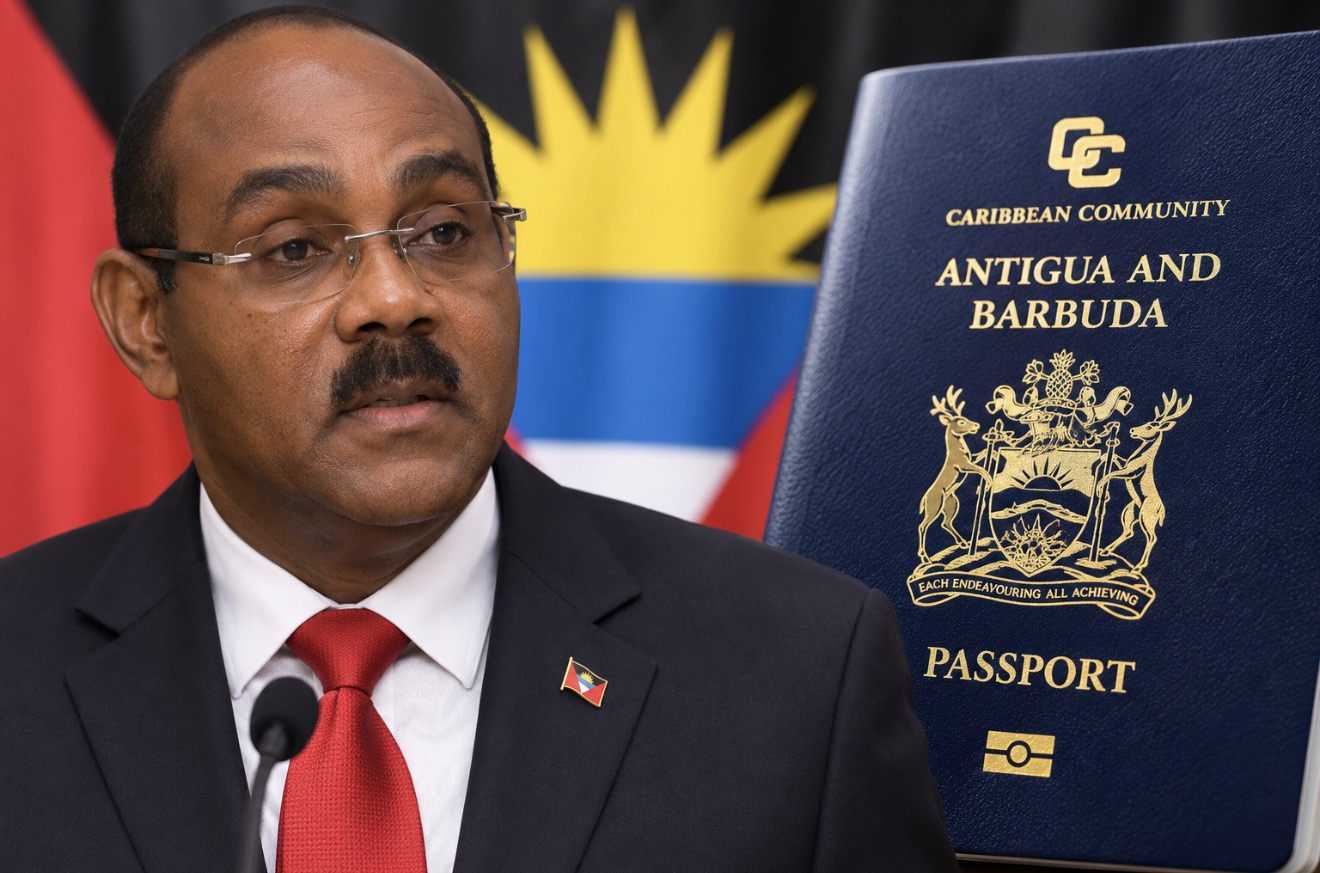
Delivering a landmark address to mark Antigua and Barbuda’s 45th independence anniversary over the weekend, Prime Minister Gaston Browne laid out a robust case for the critical role of the nation’s Citizenship by Investment Programme (CIP) in sustaining public services, even as the Caribbean nation navigates intensifying diplomatic pressure from the European Union to wind down the scheme.
Browne emphasized that the long-running CIP has evolved into one of the government’s most reliable streams of non-tax revenue, channeling funds into underfunded public services, high-priority infrastructure builds, and creating fiscal breathing room that eases the tax burden on ordinary Antiguan and Barbudan households grappling with a global cost-of-living crisis. Skyrocketing prices for food, fuel, transport, and electricity have already stretched household budgets thin across the twin-island nation, and Browne warned that an unplanned, premature end to the CIP could trigger drastic cuts to public services or new tax hikes that would disproportionately harm vulnerable families.
The remarks come against the backdrop of a long-running dispute with the European Commission, which has formally demanded Antigua and Barbuda fully phase out its CIP by June 2028, with the implicit threat of revoking the country’s long-standing visa-free access to the EU’s Schengen travel zone if the demand is not met. The EU first publicly flagged this requirement in July of this year, prompting the Antiguan and Barbudan government to table a counter-proposal for a gradual, managed wind-down of the programme by the end of 2030, a timeline designed to give the economy time to adjust and find alternative revenue streams. To date, EU authorities have not issued a formal public response to that compromise offer.
Browne struck a balanced, firm tone in his independence day remarks, noting that his administration would pursue respectful but unyielding diplomatic negotiations with EU counterparts, prioritizing the protection of national economic interests while working to find a mutually agreeable path forward. He called for national transparency about the high stakes of the negotiations, responsible stewardship of the country’s fiscal future, and creative policy thinking to design a post-CIP economic framework that preserves growth and public services. He also stressed that the twin-island nation could not afford complacency amid rising global economic volatility, and must take deliberate steps to build long-term economic resilience to insulate communities from external shocks.
The European Commission has set a hard deadline of November 12 for Antigua and Barbuda to submit a formal, written response outlining its official position on the future of the CIP, leaving Browne’s administration with a narrow window to finalize its negotiating position and defend a core pillar of its national fiscal strategy.
PM Gaston Browne warns loss of CIP revenue could increase pressure on taxpayers