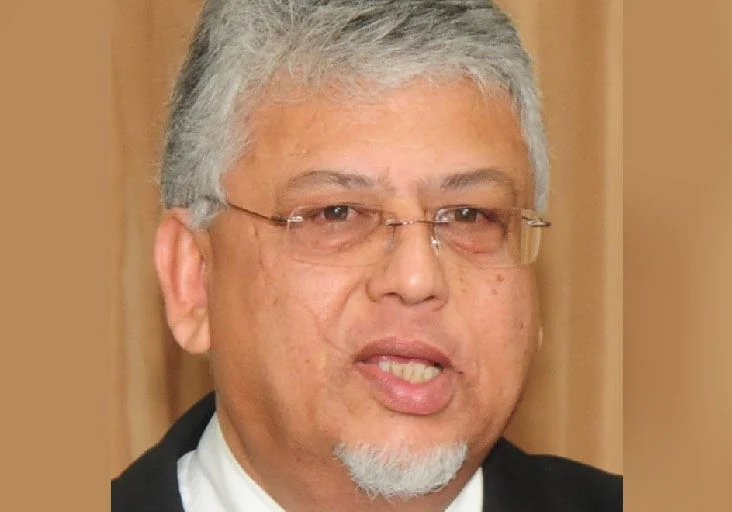
During a virtual public forum hosted by the University of the West Indies’ Trade and Development Economic Unit (TEDU) on a recent Friday evening, Dr. Bhoe Tewarie, Pro Vice Chancellor for Planning and Development at UWI and a former government cabinet minister, laid out a stark, unvarnished assessment of Trinidad and Tobago’s current economic trajectory, framing the nation’s fiscal position as a constant battle to stay afloat against unrelenting, unfavorable structural headwinds.
Tewarie pushed back against the widespread assumption that upcoming natural gas production projects would automatically resolve the country’s long-running economic strains, noting that the recently tabled national budget is calibrated not to drive rapid expansion, but to enable short-term stability: “This budget signals to the entire nation that our immediate priority is to keep our heads above water, treading carefully to avoid sinking. We know we need a lifeline, we know time is not on our side, but incremental progress is the only viable path forward.”
He acknowledged that the sitting administration inherited a deeply dysfunctional economic landscape, and had taken tangible stabilization steps including tightening tax collection protocols, bolstering customs enforcement to reduce leakages, and expanding access to formal financial services for underserved populations. Even so, he emphasized that these measures have not yet translated to tangible economic recovery or a clearly defined, sustainable growth roadmap.
Adding a critical fiscal warning, Tewarie flagged that roughly TT$70 billion in outstanding public debt is scheduled to mature over the next five years, presenting a massive, unaddressed refinancing risk for state finances. He also pushed back against a common policy assumption, explaining that current export promotion and import substitution strategies that merely redirect existing foreign exchange reserves will not expand the country’s overall forex pool, as many policymakers claim. Deep, structural gaps in economic diversification, targeted new sector investment and export expansion remain largely unaddressed, he noted.
Beyond economic metrics, Tewarie raised urgent concerns about the country’s deteriorating political climate, noting that increasingly adversarial, confrontational rhetoric between opposing factions is amplifying the financial stress already weighing on ordinary citizens. He went a step further to caution that polarizing political language is actively stoking racial tensions, creating tangible risks of social instability for Trinidad and Tobago. He issued a direct public appeal to both the sitting Government and the Opposition to adopt far more measured, judicious public communication practices to avoid worsening social fractures during this historically challenging fiscal period.
Also presenting at the TEDU forum, prominent Trinidadian businessman Vivek Charran, who represents local small and medium-sized enterprises (SMEs) and runs a family-owned operation of his own, shared a grassroots perspective on a decade of unrelenting economic contraction that has left the SME sector largely abandoned and overlooked. “Over the past 10 years, as we navigated this extended economic downturn, we felt our voices were completely ignored, hung out to dry, marginalized, and even unfairly blamed for economic struggles that were entirely outside of our control,” Charran explained.
He noted that the latest national budget contains no targeted, direct support mechanisms for SMEs, despite the fact that small businesses are uniquely positioned to drive growth in the non-energy sector, a core pillar of the country’s long-stalled diversification agenda. Charran identified access to commercial financing as the single largest barrier preventing SMEs from expanding into domestic manufacturing, noting that local banks routinely demand collateral valued at 1.5 to 2 times the total value of requested business loans – a threshold nearly impossible for most cash-strapped small operations already carrying existing debt and grappling with shrinking sales to meet.
Charran also called for a major coordinated push to expand domestic agricultural and food production as a high-impact strategy to conserve foreign exchange, pointing out that the country spends TT$300 to TT$350 million annually on imported dairy products alone. He highlighted clear, low-hanging opportunities for local SMEs to scale up domestic dairy production, egg farming, broiler operations, leafy vegetable cultivation and hydroponic food systems to replace costly imports, reduce forex outflows and create local jobs. Finally, he emphasized that private sector businesses cannot afford to wait passively for government intervention to drive recovery, noting that small business owners must take proactive, independent steps to build resilience, diversify their revenue streams and contribute to national economic renewal.
Tewarie: Economy still treading water, with no clear path to recovery