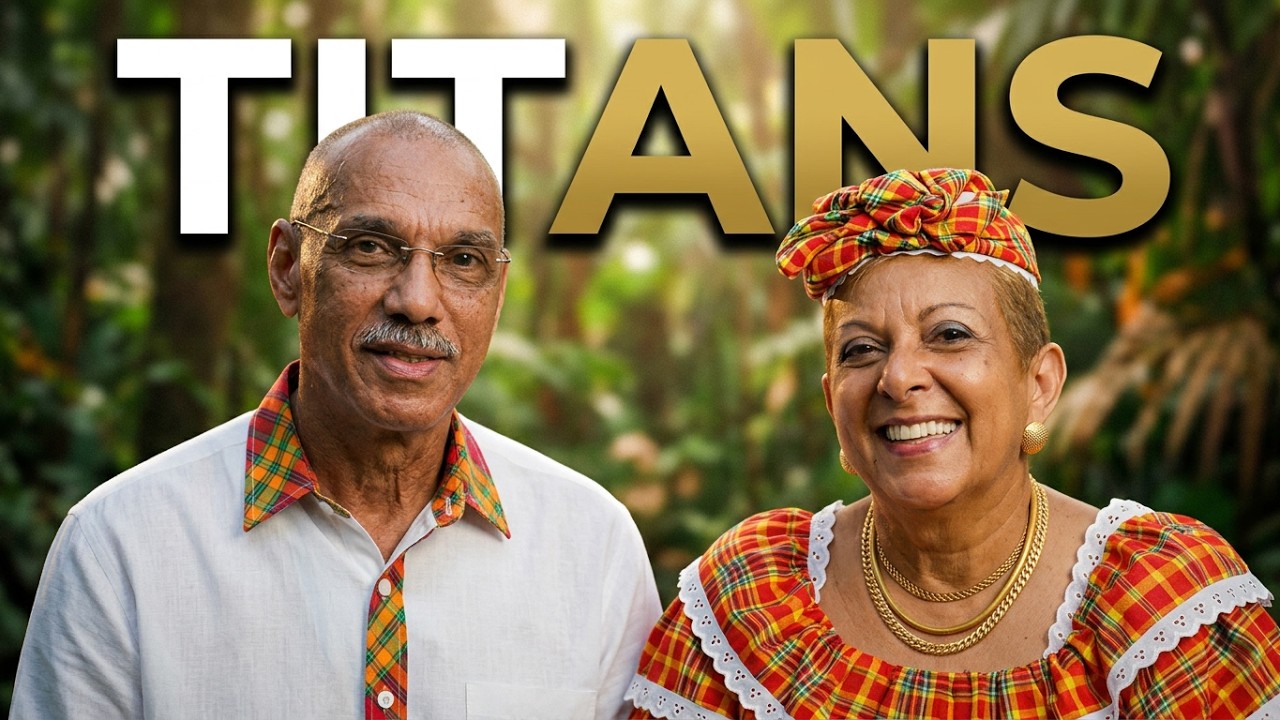
Against the backdrop of Dominica’s pre-independence cultural awakening, a singular partnership emerged that weds intellectual rigor, creative genius, intergenerational family devotion, and unwavering national service into a defining chapter of the island’s modern history: the life and shared work of Anita Astaphan Bully and her late husband, Dr. Alwin Bully, the iconic playwright, artist, educator, cultural administrator, and designer of the Commonwealth of Dominica’s national flag. Their paths converged at a pivotal historical juncture, when Dominican citizens were embracing the promise of political self-governance, unapologetic cultural self-expression, and a distinct, proudly rooted Caribbean identity. While Dr. Bully’s public contributions to national life have long been celebrated, Anita’s own extraordinary journey of academic perseverance, transformative mentorship, and lifelong dedication to her homeland deserves distinct, well-earned recognition.
Anita’s origins are rooted in a landmark family union that foreshadowed Dominica’s modern multi-ethnic social fabric. Born Anita Astaphan, she is the daughter of Raymond and Lucille Astaphan, a couple whose 20th-century marriage marked a notable milestone in Dominican social evolution. Lucille hailed from the longstanding, prominent Shillingford family, whose lineage is woven deep into the island’s historical record, while Raymond, of Lebanese descent, belonged to a community whose entrepreneurial drive and industry became a cornerstone of Dominica’s commercial and social growth. Family accounts note that their union was the first recorded marriage between a person of Lebanese heritage and a native Dominican, a pairing that sparked widespread public fascination and even social controversy in conservative circles at the time. What was once seen as bold, boundary-crossing, and unorthodox has become a normalized, cherished feature of contemporary Dominican life: intermarriage across ethnic and cultural lines is now a common, unremarkable part of the national social landscape, and the Astaphan-Shillingford union prefigured the inclusive, integrated multi-ethnic identity that defines modern Dominican citizenship. Their legacy reminds citizens that the richness of national identity emerges from the confluence of disparate peoples, traditions, and lived experiences, bound together by shared civic values, collective aspirations, and love for the island. From that pioneering union came Anita and her eight siblings, whose family stories form a vibrant thread in the broader tapestry of Dominican communal life.
Anita’s academic trajectory stands as a powerful testament to the transformative impact of dedicated mentorship and accessible educational opportunity. While working as a trainee assistant teacher at Roseau’s Convent High School, she crossed paths with an extraordinary principal: a white American nun who was also a trained atomic physicist, blending rigorous scientific expertise with a deep commitment to educational service. The religious educator recognized Anita’s exceptional aptitude for mathematics, and worked tirelessly to secure two full scholarships that cleared a path for her to pursue higher education in the United States. Anita went on to earn a Bachelor of Science in Mathematics from Marymount Manhattan College, followed by a Master of Science in Mathematics from the State University of New York at Stony Brook — milestones that carried particular weight in an era when advanced academic opportunities for young Caribbean women in STEM fields were extremely limited. Her story also pays tribute to the generations of religious sisters who educated cohorts of Dominican girls at Convent High School, fostering a legacy of intellectual excellence, professional competence, and civic responsibility that empowered generations of women to serve their communities.
The man Anita married in 1977, Alwin Bully, would go on to cement his status as one of the most consequential cultural icons in modern Dominican and wider Caribbean history. Raised in Roseau, Bully attended Convent Preparatory School, Dominica Grammar School, and St. Mary’s Academy before enrolling at the University of the West Indies, Cave Hill Campus in Barbados in 1967, where he graduated in 1972 with an honours degree in Modern Languages (English and French). Even as a student, his prodigious creative gifts were unmistakable: he helped spearhead the development of campus theatre, forging creative alliances that would shape the emerging regional Caribbean theatre movement for decades to come. Returning to Dominica that same year, Bully taught at Dominica Grammar School, later serving as its Acting Principal, and led the founding of the People’s Action Theatre at the height of Dominica’s 1970s cultural renaissance. Under his direction, the collective of actors, playwrights, musicians, dancers, and cultural workers elevated theatre to the very core of Dominican public life: their productions entertained, educated, challenged outdated social conventions, and encouraged ordinary citizens to take pride in their local history, Creole language, folklore, and unique cultural inheritance.
Bully’s creative range spanned an extraordinary breadth of disciplines: he penned at least 16 plays, including the regionally celebrated classic *Good Morning Miss Millie*, alongside seminal works such as *Streak*, *The Ruler*, *The Nite Box*, and *Pio-Pio* that introduced Dominican dramatic storytelling to audiences across the Caribbean. He was also an accomplished director, painter, sculptor, Carnival costume designer, storyteller, and composer credited with writing more than 50 original songs, drawing equal inspiration from traditional Dominican rhythmic and masquerade traditions and the broader landscape of Caribbean creative expression. His most enduring national contribution arrived in 1978, when he designed the national flag of the Commonwealth of Dominica to mark the country’s imminent independence: the iconic design centers the endemic Sisserou parrot as a symbol of the island’s unique natural heritage, surrounded by colors and emblems that encapsulate the nation’s history, ecosystem, cultural lineage, and collective aspirations. That same landmark year, he founded Dominica’s Department of Culture and took office as the country’s first Chief Cultural Officer, laying the institutional foundation for the long-term preservation and advancement of the island’s creative traditions. His public service soon extended beyond Dominica’s shores: from 1987 onward, he spent more than two decades based in Jamaica, serving in senior cultural roles at UNESCO, including as Caribbean Culture Advisor, where he played a key leadership role in overseeing the production of UNESCO’s landmark six-volume *General History of the Caribbean*, a definitive scholarly project documenting the full history and civilization of the region. In 2011, his alma mater, the University of the West Indies, awarded him an Honorary Doctorate of Letters, a fitting formal recognition of his decades of transformative contributions to Caribbean education, theatre, literature, and cultural development.
Anita and Alwin built their family and shared mission of national cultural advancement against this extraordinary backdrop of creative ferment and public service, raising three children together: Brent Bully, Sade Bully-Bell, and their late son Peron Bully. In recent biographical interviews, Anita has shared vivid, first-hand recollections of the golden era of the People’s Action Theatre, a period when cultural expression served as a powerful tool for public enlightenment, community cohesion, and rising national pride. Her preserved memories capture the intimate human dimension of that 1970s cultural renaissance: the deep friendships, collective sacrifices, contagious creative enthusiasm, collaborative artistic partnerships, and shared patriotism of a generation of cultural workers who believed that a small island nation could make an outsized contribution to Caribbean civilization. Her life story also illustrates that the legacy of pioneering cultural leaders is rarely sustained by individual talent alone, but by the quiet, steady support of family affection, intellectual companionship, mutual encouragement, and a collective commitment to shared national purpose.
When Dr. Alwin Bully passed away on March 10, 2023, Dominica and the wider Caribbean lost a cultural giant whose legacy endures in the national flag, thriving local theatre traditions, regional literary canon, and the generations of artists and cultural workers he inspired. Anita continues to uphold a core part of that shared legacy, while retaining her own distinct, distinguished place in Dominican educational and cultural history. Today, her advocacy for expanded public investment in arts education carries particular resonance: as an accomplished mathematician who benefited from transformative educational opportunities, and a close witness to the life-changing power of creative expression, she emphasizes that scientific learning and artistic practice are complementary, mutually reinforcing foundations of a thriving, enlightened society. Her full life journey — from the pioneering Astaphan-Shillingford intercultural union, to the lecture halls of New York’s public university system, to the heart of Dominica’s 1970s cultural renaissance — embodies the immense potential that unfolds when a nation prioritizes education, celebrates cultural diversity, nurtures creativity, and upholds a culture of public service. At a moment when Dominica is poised to make targeted, deliberate investments in its youth, educational infrastructure, and creative industries, the shared lives of Anita and Alwin Bully offer a timeless lesson: a nation cannot thrive on material economic development alone. It must also nurture the intellectual curiosity, creative imagination, historical consciousness, and cultural confidence of its people. Their legacies serve as a reminder that nation-building is not the exclusive domain of governments and elected officials, but a collective undertaking shaped by teachers, scholars, artists, parents, and every citizen dedicated to expanding opportunity for their community. Honoring their work means upholding the collaborative, community-led spirit that defined the 1970s cultural renaissance, by strengthening local schools, theatre spaces, artistic collectives, cultural institutions, and creative industries to ensure future generations inherit not just the formal symbols of national sovereignty, but the intellectual confidence, cultural pride, and patriotic purpose needed to advance Dominican civilization for decades to come. As Dominica stewards its unique cultural heritage as a sacred intergenerational trust, the lives of Anita Astaphan Bully and the late Dr. Alwin Bully stand as a noble, inspiring chapter in the ongoing story of the island known as the Nature Isle.