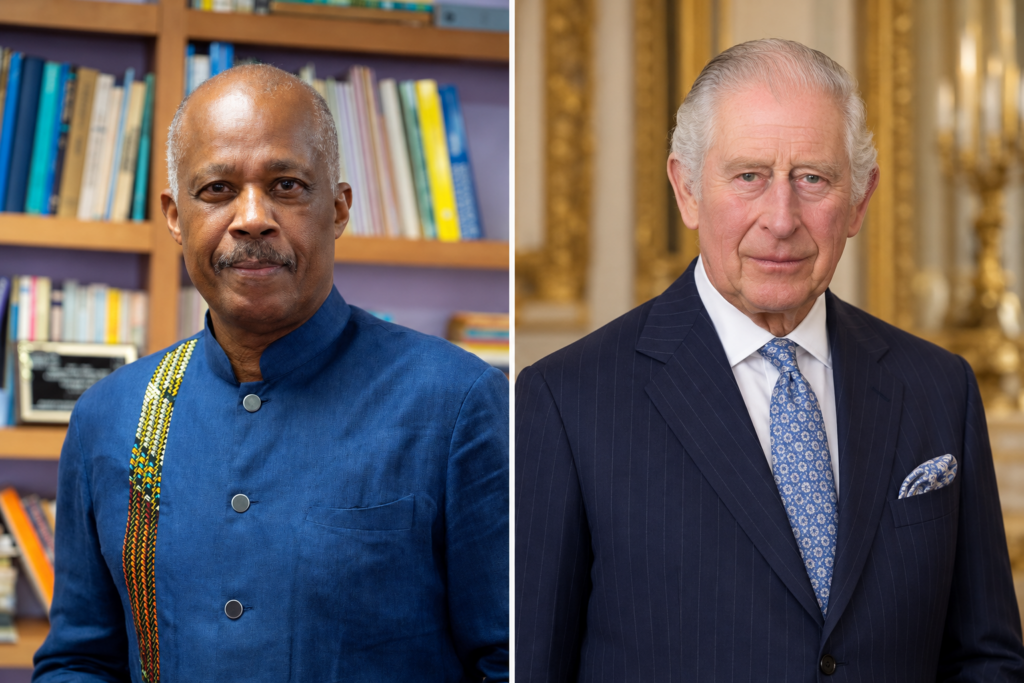
Just weeks before King Charles III is set to travel to the Caribbean for the Commonwealth Heads of Government Meeting (CHOGM) hosted by Antigua and Barbuda, the chair of the CARICOM Reparations Commission has issued a deeply personal, unorthodox call to the British monarch that deliberately sidesteps his formal institutional titles. Delivering remarks at a Thursday press briefing, Sir Hilary Beckles explained that he was not reaching out to the King in his official capacity as Head of the Commonwealth or as the constitutional sovereign of multiple Caribbean realms, but rather to Charles Windsor the private individual. “I am speaking to a father, a grandfather, a man who now has the space to reflect on the centuries-long history of his own family’s legacy,” Beckles told assembled reporters. “We are calling on him as a fellow human being, as a brother, to step forward and exercise moral leadership over the Commonwealth, the intergovernmental body he presides over.” Beckles went on to frame the Commonwealth as an institution rooted in the historical atrocity of transatlantic chattel slavery, noting that the bloc was built in large part from territories that were exploited and brutalized under that system. He argued that the Commonwealth now has a unique opportunity to rebrand itself as a global beacon of human justice, and that CARICOM is aligned with the African Union and other allied groups to push for full reparatory justice for communities that endured what he described as the worst crime against humanity of the modern era. Eric Phillips, lead representative of the Guyana Reparations Committee, echoed Beckles’ appeal, noting that King Charles’ decades of public advocacy for environmental stewardship and protection of the natural world demonstrate his commitment to collective care. Phillips added that the African descendant communities of the Caribbean are an inextricable, sacred part of that global ecosystem the King has dedicated much of his life to safeguarding, making his leadership on reparations a natural extension of his long-held values.
Sir Hilary Beckles urges King Charles to lead on reparatory justice ahead of Antigua and Barbuda summit