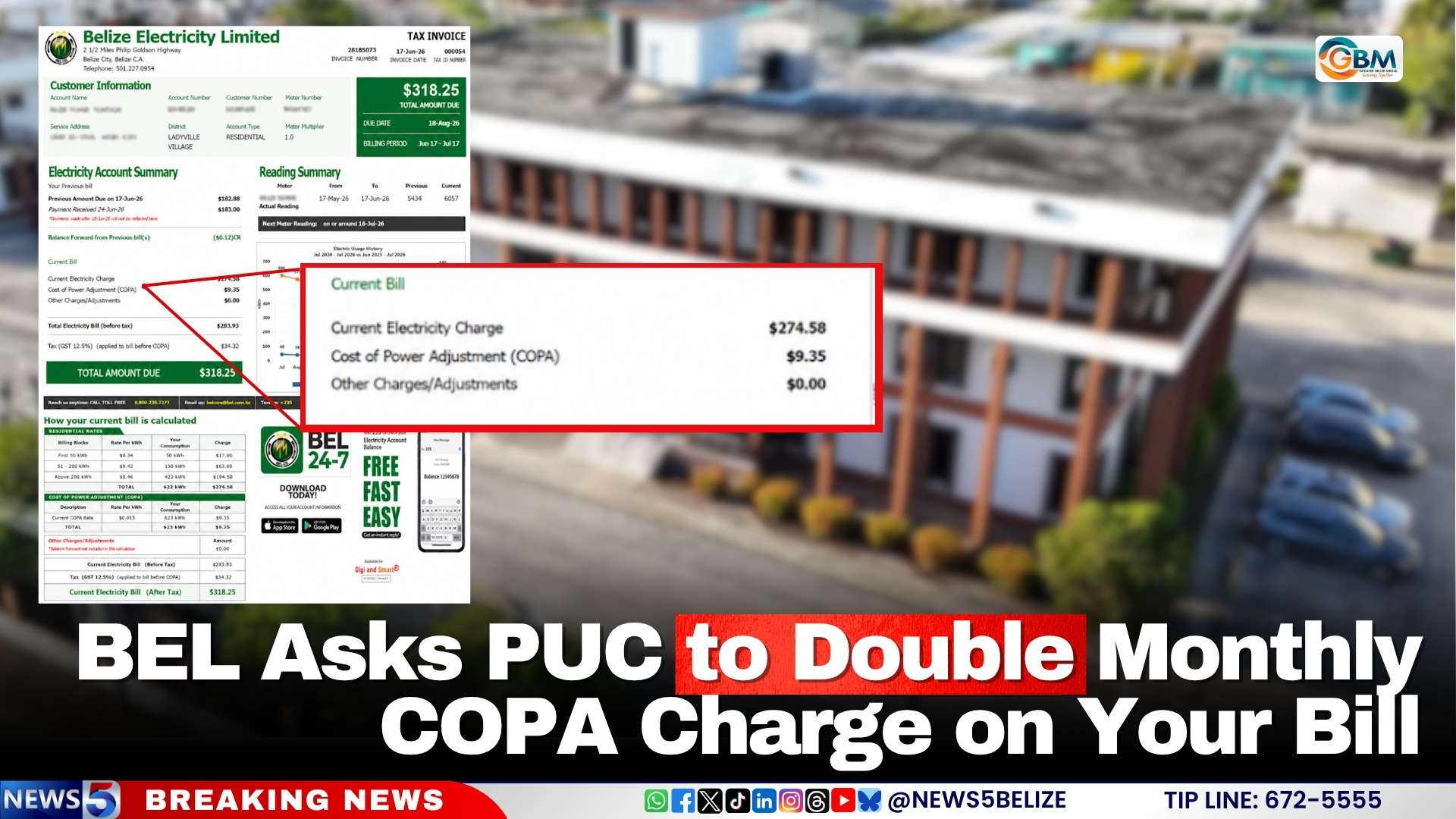
On October 23, 2026, Belize Electricity Limited (BEL) Executive Chairman Lynn Young submitted a formal petition to the Public Utilities Commission (PUC), the national utility regulator, requesting to raise the maximum allowable Cost of Power Adjustment (COPA) surcharge on residential and commercial customer bills from 5% to 10% – effectively doubling the current monthly cap. If approved, the per-kilowatt-hour (kWh) maximum adjustment will jump from approximately 1.5 cents to 3 cents per kWh, translating to a $3 increase in the monthly COPA line item for the average household consuming 200 kWh of power per month, from the current $3 to $6. Households eligible for the social tariff, which applies to users consuming 60 kWh or less monthly at a fixed 22 cent per kWh rate, remain fully exempt from all COPA charges. First launched by the PUC in July 2026 as a 12-month “regulatory sandbox” pilot framework, COPA was designed to keep base electricity rates stable, while permitting BEL to pass fluctuating power procurement and generation costs directly to customers via a transparent, separate line item on monthly bills, with no General Sales Tax applied to the surcharge. The mechanism was structured with a 5% monthly cap to prevent sudden, unmanageable cost spikes for end users. However, BEL reports that it has hit the existing 5% cap every single month since the pilot launched, with required actual adjustments far outstripping the allowed limit: 4.98 cents per kWh for August, 6.27 cents for September, 8.02 cents for October, and 10.67 cents for November, compared to the permitted 1.51 cent per kWh cap. This cumulative gap has left the utility with an estimated $16.86 million in unrecovered power-related expenses over a four-month period. BEL attributes the steep cost overruns to three overlapping market pressures. First, wholesale power imported from Mexico’s state-owned utility CFE has surged in price, climbing from an average 17.1 cents per kWh in January 2026 to a peak of 62.4 cents per kWh in September, before moderating to 33.1 cents per kWh in October. Second, national hydroelectric output has only reached 80.97 gigawatt-hours, falling well short of the 100 gigawatt-hour threshold that would trigger a discounted hydro power rate, dropping costs from 26 cents per kWh to roughly 10 cents per kWh. Third, BEL remains bound by existing contracts for rented temporary generation capacity running through April 2027, required to offset 24 separate unplanned CFE power supply interruptions recorded across August and September 2026. The PUC has a documented history of pushing back against unstructured cost recovery requests from BEL. In July 2026, the regulator rejected an earlier proposal from the utility to roll accumulated unrecovered expenses into future monthly COPA charges, warning that the move would eliminate any possibility of customer rebates when power market costs eventually decline. The PUC noted at the time that such a modification would render the COPA pilot unfit for its original purpose, and that a formal, transparent fixed base rate increase would be a far clearer alternative for consumers. The regulator also previously faulted BEL for strategic missteps between 2023 and 2025, noting that actual power procurement costs ran 19% to 14% higher than the levels embedded in approved base rates, a gap the utility chose not to address by pursuing scheduled rate adjustments at the time. The PUC further criticized BEL for failing to implement a planned demand-side usage charge, despite having invested more than $40 million in rolling out smart metering infrastructure across the customer base. Per the original COPA sandbox rules, the PUC holds full authority to modify or suspend the entire program if repeated breaches of the 5% cap demonstrate the original framework is no longer functional. The petition to double the COPA cap is now under formal review, with the PUC’s final decision set to determine whether the $16.86 million accumulated cost shortfall is recouped from customers immediately, or deferred to the next scheduled full national electricity rate review in 2027.