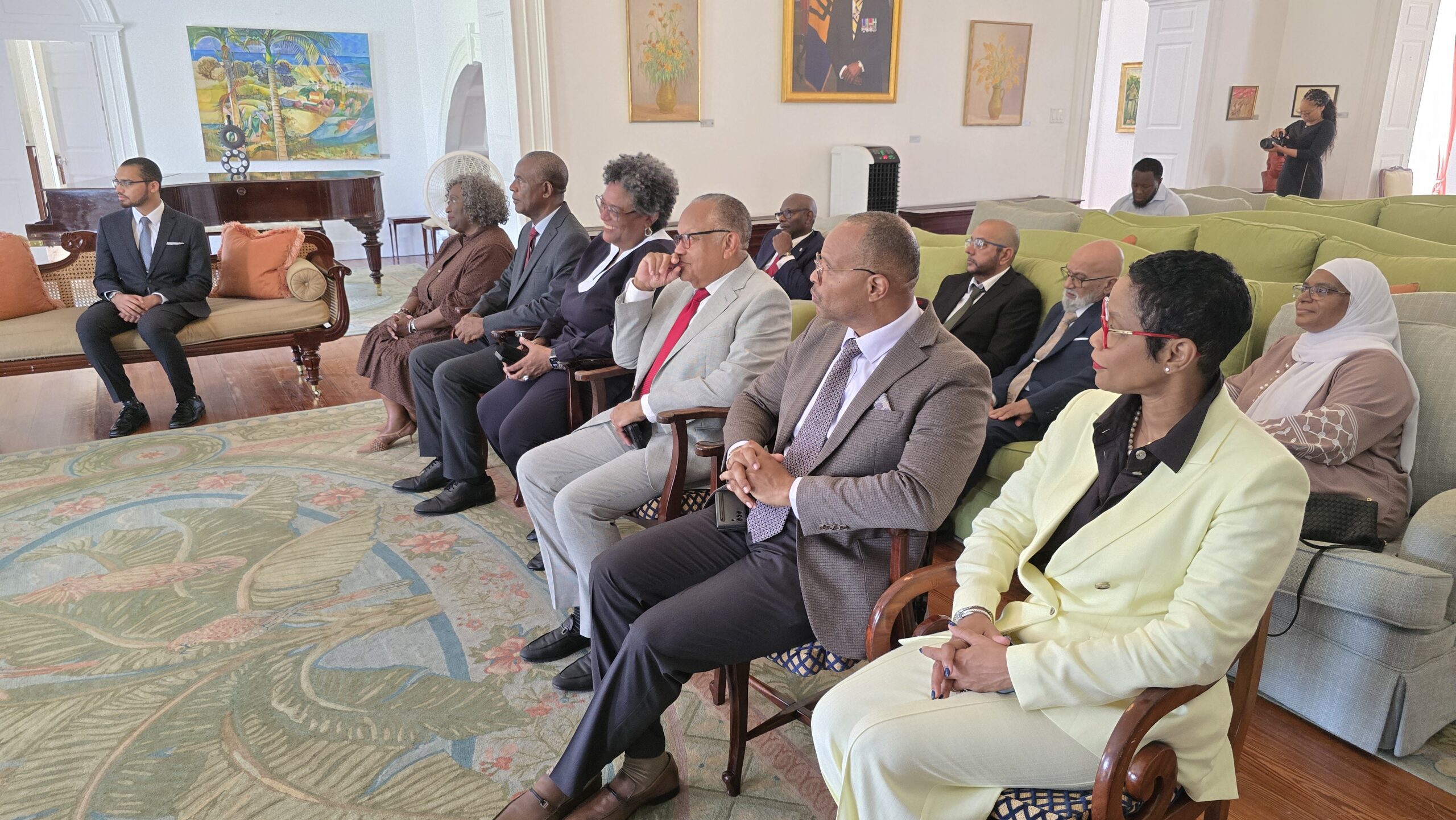
During an official swearing-in ceremony held at Barbados’ State House on Tuesday, Prime Minister Mia Mottley formally welcomed 23-year-old Khaleel Kothdiwala as the youngest sitting member of the Caribbean nation’s Senate, while signaling a series of upcoming structural and personnel adjustments to the Upper Chamber in the months ahead. Kothdiwala’s historic appointment breaks a decades-long record set by former senator Damien Griffith, who took office at age 24 in February 2008, and pushes past a prior 2022 nomination attempt that was blocked when proposed constitutional amendments to lower the minimum age for senate service failed to garner the required legislative support. Mottley emphasized that the government chose to respect the Senate’s formal rejection of that earlier proposal rather than pursue procedural workarounds, noting that Kothdiwala’s subsequent overseas academic pursuits and the upcoming departure of sitting Senator Roshanna Trim for a diaspora engagement posting in the United Kingdom created the opening for his current, fully compliant appointment. The prime minister, who herself entered the Senate at 25 in 1991 as one of two opposition representatives handling the shadow portfolio for culture and community development, laid out a sweeping vision for centering young voices in national governance, arguing that any citizen old enough to cast a vote at 18 should also be eligible to run for public office, a principle she intends to codify in Barbados’ upcoming new national constitution. Mottley revealed that three members of the government’s Senate caucus are now under the age of 35, a cohort joined by additional young appointees selected by the nation’s president, as part of a deliberate strategy to build mentorship pipelines and smooth leadership transitions for generations that will soon bear responsibility for addressing the country’s most pressing challenges. She contextualized this push for youth representation against a fraught global landscape where autocratic regimes now outnumber democratic systems, warning that Barbados must cultivate a new cohort of leaders with a grounded understanding of good governance to safeguard the country’s democratic sovereignty. Mottley outlined three interconnected existential threats facing small island nations like Barbados: eroding national sovereignty in an unequal global order, escalating climate change impacts, and unregulated artificial intelligence development that poses systemic risks to humanity, alongside domestic priorities including boosted national productivity, reformed public services, and coordinated action to reduce rates of chronic non-communicable diseases, improve community safety, and mitigate regional conflict. She urged Kothdiwala to view his Senate tenure as a hands-on learning opportunity to build cross-cutting policy expertise across sectors ranging from finance and public health to environmental stewardship and national security, advising him to remain patient through slow bureaucratic processes rather than growing disillusioned when change does not unfold at the pace he anticipates. The Senate, a 21-member appointed body with five-year terms, was established in 1964 to replace the colonial-era Legislative Council, a governing body dominated by the white planter and merchant class that held sweeping powers to veto legislation and control public spending. The restructured Upper Chamber was stripped of those unilateral authorities and placed under the oversight of the national cabinet as part of Barbados’ gradual move toward full self-governance. Prior to Kothdiwala’s appointment, the title of youngest senator in Barbados’ history was held by David Commissiong, who was named to the chamber at age 26 by then-Prime Minister Errol Barrow in May 1986. Mottley confirmed that additional, unspecified changes to the Senate’s composition and operations will be rolled out in coming months, with full details to be released at an appropriate future juncture.