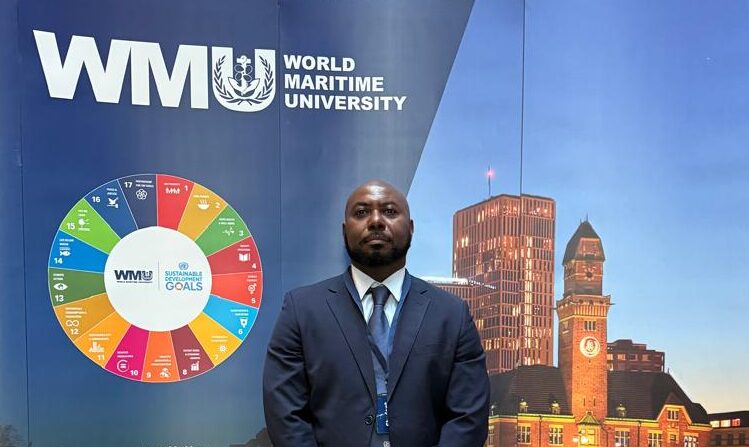
A decades-long veteran of Grenada’s maritime sector has reached a major academic milestone that is set to accelerate the Caribbean nation’s push for a sustainable, competitive blue economy. Ian Noel, a maritime professional with over 30 years of frontline and regulatory experience across the industry, has successfully completed a Master of Science in Maritime Affairs, with a specialized focus on Maritime Energy Management, at the World Maritime University (WMU) based in Malmö, Sweden, for the 2025–2026 academic year.
Noel’s professional background spans nearly every critical domain of maritime operations. He has held key roles ranging from deep-sea seafaring and ship pilotage to port management, maritime safety oversight, vessel inspections, and marine accident probes. Currently, he serves as Class I Marine Pilot and Cruise Terminal Operations Supervisor at the Grenada Ports Authority, while also holding multiple regulatory and intergovernmental appointments for the Grenadian government: Flag State Surveyor, Port State Control Inspector, and Marine Accident Investigator. Beyond national roles, he acts as Grenada’s official Focal Point to the Organisation of Eastern Caribbean States (OECS) Ocean Governance Team, Deputy Chair of Grenada’s National Coastal and Ocean Governance Committee, and a national delegate to meetings of the International Maritime Organisation’s (IMO) Marine Environment Protection Committee (MEPC) and its Intersessional Working Groups (ISWG).
The specialized master’s curriculum Noel completed was tailored directly to the most pressing shifts in the global maritime industry. Coursework covered core topics including international maritime law, IMO institutional governance, maritime economics, energy-efficient vessel operations, energy management for ports and onshore maritime facilities, low-carbon alternative marine fuels, maritime renewable energy technologies, and frameworks for equitable sustainable maritime development.
This new qualification comes at a pivotal moment for both global shipping and Grenada’s national development goals. As the international shipping sector undergoes a rapid transition to align with strict new global environmental regulations, adopt new low-carbon technologies, and cut operational emissions to meet global climate targets, specialized expertise in maritime energy management has never been more valuable for national maritime administrations and port operators. For Grenada, which has prioritized growing its blue economy as a core national development strategy, Noel’s advanced training directly fills a critical capacity gap.
In comments following the completion of his degree, Noel emphasized how the program deepened his insight into the fastest-evolving areas of global shipping. “This programme has enhanced my understanding of key developments in international shipping, particularly energy management, environmental regulation and emerging technologies,” he said. “The knowledge gained will support efforts to improve port efficiency, strengthen maritime governance and advance Grenada’s blue economy through informed, standards-based decision-making.”
Noel also publicly thanked the two senior officials who helped make the academic opportunity possible: Javan Williams, former Permanent Secretary of Grenada’s Ministry of the Blue Economy and Marine Affairs, and Jerry Jermain Enoe, Grenada’s Ambassador and Special Envoy for Oceans. “I am particularly grateful to Permanent Secretary Javan Williams and Ambassador Jerry Enoe for their support and assistance in making this opportunity possible. Their commitment to strengthening technical capacity within Grenada’s maritime sector is greatly appreciated, and I intend to ensure that the knowledge gained contributes meaningfully to the continued development of our maritime industry,” Noel added.
Grenada’s strategy to build a competitive, sustainable blue economy relies on four foundational pillars: efficient port infrastructure, reliable maritime transport connectivity, modern shipping services, and robust institutional capacity to regulate and manage an increasingly complex sector. Noel’s specialized postgraduate training directly strengthens national capacity to advance core priorities including port modernization, widespread adoption of maritime energy efficiency measures, deployment of cleaner shipping technologies, and planning for climate-resilient maritime infrastructure.
This latest degree adds to Noel’s already impressive academic and professional credentials. He previously holds a master’s degree in Logistics and Supply Chain Management, alongside professional certifications in port management, naval architecture, and marine surveying. The combination of his decades of hands-on operational experience, long-standing engagement with international maritime regulatory processes, and advanced specialized academic training positions him to make significant contributions to advancing maritime safety, port development, global environmental compliance, and sustainable blue economy growth across Grenada.