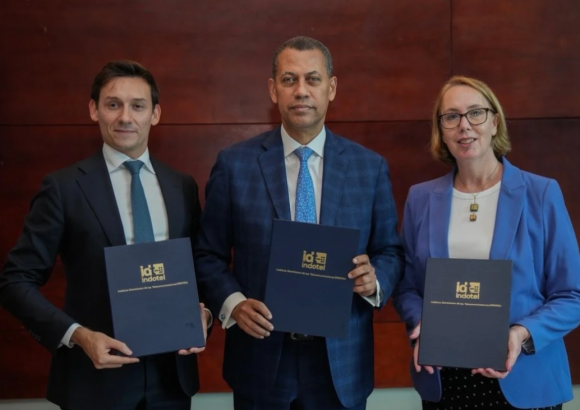
A new partnership between the Dominican Institute of Telecommunications (Indotel) and Swedfund, Sweden’s state-owned development finance institution, is set to strengthen the Caribbean nation’s telecommunications regulatory infrastructure, thanks to a recently signed grant agreement worth roughly 44 million Dominican pesos.
The funding will be directed toward two key priority projects within the Dominican telecom sector. First, it will cover the costs of developing Indotel’s 2027–2031 Master Plan for the Use and Administration of the Radio Spectrum, a foundational strategic document that will shape the country’s spectrum management for the next five years. Second, the grant will support the drafting of updated regulatory frameworks governing satellite-based communication services.
Guido Gómez Mazara, president of Indotel’s board of directors, explained that the upcoming master plan will deliver clear, long-term value for both the public and private telecom sectors. By outlining official priorities for the 2027–2031 period, mapping out existing and future frequency demand across all user groups, and establishing consistent, evidence-based guidelines for spectrum allocation and use, the plan will cut through technical uncertainty for industry stakeholders. This improved clarity, in turn, will create a more stable and attractive environment for private investment in the country’s telecom ecosystem.
Gómez Mazara also emphasized the growing strategic importance of satellite technology in closing the Dominican Republic’s digital divide. For remote, rural, or geographically challenging communities where building terrestrial communication infrastructure such as fiber-optic cables or cell towers is prohibitively expensive or logistically unfeasible, satellite services offer a viable pathway to connect unconnected populations. Beyond closing connectivity gaps, satellite networks also serve as a critical resilience backup during natural disasters and emergencies, when ground-based infrastructure is often damaged or disabled.
The new regulatory framework for satellite services being developed under the grant will address core operational priorities. It will establish clear rules to prevent harmful radio frequency interference between different users of the spectrum, ensure that satellite services can operate smoothly alongside existing terrestrial and other communication networks, and lay the groundwork for a market that encourages sustained private investment, healthy competition between providers, and robust protections for end consumers.
For additional coverage of local Dominican current events and industry developments, visit DominicanScope.