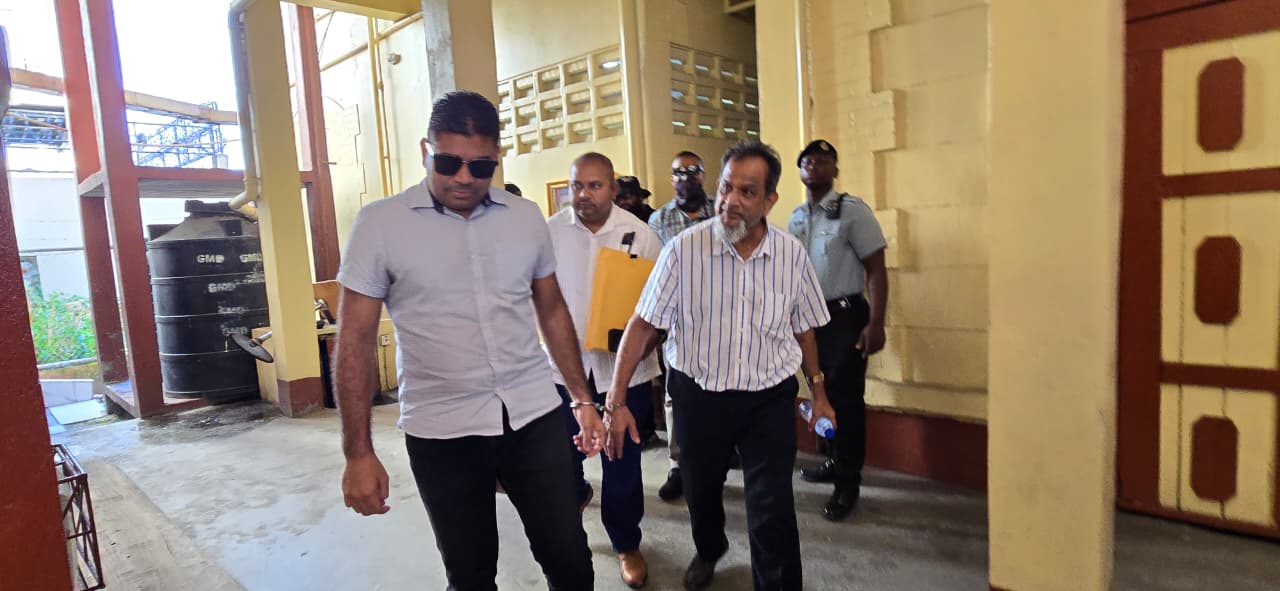
A high-stakes legal clash over the extradition of two Guyanese billionaire businessmen, father and son Nazar “Shell” Mohamed and Azruddin Mohamed, who are wanted by United States authorities, has unfolded before Guyana’s Court of Appeal, with prosecutors and defence counsel clashing sharply over the validity of American reassurances against re-extradition to a third nation.
The pair stand accused by a US Grand Jury in an 11-count indictment of involvement in wire fraud, mail fraud and money laundering connected to their gold trading operations, specifically for improper gold sales routed through Dubai. The US Treasury Department has already imposed sanctions on the Mohameds, alleging they intentionally evaded gold export taxes owed to the Guyanese government. American authorities are seeking to extradite the men to stand trial in a federal court based in Florida.
At the core of the legal standoff is a dispute over the terms of the 150-year-old extradition treaty between the United States and the United Kingdom, which Guyana inherited upon gaining independence from British rule in 1966. Defence barrister Roysdale Forde, arguing on behalf of the Mohameds, has challenged the legality of the extradition process, arguing that the US diplomatic assurance banning re-extradition to a third country carries no legal weight under Guyanese law.
Forde stressed that the existing bilateral extradition framework does not include any provisions allowing for informal diplomatic assurances to override statutory requirements. He also pointed to a critical timing discrepancy: the US issued its non-re-extradition assurance in early December 2025, two full months after Guyana’s Home Affairs Minister Oneidge Walrond granted Chief Magistrate Judy Latchman authorization to move forward with the extradition hearing in October 2025. Under Guyana’s Fugitive Offenders Act, all required legal arrangements must be finalized at the time a suspect is taken into custody, Forde explained, meaning the belated assurance cannot meet the law’s requirements. He added that the Act requires explicit statutory provision and ministerial approval for extradition to any third country, a framework that simply does not exist in this case.
The Mohameds have also launched a broader constitutional challenge to multiple provisions of the Fugitive Offenders Act, arguing the clauses violate their constitutional rights to personal liberty, freedom of movement, and equal protection under the law. Attorney General Anil Nandlall, leading the case for the Guyanese government, pushed back against these claims, telling the court the defence has failed to demonstrate how any of the Mohameds’ constitutional rights would actually be infringed by the extradition process.
Nandlall clarified that the longstanding bilateral US-UK extradition treaty only allows for extradition directly to the requesting state (the United States in this case), with any person extradited required to be returned to Guyana after their legal process concludes. He emphasized the agreement is strictly bilateral, with no room for third-party extradition outlined in its text. The Attorney General further noted that the Caribbean Court of Justice (CCJ) has previously ruled that diplomatic agreements between sovereign states, such as the non-re-extradition assurance provided by the US, are legally enforceable under international law. On the global diplomatic stage, nations operate on principles of comity, good faith and established propriety that they do not depart from, Nandlall told reporters outside the court. He added that combined with the terms of the treaty, the explicit US assurance eliminates any legitimate risk of re-extradition that the Mohameds have cited in their challenge.
Chancellor of the Judiciary Roxane George-Wiltshire, who presides over the Court of Appeal, has not yet scheduled a release date for the court’s ruling, noting that the bench requires sufficient time to review the more than 2,000 pages of legal submissions submitted by both parties. Even after Chief Magistrate Latchman concludes her extradition hearing, she will not be able to issue a ruling on whether the Mohameds will be committed for extradition until the Court of Appeal delivers its judgment. If the final ruling goes against the businessmen, they will still retain the right to launch a subsequent appeal against the magistrate’s decision.