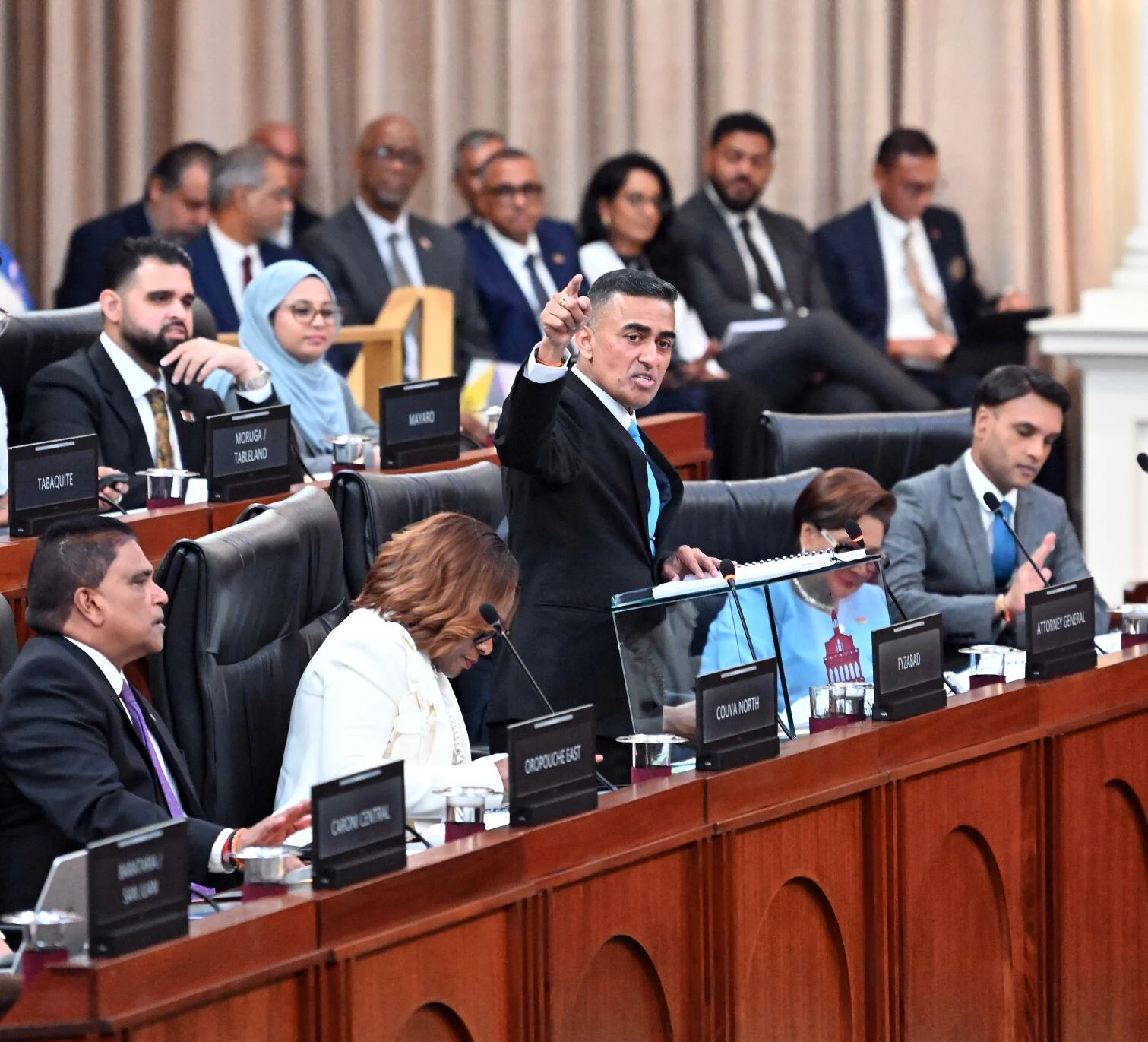
On a historic parliamentary sitting at Port of Spain’s Red House, Trinidad and Tobago’s Finance Minister Davendranath Tancoo presented a $63.368 billion 2027 national budget centered on a progressive framework: putting more disposable income into the pockets of low-income and vulnerable citizens while expanding revenue collection from high earners, large businesses and heavy consumers.
Titled “A People-Centred Approach: Investing in Communities, Transforming the Economy and Securing a Sustainable Future”, Tancoo’s two-and-a-half hour budget address laid out targeted relief for groups that have gone more than a decade without financial support, paired with long-term investments in youth development, public services and accessible wealth-building opportunities. Before the presentation, Prime Minister Kamla Persad-Bissessar joined Tancoo to unveil the official budget statement to assembled lawmakers and onlookers.
Built on conservative commodity price assumptions aligned with ongoing global market volatility, the 2027 budget pegged benchmark oil prices at US$77 per barrel—an upward adjustment from the 2026 budget’s US$73.25 projection—and natural gas prices at US$5 per MMBtu, up from 2026’s US$4.25. Total projected revenue for the fiscal year stands at $59.729 billion, with total expenditure reaching $63.368 billion, resulting in a projected fiscal deficit of $3.639 billion. The largest three budget allocations prioritize core public services: $8.061 billion for health, $8.033 billion for education and training, and $7.321 billion for national security.
For the nation’s sister island Tobago, the government earmarked a total combined allocation of $3.473 billion for fiscal 2027—equal to 5.48% of the entire national budget. This includes $2.756 billion allocated directly to the Tobago House of Assembly, plus an additional $716.5 million for cross-ministerial projects and services benefiting Tobago residents.
Opening the most impactful provisions for vulnerable households, Tancoo announced a $250 monthly increase to three core social assistance grants, marking the first raise for these groups in 12 years, since the first Kamla Persad-Bissessar administration. The increase will go into effect January 1, 2027, benefiting roughly 124,000 senior citizens receiving the Senior Citizens’ Grant, 13,637 families on Public Assistance, and 28,000 adults and children eligible for Disability Assistance. The additional support will cost the national treasury an estimated $555 million annually, a cost Tancoo defended as a critical investment in the nation’s most financially vulnerable citizens.
Retirees will also receive targeted tax relief, with the annual personal tax allowance for eligible retired public officers and qualifying pensioners rising from $90,000 to $102,000, effective January 2027. This adjustment will provide a total of $11 million in collective tax relief, allowing pensioners to keep an extra $12,000 in annual pension income before crossing the taxable threshold. The change follows the 2026 fiscal policy decision to make all private pensions fully tax-free, and addresses longstanding concerns from retired public servants who continued to face tax liabilities on higher pension incomes.
Young people are a core focus of the budget’s transformative investments, with new funding allocated to expand technical vocational education and training (TVET) in secondary schools and introduce paid work experience programming. A $16.3 million investment will upgrade workshops, provide new equipment and distribute practical learning materials across 56 secondary schools, with 22 institutions prioritized for full infrastructure upgrades. The funding will expand training access for students in high-demand trades including carpentry, plumbing, electrical technology, welding, automotive repair, air conditioning and refrigeration, agriculture, computer-aided design and steelpan manufacturing, while also supporting teacher training, curriculum development and career guidance services.
For students aged 16 and older, the new $2 million Real Experience and Development for Youth (READY) programme will place approximately 1,300 participants in four-week paid internships during the 2027 July-August school break. Interns will be placed with government ministries, the Tobago House of Assembly and participating private sector organizations, earning a $1,500 stipend while gaining training in workplace ethics, financial literacy, entrepreneurship and job search skills. For young people interested in agriculture, the government will expand the existing Agricultural Internship Programme from 30 to 100 spots, offering hands-on experience in farming, agro-processing, agricultural technology and distribution, with exploratory support for interns looking to launch their own agricultural businesses. A new Farm Business Formalisation Programme will also provide registered farmers with a one-stop service for land tenure clarification, business registration, financial management training and access to financing.
To expand accessible wealth-building opportunities for ordinary citizens, the government introduced two new retail bond initiatives designed to open up government securities investment to small-scale investors. The Government Savings Bond Programme will allow individuals to invest in amounts starting as low as $1,000, with options for fixed interest rates, varying maturity terms and investments in both local and US currency. A separate Retail Government Securities Programme will offer bonds in small denominations starting at $5,000, held electronically via the Trinidad and Tobago Central Depository and listed on the local stock exchange. Exact interest rates and official launch dates have not yet been announced.
To offset the cost of targeted relief and expand overall national revenue, Tancoo announced a series of new revenue measures aimed at high consumers, large businesses and importers, alongside tighter tax enforcement to close longstanding loopholes. Key measures include a new surcharge for households consuming more than 3,000 kilowatt-hours of electricity per billing period, higher customs duties for high-value imported alcoholic beverages under a revised classification system, and increased Motor Vehicle Tax rates for owners and importers of classic, antique and vintage vehicles. Adjustments to the broader tax regime will also increase contributions from petroleum companies, large businesses and non-resident investors. To crack down on tax evasion, the budget introduces mandatory electronic tax filing, stiffer penalties for false customs declarations, and stricter oversight of businesses using loopholes to reduce their tax liabilities.
In a notable relief for motorists, Tancoo confirmed that the government would maintain the current price of super gasoline, absorbing higher international oil price pressures rather than passing costs directly to consumers. Throughout his address, Tancoo repeatedly emphasized the government’s delivery on campaign commitments, repeating the refrain: “We promised. We delivered. More to come!” Following the presentation, Prime Minister Persad-Bissessar publicly congratulated Tancoo on the budget framework, capping a day of political activity that saw lawmakers greeting supporting constituents gathered outside the Red House.