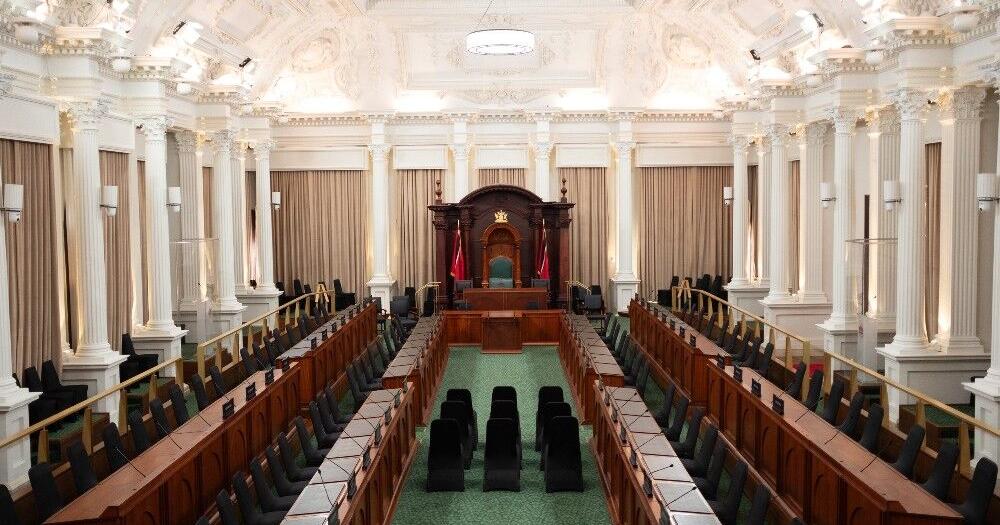
A sweeping package of local government reforms that will reshape Trinidad’s municipal governance landscape took a key step forward this week, after the Municipal Corporations (Amendment) Bill, 2026 was formally tabled before the country’s House of Representatives. The legislation, which is scheduled to open for floor debate tomorrow, includes 15 clauses and only requires a simple majority vote to pass, with its official implementation date to be set via presidential proclamation once approved.
The proposed changes were first previewed exclusively by *The Express* yesterday, which confirmed the government’s plan to expand the total number of municipal corporations across the country from the current 14 to 17. Prime Minister Kamla Persad-Bissessar later backed this report, publicly confirming the restructuring and framing the overhaul as a necessary correction for deep inequities embedded in the existing local government framework.
One of the most consequential provisions included in the tabled bill, outlined in Clause 9, introduces a controversial anti-defection rule that directly ties an elected representative’s hold on office to their continued party membership. Under the new rule, any elected councillor or appointed alderman who either resigns from or is expelled by the political party on whose ticket they won office will immediately forfeit their seat. The process requires formal written notification: resignations must be documented via a signed notice from the officeholder submitted to their party, while expulsions require a written notice from the party delivered to the member. A certified copy of the notice is then sent to the municipal corporation’s chief executive officer, who passes it to the mayor. The mayor is required to convene a special council meeting within seven days to table the notice and formally declare the seat vacant. If the meeting is not held within the seven-day window, the seat automatically becomes vacant once the period expires.
The bill also addresses a longstanding procedural gap by establishing a clear framework for resolving deadlocks in mayoral and deputy mayoral elections. If a vote for either leadership position ends in a tie, the new rules prioritize the overall popular vote result for the municipality. In cases where a deadlock occurs at the start of the election process over selecting a presiding officer, the role goes to a councillor or alderman from the party that won the highest total number of valid votes in the municipality’s local election; that presiding officer is barred from running for mayor or deputy mayor. If a final vote for the leadership position ends in a tie, the presiding officer must cast a tie-breaking vote in favor of the candidate backed by the party that won a majority of valid votes in the general local election. If no party crosses the 50% threshold, the rule defaults to plurality, meaning the party that received more votes than any other is deemed the majority for this purpose. All determinations of vote totals must be based on official results certified by the Elections and Boundaries Commission (EBC), and the same process applies to deputy mayoral elections.
Another key change updates the rules for alderman appointments, granting political parties full flexibility to revise their alderman candidate lists at any point, both before and after formal appointments are finalized. Parties can add, remove, or substitute names, or adjust the order of preference on their lists at will. A mandatory revision is also required if an alderman dies, leaves the party, formally withdraws their support for the party, or becomes disqualified from serving. In these cases, parties have seven days to submit an updated list to the EBC, which automatically replaces all previous versions and becomes the official document used for alderman selection and appointment.
To smooth the transition caused by the restructuring, the bill protects existing labor rights for municipal workers affected by boundary and organizational changes. Clause 15 guarantees that current collective bargaining agreements for employees at the reorganized San Juan/Laventille, Tabaquite/Talparo and Tunapuna municipal corporations will remain in full force after the reforms take effect.
The legislative overhaul comes in advance of the 2027 Trinidad local government election, the next scheduled poll after the 2023 vote held on August 14. The 2023 election maintained the status quo of the 2019 poll, resulting in an even split of the 14 existing municipal corporations between the country’s two major parties: the United National Congress (UNC) and the People’s National Movement (PNM) each controlled seven bodies. Once the reforms are implemented, all 17 newly restructured municipal corporations will be contested in the upcoming 2027 election.
Beyond the procedural changes for representatives and deadlock resolution, the bill redraws Trinidad’s entire municipal map. In addition to expanding the total number of corporations, the legislation formally establishes Chaguanas as a full city, creates three new boroughs (Barataria, Couva, and St Augustine), and converts the existing Sangre Grande Regional Corporation into a borough. Two existing regional corporations will also be renamed and restructured: the current Tunapuna/Piarco Regional Corporation will become the Tunapuna Regional Corporation, while the Couva-Tabaquite-Talparo Regional Corporation will be reorganized into the Tabaquite/Talparo Regional Corporation. The final restructured framework will consist of three cities (Port of Spain, San Fernando, Chaguanas), eight boroughs, and six regional municipalities across Trinidad.