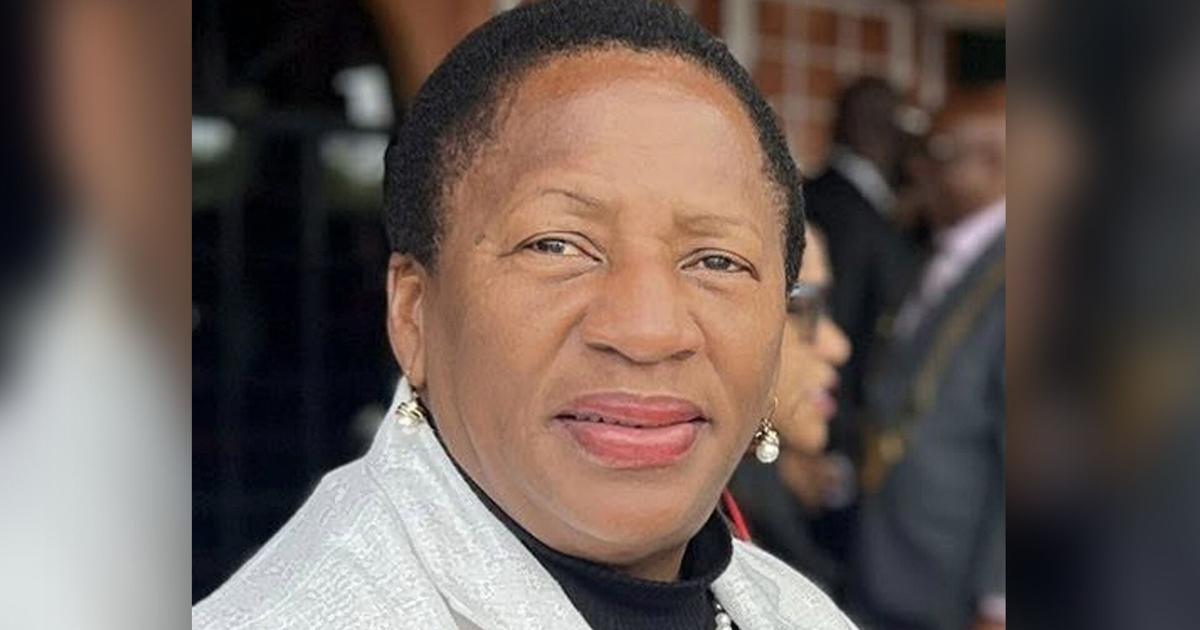
A brewing political controversy has emerged in Trinidad and Tobago over the ruling government’s plan to create three new municipal boroughs, with Opposition Leader Pennelope Beckles drawing sharp accusations of electoral manipulation against Prime Minister Kamla Persad-Bissessar. The plan, outlined in the 2026 Municipal Corporations (Amendment) Bill, was announced by the Prime Minister this past Sunday and formally introduced to Parliament this week. The legislation would establish the Boroughs of Barataria, St Augustine, and Couva as new local government entities.
In a scathing public statement, Beckles argued that the proposal is a clear attempt at gerrymandering the local government framework to benefit the ruling United National Congress (UNC). She claimed that the Prime Minister’s actions have reinforced a growing narrative that describes Persad-Bissessar as a ‘rolling dictator’, whose overarching goal is to reshape constitutional and electoral systems purely to shore up the UNC’s political power.
Beckles pointed out that all three regions selected for new borough status are currently represented by UNC members of parliament and have long been considered core political strongholds for the party. She questioned the extreme lengths the ruling party is willing to go to cling to power, saying the entire proposal raises serious questions about the government’s commitment to free and fair elections.
The Opposition Leader also raised pressing questions about the financial sustainability of the plan. She noted that funding for municipal corporations controlled by her party, the People’s National Movement (PNM), was already slashed dramatically in the 2025/2026 national budget. Creating three new boroughs will require hiring additional staff and expanding public service delivery, placing new demands on government coffers. Beckles asked pointedly: ‘Where will this additional funding come from?’ She argued that the inevitable outcome will be even deeper cuts to PNM-held municipalities, while the government creates three unnecessary new administrative entities solely for political gain.
Going further, Beckles accused the current government of being ‘out of control and hell-bent on creating a dictatorship in Trinidad and Tobago.’ Beyond the creation of new boroughs, she highlighted that the bill makes sweeping changes to the local government system: it redraws existing boundaries, reshapes electoral districts, and via Clause 4 of the legislation, grants national political parties far more control over the appointment of aldermen.
Beckles emphasized that the future of local democratic governance in Trinidad and Tobago requires far more public scrutiny than it has received to date. She reiterated that two core questions remain unanswered: how the government will pay for the additional staffing and operational costs of the new municipalities, and why national political parties should be granted expanded power over already appointed local representatives.
In closing, Beckles noted that PNM-led municipal corporations have already raised formal objections to existing funding cuts, and she called for transparent justification for the proportionality and necessity of the proposed changes. She argued that the government has failed to provide any clear public rationale for why these specific regions need new borough status, leading to only one conclusion: the entire plan is a naked power grab designed to skew the electoral system in the UNC’s favor.