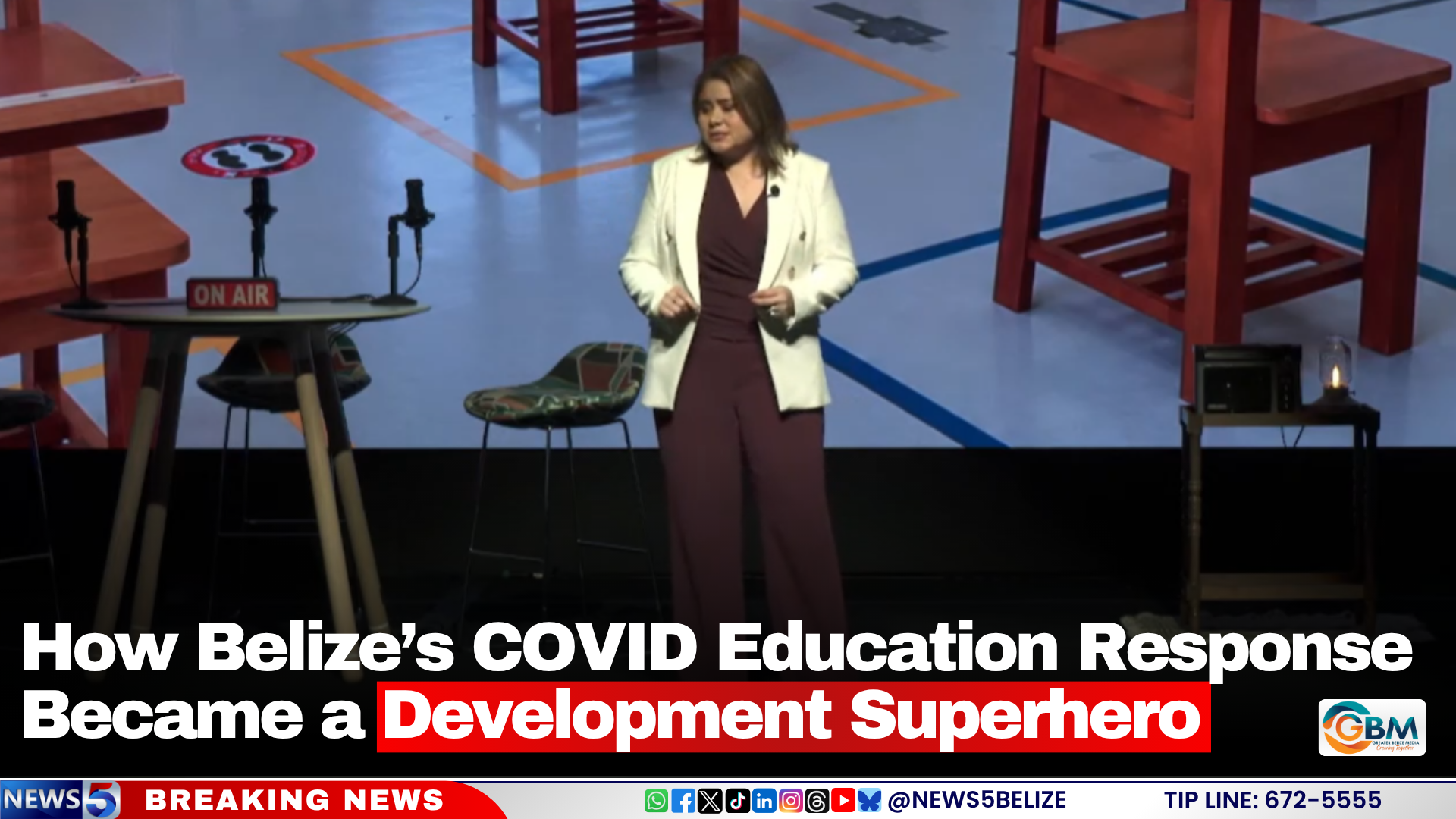
As countries around the globe continue to unpack the long-term lessons of the COVID-19 pandemic, one small Central American nation has emerged as a global stand-out for its innovative response to education disruptions. Belize has secured a place as one of just six finalists in the Inter-American Development Bank’s (IDB) 2026 Superheroes of Development competition, honored for reimagining its national teacher support model when pandemic-related school closures upended traditional learning systems.
Speaking at the competition’s presentation event, Ingrid Acosta, a representative from Belize’s Ministry of Education, Science and Culture, walked audiences through the crisis that forced the country to rethink a decades-old approach to teacher training. When the pandemic hit, teachers were abruptly thrown into uncharted territory: they were required to master new digital tools and remote learning methodologies almost overnight, all while continuing to meet the social and academic needs of vulnerable students. For years, Acosta explained, the default solution for teacher struggling had been one-off workshops that left little lasting change.
“Too often when our teachers struggle, the answer is another workshop. You attend, you go home. But the classroom, it stays just the same,” Acosta told attendees. Recognizing that traditional, one-time training could not address the urgent, ongoing needs of educators navigating a public health crisis, the ministry rolled out a fundamentally new model: hybrid ongoing coaching that combines in-person guidance with flexible virtual support. This model shifts away from passive instruction to active, on-the-job mentorship, meeting teachers where they are as they test new teaching strategies.
“Real transformation occurs when someone stands alongside a teacher and supports her as she tries something new,” Acosta said. The results of the program have exceeded even the most optimistic projections: internal data presented at the event shows that the share of teachers delivering consistent, high-quality lessons jumped dramatically from 30% pre-program to 73% after the coaching model was rolled out nationwide.
Beyond immediate improvements to classroom instruction, the initiative has left Belize with a durable, scalable public good: a cohort of trained instructional coaches and a replicable coaching framework that can be adapted to other public development programs. For the IDB, the Belize model stands as a powerful case study in adaptive development, demonstrating how local programs can pivot to meet unforeseen crises, design context-appropriate solutions, and leave behind actionable insights that benefit nations facing similar challenges.
Acosta emphasized that the success of the program debunks a common myth that educators are resistant to systemic change. She noted that teachers are eager to adopt new, more effective practices to support their students, but they need sustained, relevant support rather than disconnected training. “When we empower a teacher, we transform much more than a classroom. We help to transform society one classroom at a time,” she said. The three overall winners of the 2026 Superheroes of Development competition will be announced later the same day following all finalist presentations.