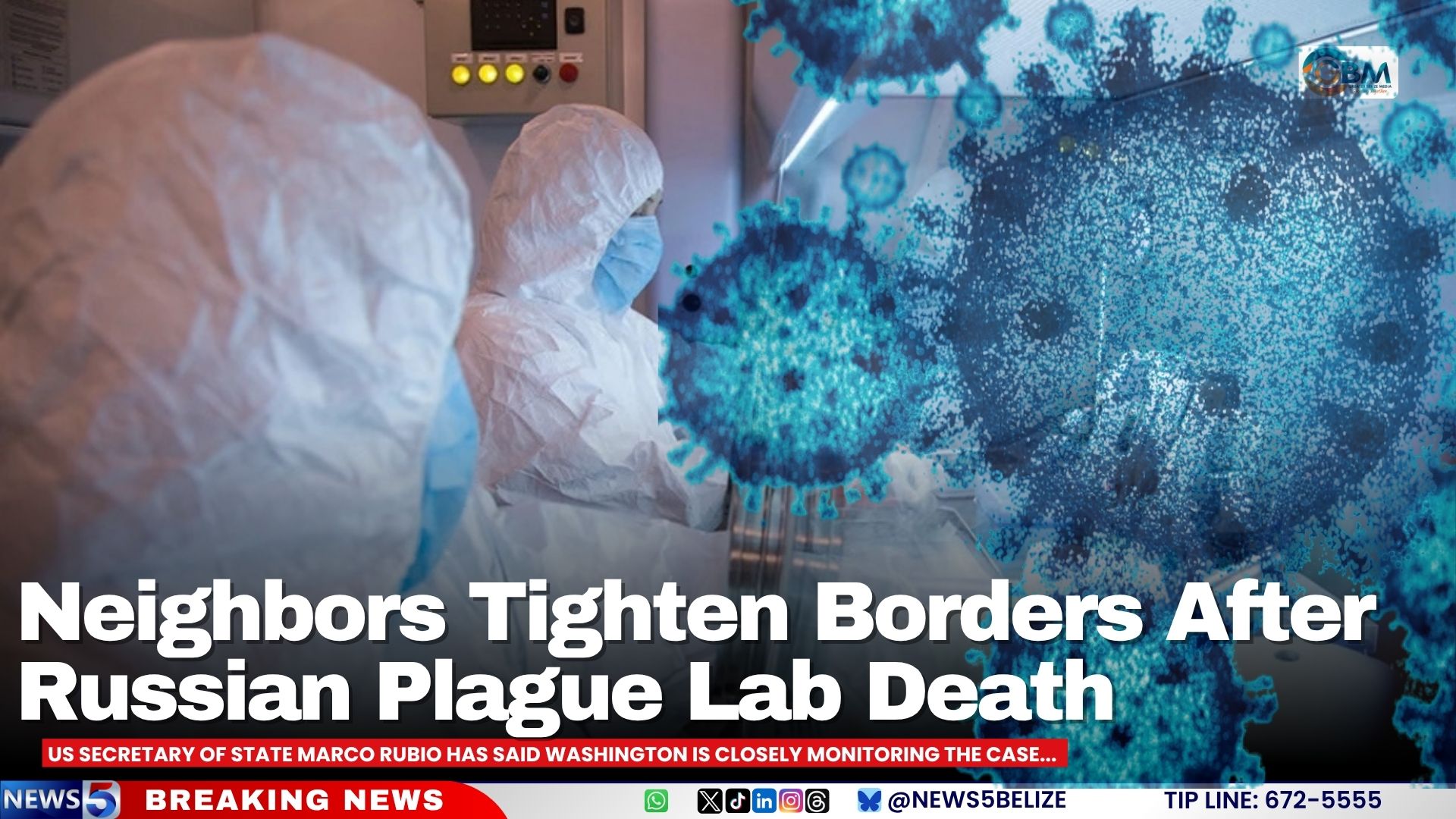
In the wake of the death of a 28-year-old researcher at a Siberian anti-plague research institute, multiple neighboring countries have ramped up public health protocols along their borders with Russia, despite official Russian statements insisting the death had no connection to any dangerous pathogen the scientist worked with, UK outlet The Sun has reported.
The researcher, identified by The Sun as Daria Shipilova, was employed at the Irkutsk Anti-Plague Research Institute serving Siberia and the Russian Far East. She died on October 2, according to unconfirmed reports that she suffered a fatal infection after accidentally breaking a glass vial holding live plague bacteria. Russian authorities have repeatedly pushed back on these claims, stating that the researcher died from pneumonia with an as-yet undetermined origin. To date, Russian officials have not confirmed the researcher’s name nor verified that any lab accident involving plague pathogens took place.
In response to widespread public concern over the incident, Central Asian states have moved quickly to implement preventive border measures. Kyrgyzstan has upgraded sanitary inspection protocols at all land border crossings with Russia, while Kazakhstan and Uzbekistan have rolled out targeted precautionary health checks for travelers entering from the affected region. Mongolia, which shares a long northern border with Russia, already maintains heightened health screening in all border adjacent areas, and has kept these precautions active following the news of the researcher’s death.
Russia’s federal public health watchdog Rospotrebnadzor released an official update over the weekend stating that exhaustive diagnostic testing found no trace of the pathogens the institute studies in the researcher’s samples. The agency has not yet announced a confirmed cause of death, nor has it acknowledged that any infectious disease outbreak linked to the lab is ongoing.
Biological security expert Dr. Andrew Weber, who has first-hand experience inspecting anti-plague laboratories across the former Soviet Union, told The Sun that global public health agencies should consider proactive screening for travelers arriving from the region, given Russia’s lack of a transparent explanation for the death. “If I were a public health authority in London, I would be monitoring flights and passengers coming from the region and screening them at the airport,” Weber said in his interview with the outlet.
The United States has also stepped in to monitor developments, with Secretary of State Marco Rubio confirming that Washington is keeping close track of the situation. The Sun reports that the Trump White House issued a brief statement confirming the administration is aware of the reported incident, actively monitoring updates, and assessing what policy or public health actions may be needed going forward.