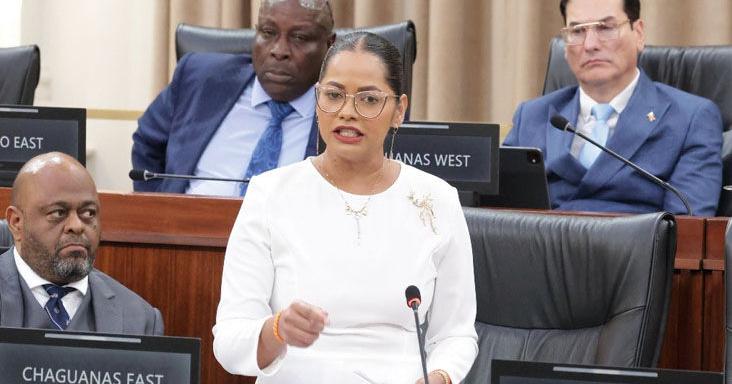
A sweeping new substance regulation law officially cleared Trinidad and Tobago’s Lower House this Wednesday, after heated parliamentary debate that highlighted a growing public health and safety crisis of underage substance abuse across the nation.
Minister of the People, Social Development and Family Services Vandana Mohit, who spearheaded the government’s defense of the bill, opened her remarks by revealing startling data on State-managed interventions for at-risk minors. Currently, 130 children are enrolled in support programs for marijuana misuse, 59 receive assistance for problematic alcohol use, and 38 are being supervised for co-occurring abuse of both substances. Of all minors struggling with addiction, 20 are participants in the specialized Children’s Drug Treatment Court program, all falling between the ages of 14 and 17.
At the core of the Miscellaneous Provisions (Alcohol, Cannabis, Dangerous Drugs, Gambling and Tobacco) Bill, 2026 are key adjustments to legal age limits: the bill raises the minimum legal age for purchasing and consuming alcohol and tobacco from 18 to 21, and pushes the legal age for cannabis use from 18 to 25. Mohit stressed that the legislation also updates the nation’s Children’s Act to strengthen protections for minors, arguing that early exposure to addictive substances creates lifelong harms that anchor cycles of criminality.
To underscore the urgent need for stricter age limits, Mohit shared firsthand case profiles of minors currently receiving State care for addiction and behavioral issues. One case involved a teen with frequent school suspensions, persistent marijuana use, and persistent aggressive, defiant conduct. Another described an adolescent with diagnosed conduct and cocaine use disorders, who experiences regular violent outbursts. Other cases ranged from teen gang affiliation, threats of violence against family members, and charges of property crime like housebreaking and larceny, all tied to underage substance abuse. She also directly linked last week’s violent riot at the National Care and Empowerment Centre (NCEC), a residential treatment facility for young people, to unaddressed substance addiction among residents, framing the unrest as a clear warning of the cost of delayed intervention.
The bill faced pushback during debate from Dr. Nyan Gadsby-Dolly, a former education minister and current opposition MP for St Ann’s East, who argued the new age restrictions unfairly target young adults rather than protecting children. Mohit rejected this critique, countering that preventing underage access to addictive substances addresses the root of problems that carry into young adulthood and fuel widespread crime across the country.
Mohit added that the policy has earned backing from key stakeholder groups: segments of the business community, including bar owners, have voiced support, as have psychologists and frontline practitioners working with at-risk youth, including members of the Trinidad and Tobago Police Service and professional social workers. Business leaders, she noted, welcome policies that cut crime and create a more stable operating environment.
Beyond substance regulation, the minister defended the current government’s decision to suspend a slate of youth-focused programs inherited from the previous administration, including the Civilian Conservation Corps (CCC) and the Military-Led Academic Training Programme (MILAT). She claimed the previous administration left the programs in disarray, with documented cases of misconduct and misappropriation of funds. Many of the programs, she argued, functioned as unmonitored dumping grounds for vulnerable youth with no follow-up support or pathways to stable employment after completion, leaving many teens to fall back into harmful behavior. Inspections of legacy youth facilities under the previous government also found unsanitary conditions, she added, with no alternative housing arranged when inadequate facilities were shuttered. The current suspensions, she said, are part of a necessary review to restructure the programs to deliver tangible benefits for young people.
Under Trinidad and Tobago’s existing framework, children who cannot be controlled by their parents or guardians can be formally designated as Children In Need of Supervision (CHINs) via court order, a classification that can eventually lead to designation as a Child In Conflict with the Law (CCL) if the minor faces criminal charges. The Children’s Authority of Trinidad and Tobato holds responsibility for overseeing these minors and coordinating intervention and treatment services.