Lawmakers in Trinidad and Tobago have advanced landmark public health and youth protection legislation this week, giving initial approval to the Miscellaneous Provisions (Alcohol, Cannabis, Dangerous Drugs, Gambling and Tobacco) Bill, 2026, following a divided vote in the House of Representatives Wednesday. The final vote tally came out 23 in favor to 10 against, with no abstentions, after a full committee stage debate that saw multiple amendments adopted, with further changes already teed up for upcoming consideration.
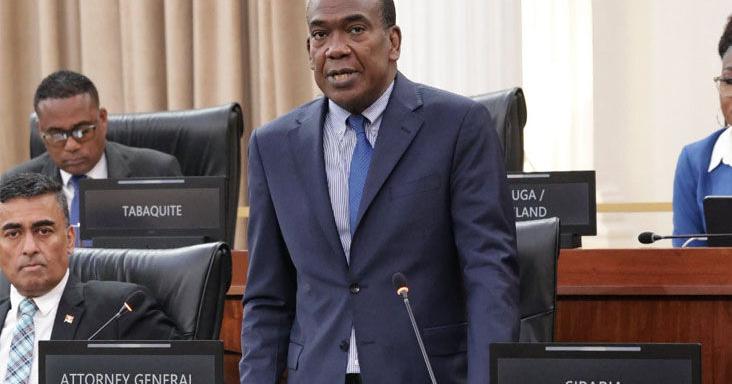
The core of the proposed regulation centers on mandatory national identification checks for age verification when consumers purchase alcohol and tobacco products, enter gambling facilities, and handle regulated cannabis. Attorney General John Jeremie, who sponsored the bill and closed the opening debate, confirmed that two key amendments will be brought forward in the next stages: one to add vaping products to the list of regulated goods requiring age checks, and another to formalize the mandatory ID requirement across all covered categories.
A defining ideological pillar of the bill is its extension of youth protection beyond the traditional 18-year threshold for legal adulthood. Jeremie argued that legal adulthood at 18 does not automatically grant equal access to all regulated substances and activities, pointing to growing scientific evidence that young people’s biological and psychological development continues through their early 20s, with lasting impacts on decision-making capacity and long-term personal wellness. As such, the bill extends protective safeguards to the “emerging adulthood” demographic spanning ages 18 to 25.
Research cited by the Attorney General confirms that early exposure to alcohol, nicotine, cannabis, and unregulated gambling significantly increases an individual’s lifetime risk of dependency. The legislative framework aligns with a regional age standard already adopted across the Caribbean Community (Caricom), drawing on successful policy precedents from other nations. For context, Jeremie noted that Singapore has incrementally raised its minimum legal age for regulated substances to 21, while the United States implemented a federal increase in the minimum sales age for tobacco and nicotine products from 18 to 21 back in 2019, and maintains a 21-year minimum drinking age. U.S. rules already require retailers to check photo ID for any buyer under 30 attempting to purchase tobacco products, a model that informed Trinidad and Tobago’s proposed ID requirements.
Jeremie also referenced guidance from the Caricom Regional Commission on Marijuana, which explicitly warns against cannabis use before age 24 due to proven risks to long-term memory function and learning ability. Citing 2025 projections from the United Nations Population Fund, roughly 285,000 people – 19% of Trinidad and Tobago’s total estimated population of 1.5 million – fall between the ages of 10 and 24. “We cannot, on this side, sit idly by while nearly one-fifth of our nation’s human capital is compromised,” Jeremie said, framing the bill as a formal commitment “that Trinidad and Tobago will act decisively to protect its young people, to strengthen its communities and to uphold the values of responsibility and care that bind us together as a people.”
The legislation drew sharp criticism of parts of the private sector from government supporters during debate. Defence Minister Wayne Sturge, who announced his support for the bill, accused segments of the local business community of prioritizing short-term profit over the well-being of young Trinidadians and Tobagonians. Sturge claimed that leading business associations “don’t care that they’re destroying young people” and are only focused on expanding their customer base. “They want more customers. That’s what they want,” he said.
Sturge raised urgent alarms about the widespread public health and social damage of substance abuse among the country’s youth, arguing that regulatory intervention is necessary to protect vulnerable populations. “We have to protect the young people from the Chambers of Commerce because all they’re studying about is their right to make money. That’s all well and good, you know, as long as your poison doesn’t affect me. Or as long as your poison doesn’t affect the taxpayer,” he added.
The Defence Minister pointed out that substance abuse is linked to a range of preventable chronic illnesses, which create significant financial and social burdens for both affected families and the state. When individuals become too unwell to work due to dependency, he explained, government and family members are forced to cover the resulting costs of care and support. While he acknowledged that some young people may oppose the new restrictions in the short term, Sturge expressed confidence that the policy will win broad appreciation over time. “This bitter medicine is what many young men and women in my constituency so desperately need,” he said, describing the bill as a “manifestation of parental love” and “tough love” for the nation’s youth.
Wednesday’s debate featured contributions from multiple government ministers, including Minister of Sport Phillip Watts, Social Development Minister Vandana Mohit, Energy Minister Dr Roodal Moonilal, and Public Utilities Minister Barry Padarath. Members of the Opposition also took part in debate, led by Opposition Leader Pennelope Beckles, alongside sitting MPs Colm Imbert, Hans des Vignes, Dominic Romain, and Keith Scotland. While the bill has cleared its first major hurdle in the House, details of the final mandatory ID requirements remain unresolved, as the agreed-upon amendments leave open the question of whether all buyers or only age-ambiguous buyers will be required to show identification going forward.