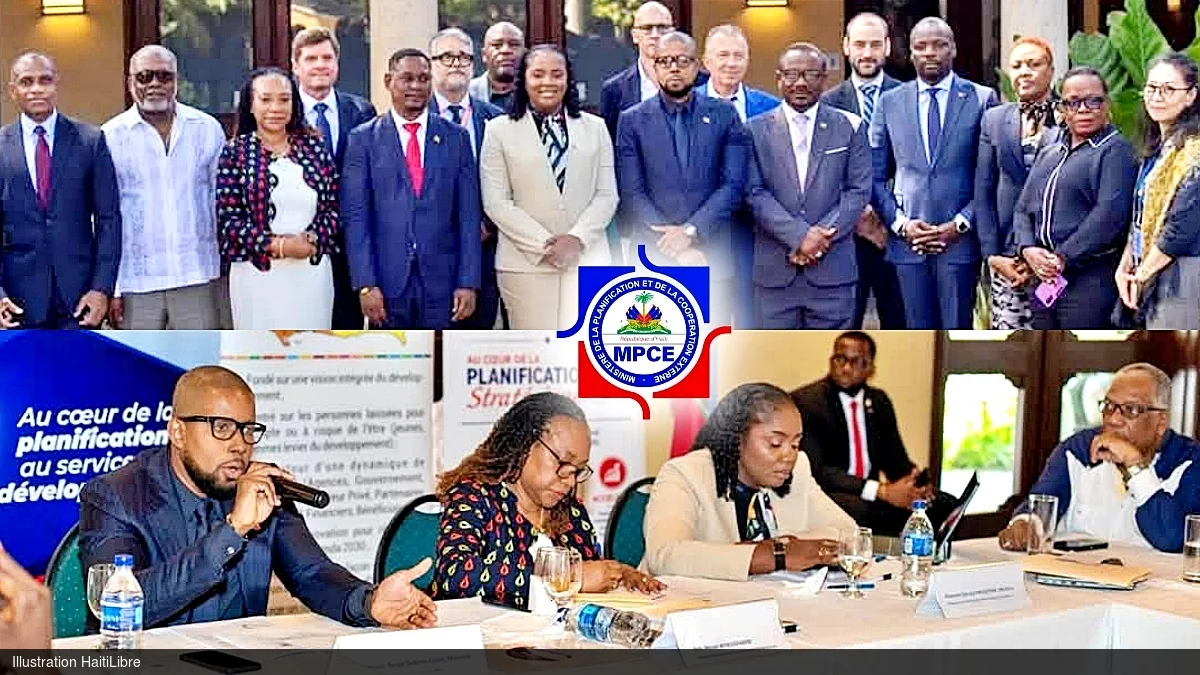
As Haiti works to pull itself out of a prolonged period of systemic crisis, the nation’s Ministry of Planning and External Cooperation (MPCE) convened a cross-sector stakeholder workshop on September 28, 2026, to review and finalize the strategic framework for its ambitious 2026–2030 National Program for Stabilization and Economic, Social, and Territorial Recovery (PNSREST). The multi-billion peso initiative, which carries a total projected budget of $250 million U.S. dollars, marks a deliberate shift from short-term emergency response to a long-term, coordinated strategy for national recovery.
The core mission of PNSREST is to rebuild the capacity and on-the-ground presence of Haitian public institutions in regions hardest hit by ongoing instability, restore universal access to critical basic services, and generate sustainable economic opportunity for vulnerable populations—including areas grappling with large-scale internal displacement. Women and young people, two groups disproportionately impacted by Haiti’s crisis, are identified as key priority beneficiaries, with program leaders prioritizing early, tangible improvements to community well-being to rebuild public trust.
Monday’s workshop brought together a diverse coalition of national government leaders, United Nations agency representatives, and senior officials from leading international financial institutions to collect cross-stakeholder feedback ahead of the program’s final formal adoption. Structured around eight mutually reinforcing strategic pillars, PNSREST covers every critical dimension of national recovery: governance, security and territorial administration; economic revival and livelihood support; expanded access to basic social services; reconstruction of essential infrastructure; environmental stewardship and disaster risk management; community safety and sustainable return for displaced populations; gender equity, social protection and inclusion; and cross-cutting program governance, data analysis and inter-agency coordination. Across all pillars, the framework centers inclusive economic growth, creation of formal decent work, and targeted interventions to reduce structural vulnerability at the community level.
Opening the workshop, which she chaired, Planning Minister Sandra Paulemon outlined the government’s vision for the transformative initiative. “The Government’s ambition is clear: to shift from an ad-hoc response approach to a structured, coordinated, and sustainable strategy that lays the groundwork for the country’s recovery starting today,” Paulemon said. “The Program aims to create conditions in host areas—particularly outside the metropolitan region—that will enable those who wish to do so to remain there long-term: services, jobs, and security. And we will do this in partnership with local authorities, who are on the front lines. The PNSREST represents our collective commitment to restoring hope where it has vanished, re-establishing the State’s presence where it faded, and offering every Haitian—wherever they live—the prospect of a dignified and secure life.”
Funding transparency and financial sustainability emerged as a key focus of discussions during the workshop. Social Affairs Minister Marc-Elie Nelson, one of the participating cabinet leaders, highlighted that while the Haitian national government has committed to contribute approximately 10% of the total $250 million budget, further clarification is needed to formalize the breakdown of the state contribution, map all confirmed and prospective funding sources in collaboration with the Ministry of Economy and Finance and other relevant agencies, and distinguish between projected costs, allocations already earmarked in the national Public Investment Program, already secured funding, and resources still to be mobilized. Nelson emphasized that this level of transparency is critical to maintaining the program’s financial coherence and eliminating the risk of double-counting pledged resources.
United Nations Resident and Humanitarian Coordinator Nicole Boni Kouassi reaffirmed the global body’s commitment to supporting Haiti’s recovery, noting that the program provides a unified framework to align international action with national priorities. “For the United Nations, this program calls for a collective commitment: strengthening the alignment of our interventions with national priorities, better coordinating our agencies’ contributions, and jointly reporting on the results achieved,” Kouassi explained. “In my capacity as Resident Coordinator, I call for increased resource mobilization, in close collaboration with the Government and all partners.”
Senior representatives from the World Bank and Inter-American Development Bank, two of Haiti’s largest multilateral development partners, also participated in the workshop, alongside cabinet ministers covering the economy, commerce, women’s affairs and agriculture, and leaders from multiple UN technical agencies.
With strategic directions now set to receive formal validation from sectoral ministers, the next phase of work will focus on technical refinement of program activities under each of the eight pillars, followed by the development of concrete, community-focused projects designed to deliver visible, early impact for Haitian households. Coordinated efforts across the MPCE, UN system, international financial institutions, and all technical and funding partners are expected to drive forward the program’s mission of supporting long-term stabilization and sustainable recovery for Haiti’s crisis-affected communities.