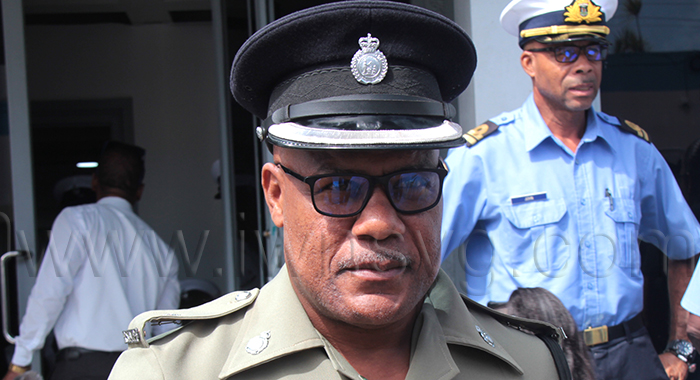
In a major reshuffle of St. Vincent and the Grenadines’ security leadership amid a surge in violent crime, seasoned law enforcement veteran Dwayne Bailey will end his temporary tenure as acting head of the country’s Prisons Service and return to the national police force to lead core operational activities, National Security Minister St. Clair Leacock announced publicly on Monday during a radio interview.
The reshuffle comes just two days after a deadly mass shooting in Green Hill, a Central Kingstown village that Leacock represents in Parliament, that left four people dead and four others wounded — an incident that has amplified public pressure on the government to crack down on violent crime across the island nation.
Bailey, who boasts 28 years of frontline experience in the Royal St. Vincent and the Grenadines Police Force, emerged as one of the country’s most prominent crime-fighting leaders before his 2022 transfer to lead the national Prisons Service. He made history earlier this year in May, when he and his older brother, Trevor “Buju” Bailey, both received appointments to serve as acting deputy commissioners of police — a first for the SVG law enforcement community. Currently, Trevor Bailey is serving as acting head of the entire police force while incumbent commissioner Enville Williams takes several months of approved leave.
Under the new leadership adjustment, Dwayne Bailey will take up a deputy commissioner post focused explicitly on overseeing all operational activity for the police force. Leacock confirmed the move during an interview on the *New Times* radio programme, explaining that the decision is explicitly designed to bolster the police service’s capacity to respond to the recent wave of violent crime that has shaken the country.
“We’re going to bring back Dwayne from the Prisons in a deputy commissionership to head the operations aspect of the police force,” Leacock stated, noting that Bailey will be tasked with leading proactive operational deployments to target criminal activity wherever it emerges. The minister framed the change as a core component of a broader government push to upgrade the police force’s overall operational effectiveness amid rising violence.
To support Bailey’s new operational command, the government is backing the team with specialized personnel drawn from elite units including the Major Crime Unit, Rapid Response Unit and Special Services Unit. Leacock also announced that traffic enforcement specialists have been consolidated into a single integrated unit to enable faster response to emerging hotspots of unrest or criminal activity.
The government is also working to expand the police force’s capabilities to pursue suspects across challenging, hard-to-access terrain, Leacock added. He noted that some officers have advanced training in tactical infantry-style operations, and pointed out that the Special Services Unit has been structured to operate with a more military-oriented skill set — a capability that Leacock says is urgently needed to address current security threats.
Bailey’s return to the police force is just one part of a wider suite of reforms and changes to SVG’s policing sector that Leacock outlined. Other changes include the addition of more than 120 new recruits, expanded specialized training programs for serving officers, and a new round of promotions to fill leadership gaps. Before his 2022 transfer to the Prisons Service, Bailey himself led one of the tactical squads within the Rapid Response Unit, giving him deep firsthand experience in the operational work he will now oversee.
The overarching goal of all these adjustments, Leacock emphasized, is to build a more professional police force with stronger, more experienced leadership and a much faster, more effective response capability to protect public safety across the country.