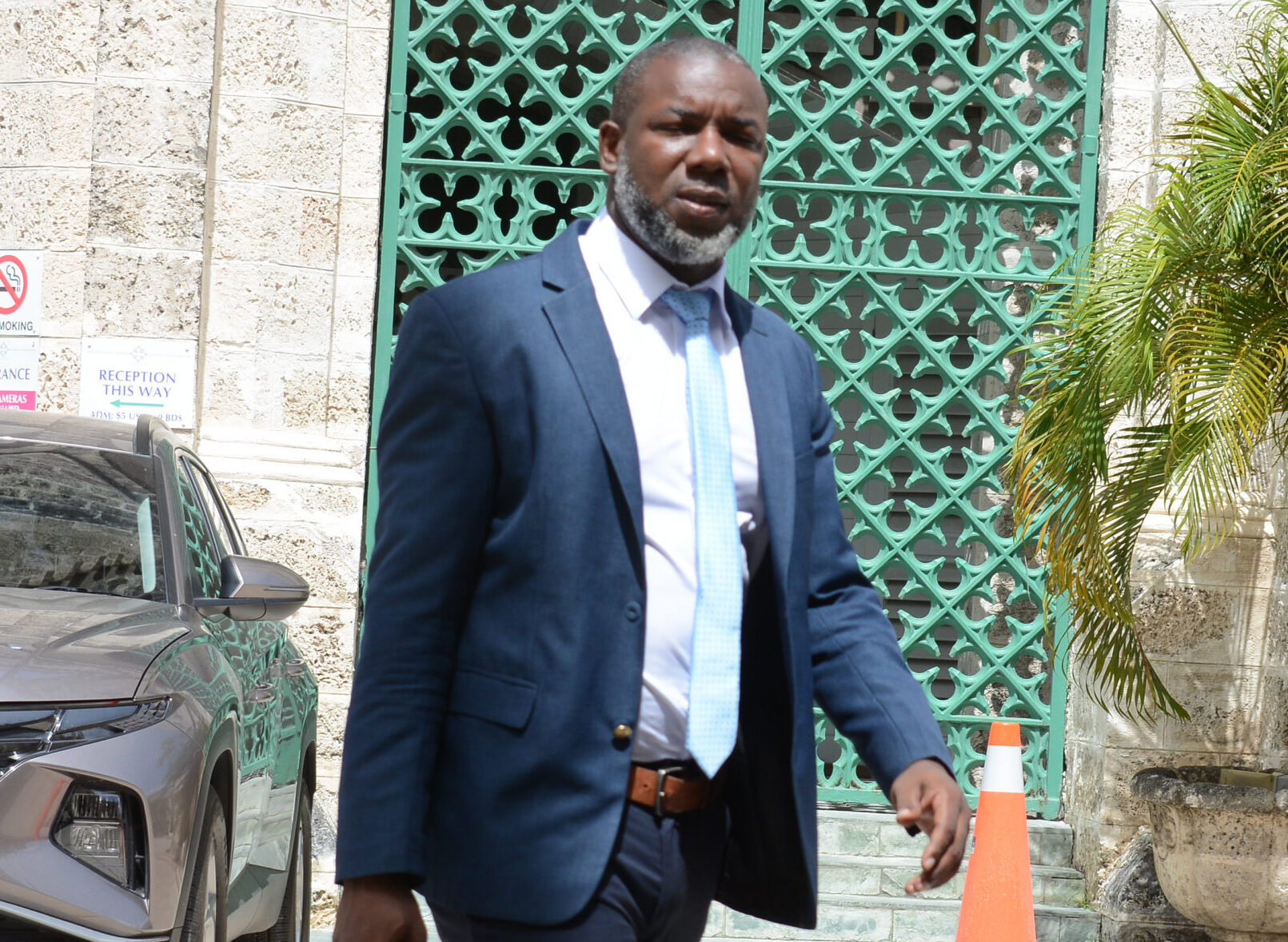
As Barbados debates plans to secure a permanent home for the National Art Gallery, a sitting parliamentarian and former linguistics lecturer is pushing for an ambitious complementary initiative: a dedicated national center to document, preserve, and celebrate the island’s distinct dialect and centuries-old oral traditions. Dr. Romel Springer, member of parliament for St. Andrew, argues that safeguarding the island’s intangible cultural heritage is just as critical as protecting its visual art, framing language as the unshakable foundation of national identity.\n\nSpeaking before the House of Assembly during debate on the National Art Gallery resolution, Springer framed the conversation around cultural preservation as a whole, not just art infrastructure. “A debate about a permanent home for our national art collection is inherently a debate about our entire cultural heritage,” he told legislators. “Language is the living expression of our linguistic heritage and national character. It carries the full weight of our history as a people, and it reveals more about who we are than almost any other cultural marker.”\n\nDrawing on his decades of experience teaching Caribbean linguistics and vocabulary documentation at the university level, Springer traced the deep ancestral roots of the Bajan dialect, pushing back on long-held misconceptions that regional Caribbean dialects are just copied from neighboring islands. He explained that most unique Bajan phrases and grammatical structures trace their origins directly to West African ethnic groups, brought to the island through the transatlantic slave trade.\n\nFor example, Springer highlighted the Bajan second-person plural pronoun “wunna,” a term with identical meaning and linguistic roots in multiple West African languages that also appears in other Caribbean dialects like Jamaican and Guyanese. “All of our language, when you dig into the research, stems from our displacement from Africa and forced resettlement here in the Caribbean,” he said. “Despite the systemic stigma and hardship placed on our native speech through centuries of colonial rule, we held onto the terms that felt most authentic to us, and those have been passed down through generations.”\n\nSpringer warned that urgent state intervention is needed now to stop the gradual erosion of Bajan speech among young people, who are increasingly exposed to globalized foreign media that outcompetes native linguistic traditions. He raised particular alarm that colloquial terms, traditional proverbs, and culture-specific expressions born from distinct Bajan subcultures — such as the iconic public service vehicle (PSV) transport community — are disappearing at a rapid pace, with no systematic effort to record or catalog them.\n\n“Countless unique Bajan expressions have already vanished from our island’s linguistic landscape, simply because no one has made the effort to chronicle, document, or preserve them,” he explained. “Right now, they only exist in the memories of older generations, who will eventually lose their memories or pass away. Before we know it, the children growing up on this island will sound just like the characters they watch on YouTube and Peppa Pig, and our native dialect will be gone from daily life.”\n\nSpringer emphasized that the Bajan accent and dialect remain the most recognizable marker of Barbadian identity across the globe, pointing to a 1990s cultural shift in Barbadian music and broadcasting as proof of the dialect’s power. During that era, he recalled, local artists abandoned the practice of mimicking Jamaican accents once they embraced the authenticity and cultural value of their native speech.\n\n“That Bajan accent is what sets us apart from Antiguans, Trinidadians, Jamaicans, and every other Caribbean people,” he told the chamber. “At the core of every person born and raised here, there is a deep love for the sound of the Bajan accent. It is something uniquely ours, that only those who grew up immersed in this culture can express authentically.”\n\nCalling on the government to partner with trained linguists and university academics to launch the initiative, Springer said a national linguistic repository is a vital investment to keep the island’s intangible history alive for future generations. He proposed building the new center as an adjunct to the planned permanent National Art Gallery, uniting the protection of the island’s visual and linguistic cultural heritage under one umbrella.\n\n“We need to put structured mechanisms in place now to ensure our language, our accent, and our unique Bajan culture do not disappear, because once they are gone, we will regret it forever,” Springer said. “Establishing a national linguistic heritage center alongside the National Art Gallery would be a critical step forward in our work to preserve the things that make us uniquely Barbadian.”