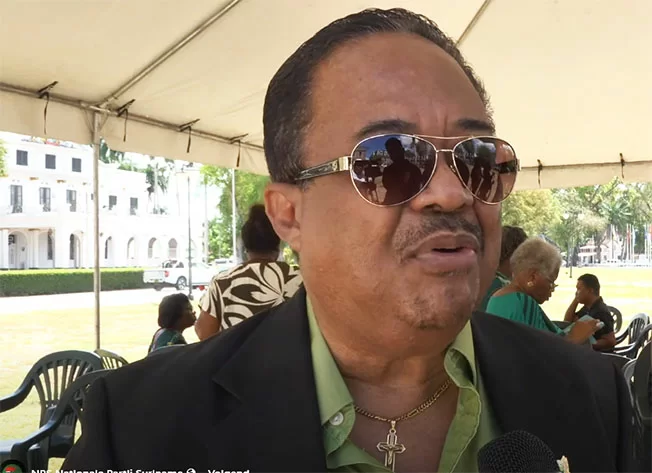
During the 80th anniversary celebration of the National Party of Suriname (NPS) on September 29, current party chairman and Suriname’s Vice President Gregory Rusland made key clarifications about his future role with the historic political organization, signaling a shift from his earlier consideration of stepping down.
Rusland, who first joined the NPS in 1999 and has served as its leader since 2012, confirmed he remains willing to continue steering the party going forward. However, he emphasized that his final position will be determined by the party’s internal structural adjustments and future development trajectory. He added that he is ready to contribute his decades of experience and institutional knowledge to the NPS wherever it is needed, regardless of his formal title.
Reflecting on the NPS’ eight-decade history in Surinamese politics, Rusland expressed deep pride in leading a party that has played an outsized role in the country’s governance, both from opposition and coalition government positions. Multiple national leaders have emerged from the NPS over its history, and Rusland outlined the core values that have defined the party across generations: unwavering respect for the rule of law, responsible fiscal and economic management, and consistent commitment to advancing public access to quality education, healthcare, and national security.
The chairman also did not shy away from addressing the party’s most challenging period in recent memory. After the 2010 general elections, the NPS fell to a historic low point, and by the time Rusland took over the party leadership in 2012, public opinion polling put the party’s support at just 3% of the electorate.
What followed, however, has been a steady, remarkable rebound. In the 2015 elections, the NPS secured 2 seats in the National Assembly and earned roughly 16,000 votes, marking the first step in its recovery. By the 2020 elections, the party doubled its total vote share and gained one additional seat, bringing its caucus to 3 members. Today, the NPS holds 6 seats in Suriname’s National Assembly, a substantial gain that positions the party for further expansion. Rusland confirmed that the NPS will build on this current momentum to grow its base and reclaim a more prominent role in shaping Suriname’s national politics.