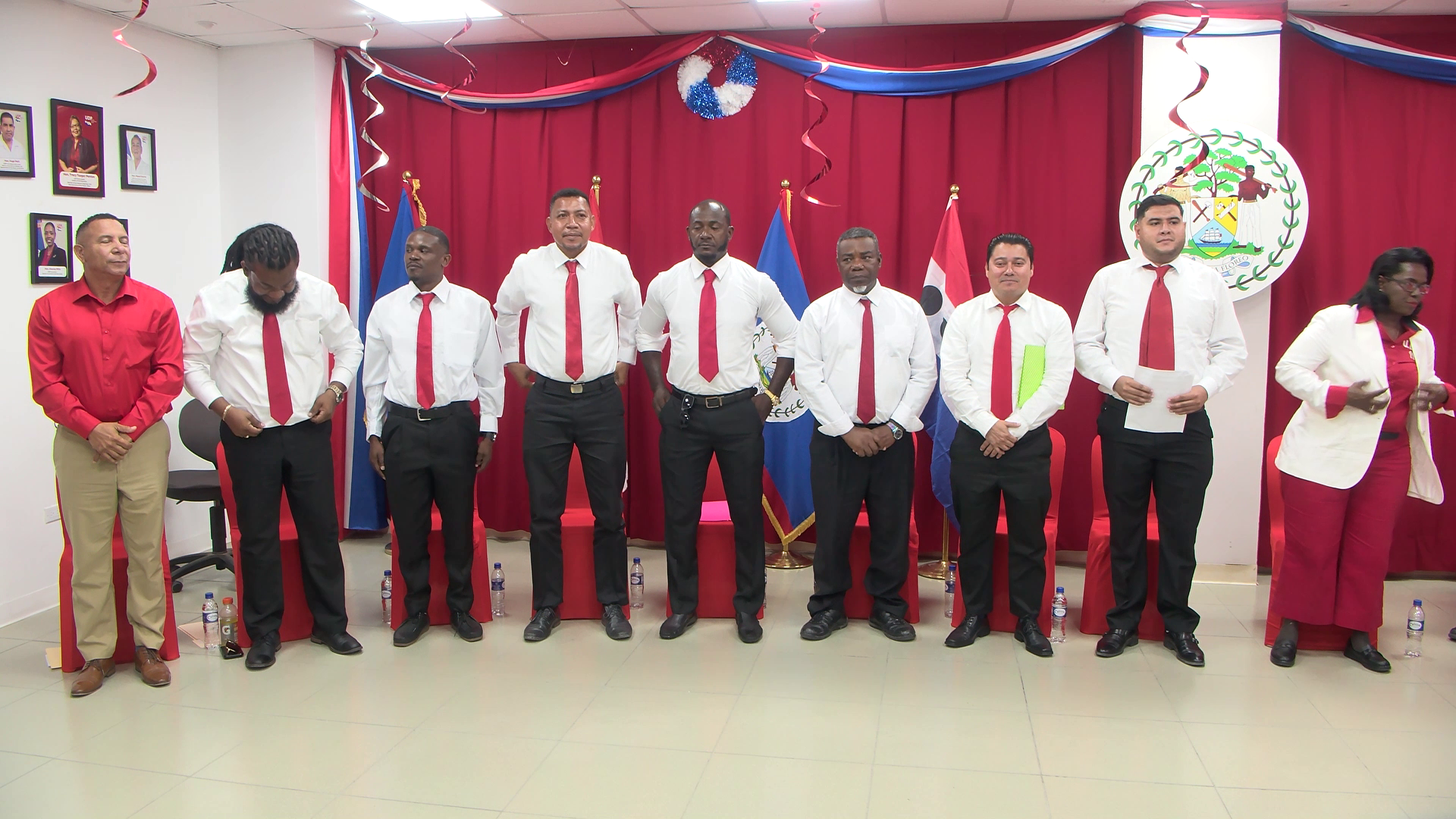
Six months ahead of Belize’s March 2027 municipal elections, the United Democratic Party (UDP) has formally kicked off its campaign, framing the nation’s current local governance challenges as a pressing national emergency and rolling out its full slate of nine mayoral candidates across the country’s major towns and cities.
At the party’s Belize City headquarters on September 29, 2026, UDP leader Tracy Panton opened the candidate unveiling event by breaking down the logic behind the party’s bold campaign slogan: “911, It’s a National Emergency.” Panton emphasized that the slogan is not empty rhetoric, but a direct reflection of the daily struggles faced by ordinary Belizeans, pointing to skyrocketing living costs, growing public safety concerns, crumbling municipal infrastructure, and consistently unreliable local public services as proof that sitting local governments have failed to meet community needs.
One by one, the party’s nominees took the stage to address a crowd of packed party supporters, laying out their policy priorities and expressing confidence in a March victory. The slate includes a mix of seasoned political veterans and first-time hopefuls, each targeting key mayoral seats held by incumbents from the ruling People’s United Party (PUP).
The most experienced candidate in the lineup is Earl Trapp, the four-time mayor of the San Ignacio/Santa Elena twin towns, who is seeking a fifth term in office. Trapp reaffirmed his long-standing commitment to serving the region’s residents, pledging to continue working with integrity, transparency, and accountability to boost quality of life for all local constituents.
In Belize City, attorney Jacqueline Willoughby is the UDP’s pick to challenge the PUP’s incumbent Eluide Miller, who is backed by the ruling party’s significant financial resources and post-convention momentum. When pressed on whether she can overcome the PUP’s advantages, Willoughby pushed back, arguing that the ruling party’s convention momentum does not translate to on-the-ground support. “On the ground, people are tired of the PUP. That is the reality,” she said, expressing unwavering confidence that she will claim victory and be sworn in as the city’s next mayor.
For UDP’s Belmopan nominee Richie Galvez, the path to victory also requires unseat-ing incumbent Pablo Cawich and his full sitting council team. Galvez acknowledged that the ruling party holds a major financial advantage, but argued that his campaign has something money cannot buy: widespread grassroots support from ordinary Belizeans. “They have the millions, but we have the love of the common people,” Galvez said, noting that while his campaign may lack the PUP’s deep funding, it boasts robust moral support from party leaders, standard bearers, and local communities.
In Orange Walk Town, first-time candidate Leonard Carballo, who has family ties to a former local councilor, is set to face off against PUP incumbent Ladrick “Mad Bull” Sheppard. Carballo framed his campaign as a push for fresh leadership, arguing that the moment calls for new energy and practical solutions rather than empty promises. “I want to help create an Orange Walk where businesses can grow, entrepreneurs can thrive and people want to invest,” he said of his policy goals.
Following a high-profile public clash with Area Representative Osmond Martinez on this year’s Independence Day, Franklin “Kranka” Polonio made his candidacy for Punta Gorda mayor official at the event. Polonio acknowledged that winning the seat will be an uphill battle, but noted that Belize’s political landscape has shifted dramatically in recent years, with voters now demanding more accountable, responsive leadership from their local representatives.
Rounding out the UDP’s mayoral slate are Dwayne Sampson in Dangriga, Roberto Lopez in Corozal Town, Joseph Elijio in San Pedro Town, and Yusef Guerra in Benque Viejo.
Closing out the candidate presentation, Panton reiterated the UDP’s long-standing reputation for delivering on campaign promises to the Belizean people, arguing that the party’s slate is far better prepared to address the country’s urgent local challenges than sitting incumbents.
Ultimately, however, the outcome of the election will be decided by Belizean voters. When polling arrives in March 2027, the UDP will learn whether its “911, It’s a National Emergency” message of urgent change resonates enough to unseat sitting incumbents, or if it will remain just an unconvincing campaign slogan that failed to connect with the electorate. This report was compiled from original on-the-ground reporting by Paul Lopez for News Five.