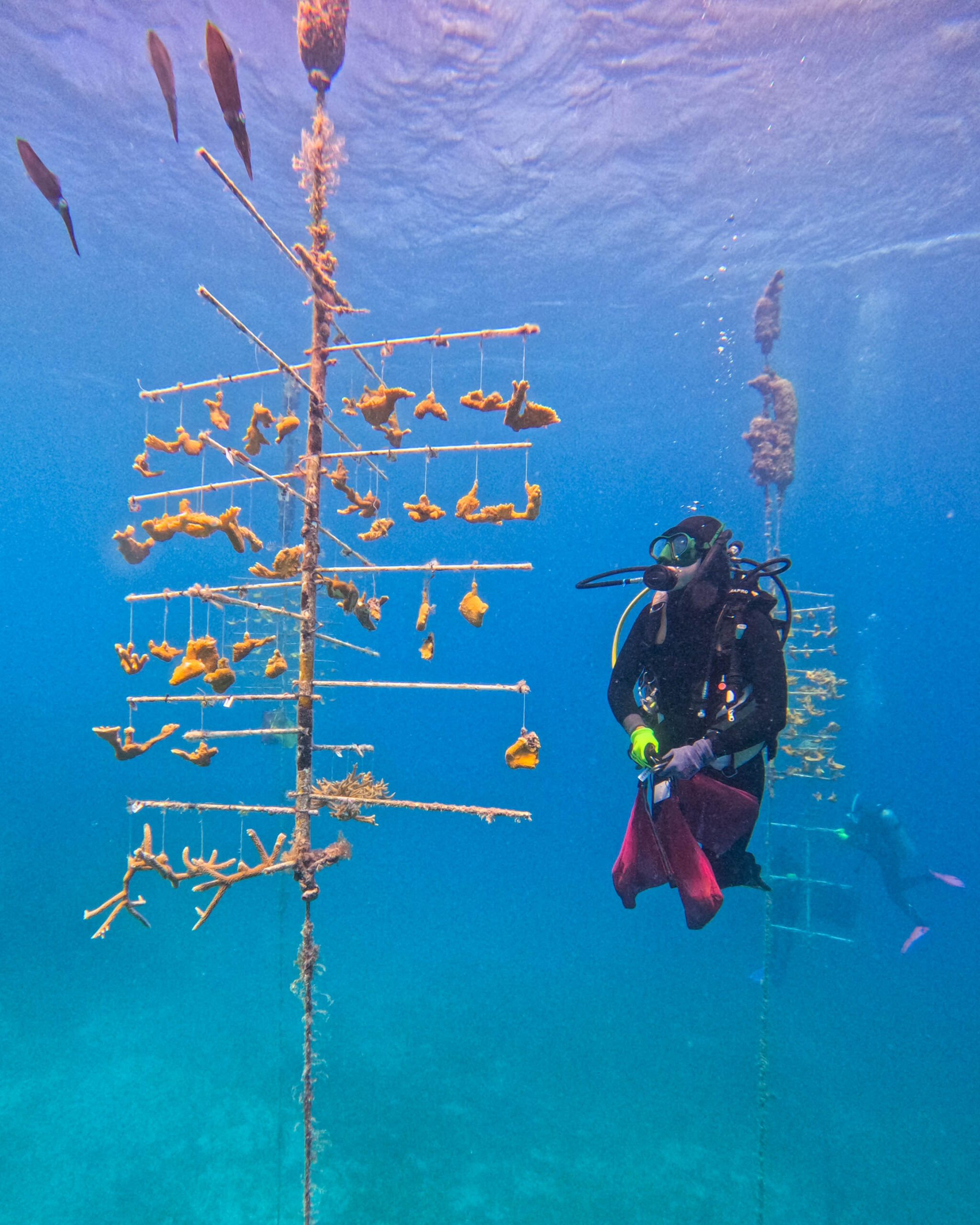
In a landmark achievement for marine conservation in the Caribbean, non-profit marine conservation organization AnuBlue has delivered its most successful year of coral restoration since launching operations in 2021, outpacing all previous annual work to restore degraded reef ecosystems around the islands of Antigua & Barbuda. Over the past year, the team planted more than 5,800 corals grown in the organization’s onshore and offshore nurseries across restored reef sites, covering roughly 2.3 acres of degraded marine habitat — an area roughly equal in size to two full-size American football fields. Even more notable than the scale of the work is its success: post-planting monitoring has recorded an 84% survival rate for transplanted corals, a figure that confirms both the expanding reach of AnuBlue’s work and the long-term effectiveness of its science-backed restoration approach. As climate change, ocean acidification, and disease have driven sharp declines in wild coral populations across the globe, active, science-driven coral restoration has emerged as a critical strategy to protect remaining healthy reefs and reverse damage in areas that have already degraded. For small island nations like Antigua & Barbuda, healthy reefs are far more than just a natural attraction: they act as natural sea barriers that protect coastal communities from storm surge and erosion, support critical commercial and artisanal fishing industries, and underpin the billion-dollar tourism economy that drives the nation’s livelihoods. By scaling up its restoration work, AnuBlue is laying the groundwork for a more resilient future for Antigua and Barbuda’s coastal and marine ecosystems. Today, AnuBlue runs the largest active coral restoration program in Antigua & Barbuda, with four dedicated coral nurseries and five established restoration sites distributed across two of the nation’s most ecologically important marine areas: Cades Reef and the North East Marine Management Area (NEMMA). Both regions are critical habitats for a wide range of Caribbean marine species and support the livelihoods of local coastal communities, making them high-priority targets for restoration work. From these core hubs, AnuBlue expands restoration efforts to multiple reef systems across Antigua, allowing the organization to work at a meaningful scale that delivers real ecological impact, rather than limited, small-scale projects. What makes this scale of work possible is a cross-sector team of diverse stakeholders united by a shared commitment to restoring Antigua’s coastal ecosystems. The program brings together professional marine scientists, local artisanal fishermen, experienced commercial and recreational divers, and community volunteers, combining local ecological knowledge with cutting-edge scientific practice to drive successful restoration. Unlike many restoration projects that focus solely on the number of corals planted, AnuBlue’s approach prioritizes long-term reef resilience and biodiversity from the very beginning of the process. The organization’s selection strategy focuses on collecting coral fragments from parent colonies that have already demonstrated natural tolerance to the key stressors facing modern reefs: rising ocean temperatures and widespread coral disease. To boost genetic diversity and overall population resilience, the team plants genetically distinct individual corals from the same species in close proximity, creating more robust populations that are better able to adapt to future change. The program also cultivates and transplants 15 different reef-building coral species, five of which are classified as critically endangered by global conservation authorities. Each of these species plays a unique, irreplaceable role in supporting healthy reef structure and function, from providing habitat for small fish to building the reef’s foundational structure. By combining selective breeding for climate resilience with a deliberate focus on boosting species diversity, AnuBlue is working to build reef ecosystems that are healthier, more resilient, and better able to survive the challenges of a changing climate. Looking ahead, the organization plans to continue expanding its restoration work, paired with long-term monitoring and ongoing research to refine its approach and share lessons learned with other restoration programs across the Caribbean and beyond. The ultimate goal is to rebuild robust reef ecosystems that can continue to support marine biodiversity, protect coastal communities, and remain a core part of Antigua and Barbuda’s natural heritage for future generations. Founded as the Elkhorn Marine Conservancy and rebranded as AnuBlue, the organization is an innovative non-profit focused on boosting the resilience of Antigua and Barbuda’s marine ecosystems through targeted restoration, cutting-edge research, and community-led stewardship.
AnuBlue Marks Record Year for Coral Restoration in Antigua & Barbuda