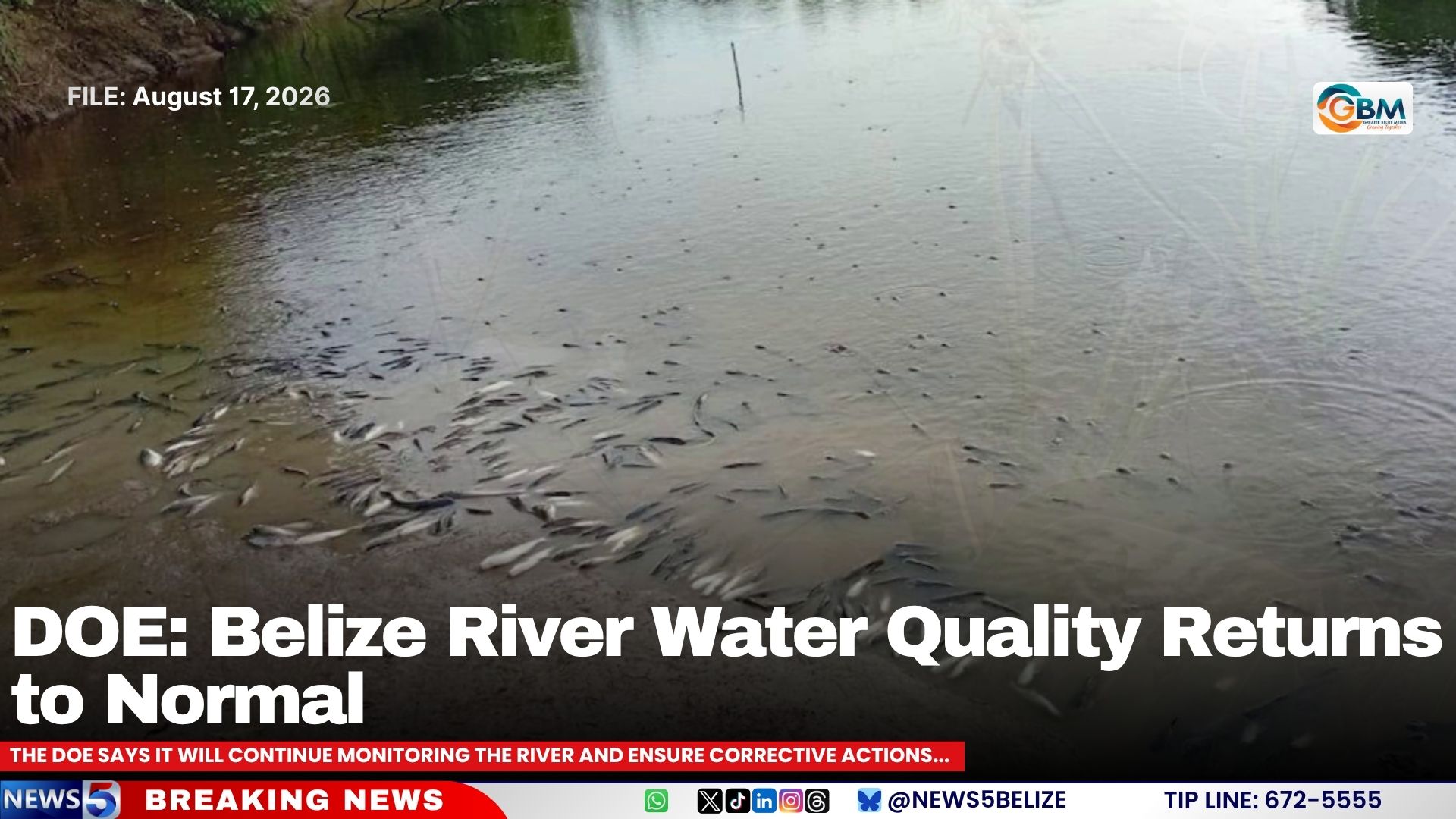
Nearly two months after a mass fish kill event in the Belize River triggered an official investigation, the country’s Department of the Environment (DOE) has announced that the waterway’s quality has fully stabilized and returned to pre-event normal levels.
In early August, the unexpected die-off of large numbers of fish in the Belize River prompted urgent intervention from environmental regulators, who launched a full probe to identify the cause and assess the extent of contamination. Over recent weeks, DOE teams have carried out consistent, widespread sampling and monitoring across the entire affected stretch of the river to track changes in water composition.
Preliminary test results published in the DOE’s Wednesday press release confirm that all key water quality indicators – including nitrate, phosphate, and sulfate concentrations, as well as Chemical Oxygen Demand readings – are now aligned with the baseline measurements collected before the fish kill incident. Further toxicological analysis, conducted via Gas Chromatography-Mass Spectrometry on tissue samples from deceased fish, also found no trace of hazardous chemicals that could explain the mass mortality event.
Even with these encouraging outcomes, environmental regulators have emphasized that ongoing oversight will remain in place. The DOE confirmed it will continue routine monitoring of the Belize River and enforce compliance with corrective and mitigation measures from all public and private stakeholders operating across the Belize River Watershed to prevent future ecological incidents.
As part of a national push to strengthen early detection of water quality threats, the DOE has already installed a fixed, high-frequency real-time monitoring system at a critical junction along the Belize River. This infrastructure tracks core water quality parameters every 15 minutes, and automatically sends alerts to DOE teams immediately if any abnormal deviations are detected. A second identical monitoring station is scheduled for installation on the nearby New River within the next four weeks, with additional units planned for other ecologically sensitive waterways across Belize in coming months.
In a separate development linked to the watershed probe, the DOE also confirmed it is continuing an active investigation into an unauthorized rice farm operating near the banks of the Belize River, though no further details on that probe have been released at this time.