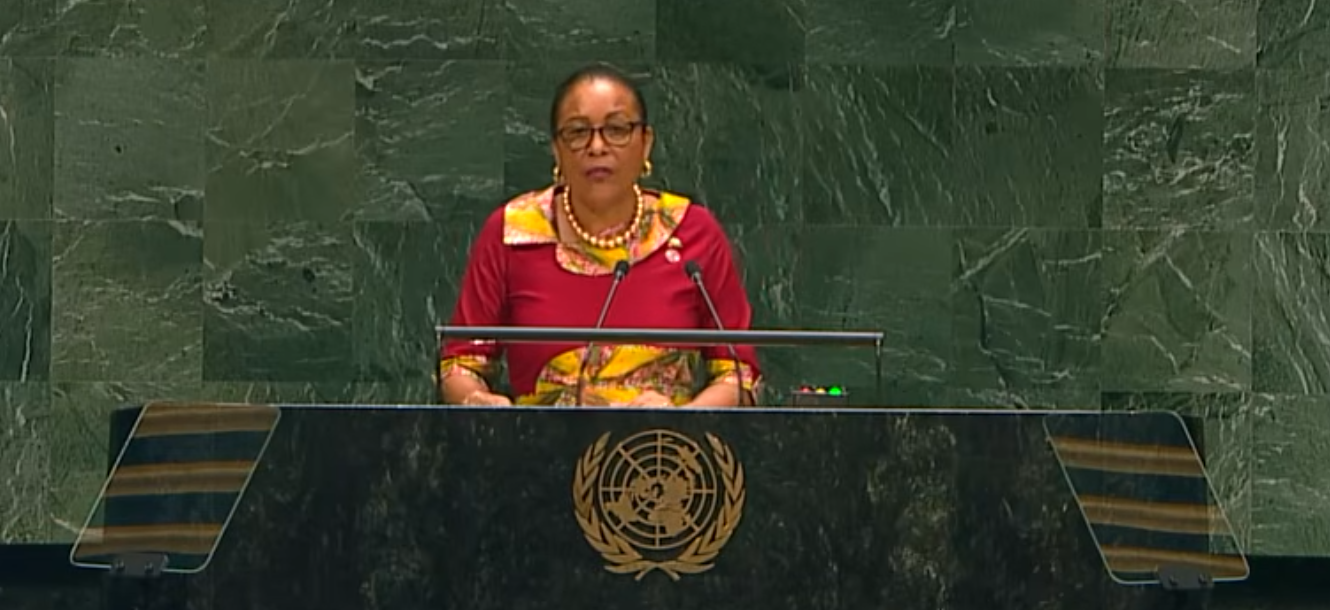
Against the backdrop of escalating global climate crisis that disproportionately threatens low-lying and small island developing states, Dominica has launched a bold new call for international partnership at the 81st United Nations General Assembly, positioning the Caribbean nation as a dedicated demonstration and living laboratory for cutting-edge climate resilience.
Addressing the assembly in New York City, President Sylvanie Burton made a direct appeal to global stakeholders: bring cutting-edge research, transformative climate technology, targeted investment, and innovative solutions to Dominica, to jointly build a blueprint for what a climate-resilient small island economy can accomplish.
Burton outlined that the proposed collaborative framework will span across seven critical high-impact areas: climate-resilient housing and core infrastructure, large-scale renewable energy adoption, climate-smart agricultural practices, modernized water resource management, expanded digital public services, and nature-based climate adaptation solutions. Unlike top-down development models, Burton framed this initiative as a reciprocal, shared learning partnership, highlighting that Dominica brings invaluable on-the-ground experience to the table from its years of community-led recovery and reconstruction after the devastating 2017 Hurricane Maria, one of the most destructive tropical cyclones to hit the Caribbean in modern history.
While the island has already made significant progress in rebuilding with climate resilience in mind, Burton emphasized that additional global resources and expertise are still required to scale up existing resilience plans and deliver long-term, systemic change. She also tied the climate resilience initiative directly to youth development, noting that strategic investment in key sectors including renewable energy, digital connectivity, sustainable tourism, and climate-smart agriculture will ultimately create meaningful local career pathways and business opportunities for Dominica’s young population, curbing brain drain and building intergenerational prosperity.
Most notably, Burton stressed that the model developed through this partnership is designed to be replicable, with lessons and tested approaches intended to benefit other climate-vulnerable small island and coastal nations around the world that face similar existential climate threats.