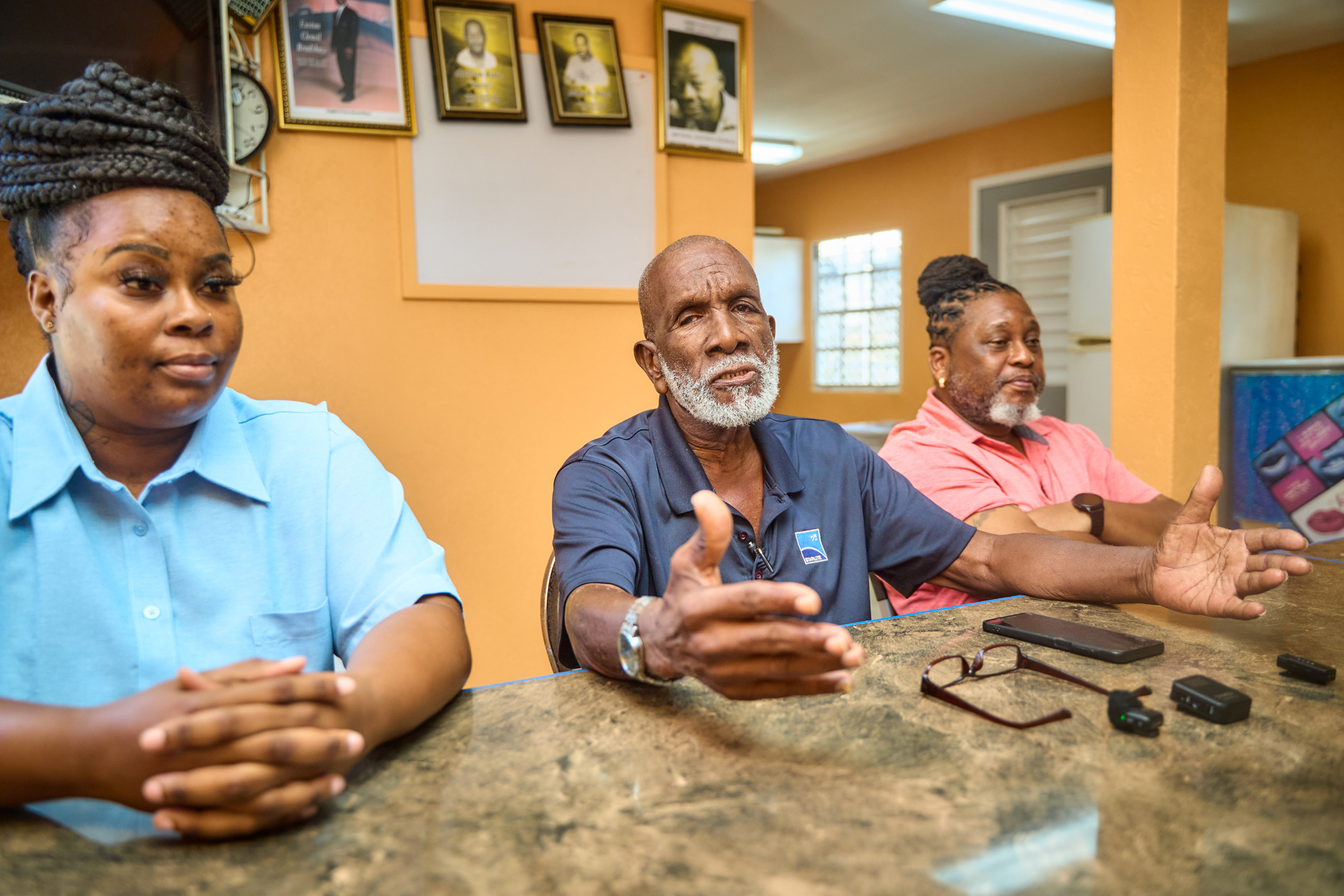
As Barbados prepares for its upcoming peak cruise tourism season, licensed traditional taxi operators are pushing for urgent government intervention, calling on Transport Minister Kirk Humphrey to launch a formal investigation into Uber’s local operations and push through targeted legislation to regulate the rapidly growing ride-hailing sector.
At a public press conference held Tuesday, veteran taxi driver Colvin Yarde, speaking on behalf of the island’s licensed taxi operator community, claimed that Uber has violated existing agreements and government guidelines by allowing unauthorised private vehicles and C-plate commercial vehicles to operate as for-hire passenger vehicles on its platform. Yarde confirmed that operators have gathered concrete evidence to back up these allegations, though they have chosen not to release the documentation publicly at this stage of the process.
“We have proof that Uber is using private vehicles here in Barbados, which is contrary to the agreement and to the understanding that the government outlined,” Yarde stated. He explained that the unauthorised operation of these unregulated vehicles has amplified the already significant financial strain facing traditional taxi providers, who are required to cover steep costs including permits, mandatory licensing, specialised insurance, regular vehicle maintenance, and access fees for high-traffic locations such as Grantley Adams International Airport, the Bridgetown Seaport, and major coastal hotels.
Yarde also noted that C-plate commercial vehicles, which are not legally permitted to function as taxi services under Barbados’ current transportation regulations, are also being integrated into Uber’s local service network. He added that there has been no meaningful communication or follow-up discussions between taxi operator representatives and the Ministry of Transport since initial talks with Prime Minister Mia Amor Mottley and then-Transport Minister Santia Bradshaw ahead of Uber’s initial launch on the island.
Calling for dedicated legislative framework to govern ride-hailing platforms, Yarde emphasized that individual small-scale taxi operators are placed at an extreme, unfair disadvantage when competing against large multinational ride-hailing corporations. “Those [in power] that see how vulnerable we are should put measures in place to protect us from what is going on,” he said.
Alongside their concerns over Uber’s alleged rule-breaking, operators have renewed longstanding objections to the widespread unauthorised use of C-plate vehicles as unlicensed taxis. Yarde pointed out that currently, the Barbados government has issued more than 2,600 active standard taxi permits alongside approximately 1,050 maxi-taxi (ZM) plates, bringing the total number of government-authorised for-hire passenger vehicles on the island to more than 3,000. He argued that the unregulated operation of unlicensed C-plate taxis directly siphons much-needed work away from licensed operators, while only licensed providers bear the financial burden of mandatory government fees and regulatory compliance.
“If you have these C taxis operating illegally, will that not put strain upon those legitimate ones who are paying the government the necessary fees and so on? Will that not also deprive us of work that should be coming to us?” Yarde asked. He stressed that Barbados’ existing vehicle licensing classification rules must be strictly enforced, saying: “After all, if you are going to issue a licence plate for a particular purpose, that should be adhered to and should be policed before putting pressure on the over 3 000 taxis that operate in Barbados.”
Taxi operator Sharice Walrond-Sealy also raised new concerns over the impact of promotional pricing strategies deployed by ride-hailing platforms on the earnings of drivers who work with these apps as well as traditional taxi providers. She recalled that the government previously introduced a guideline capping ride-hailing platform commissions at no more than 20 percent of a single trip’s total fare, but argued that platforms have found loopholes to cut driver earnings through discounted and premium pricing schemes for passengers.
“They’re finding ways to cut our money, our income by offering that premium offer where the passenger will pay a fee to have access to cheaper rides,” Walrond-Sealy explained. As an example, she noted that a local trip that typically retails for $24 BBD can be discounted to as low as $10 BBD for platform users, leaving drivers with just a small fraction of that standard fare after the platform’s commission is deducted. Walrond-Sealy also argued that ride-hailing platforms contribute nothing to Barbados’ local transportation infrastructure or to the operating community, while local taxi operators bear all the costs of maintaining their vehicles and meeting regulatory requirements. “They give nothing to taxi operators, to the transportation system. They provide nothing to Barbados, and that’s the perspective that people don’t seem to get,” she added.