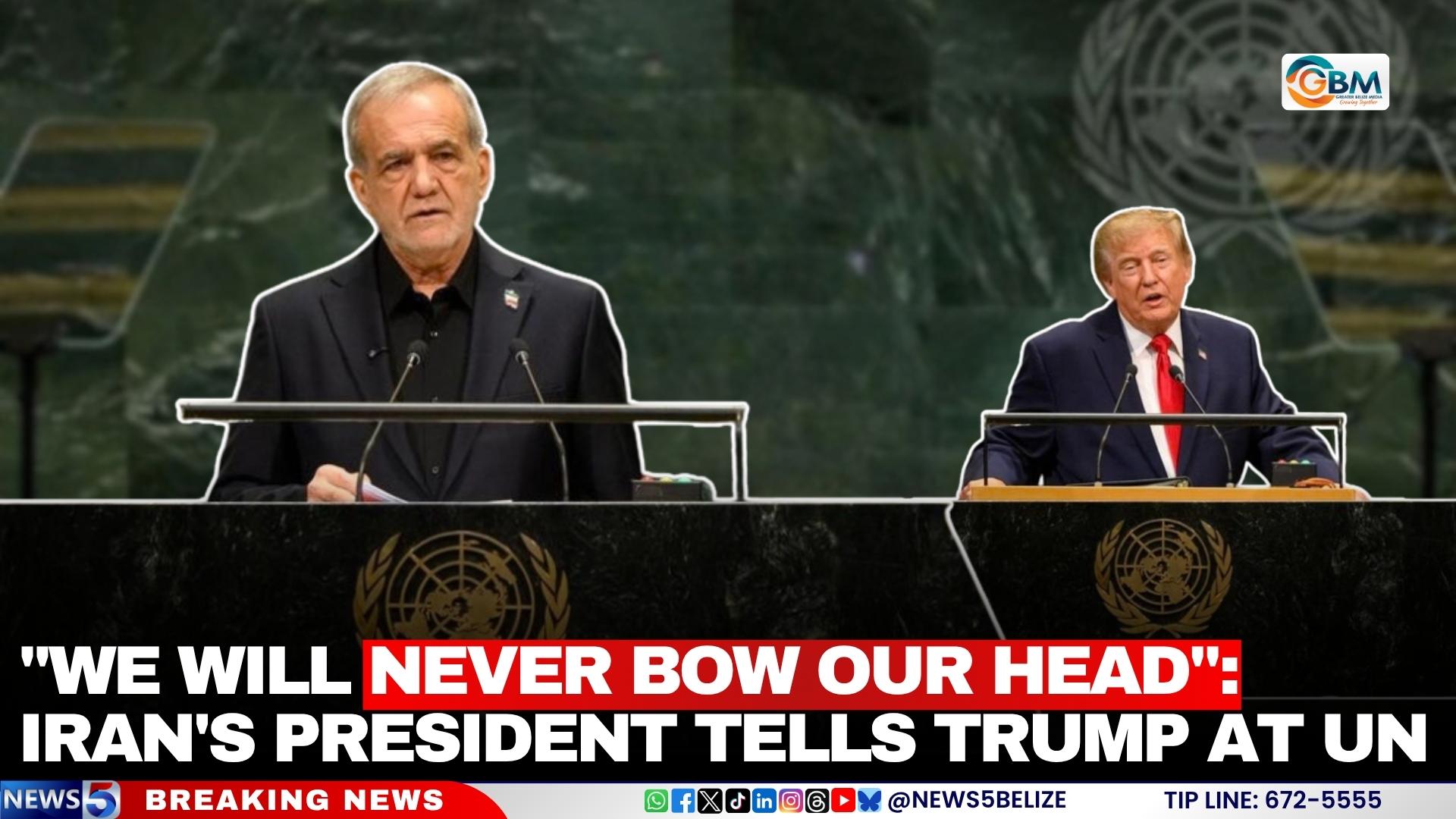
At the 2026 United Nations General Assembly held in New York on September 23, Iranian President Masoud Pezeshkian delivered a defiant address to global leaders, pushing back against escalating pressure from the United States and reaffirming Iran’s refusal to concede to external coercion.
A central focus of Pezeshkian’s speech centered on the strategic Strait of Hormuz, a critical global waterway that carries a significant share of the world’s oil and maritime trade. He emphasized that Iran would not permit the United States or any foreign power to exploit the strait as a tool of aggression against Tehran. “We cannot let some have free access and gain their interest from a waterway while at the same time using that waterway to impose their aggressions upon us, to impose insecurity upon us, to forbid us access to our own waterways,” Pezeshkian told the assembled body.
The Iranian leader directly rejected demands from US President Donald Trump, stating clearly that Iran would “never bow our head or bend at the knee” to external pressure. He clarified that Iran’s overture to international cooperation is not a sign of weakness, but a reflection of the nation’s confidence in its own resilience. “Iran extends her hand towards the world, we invite the world. We call the world, not out of weakness, but out of a deep belief in our own power and steadfastness to cooperate and collaborate,” he added.
Pezeshkian’s remarks came in direct response to Trump’s address to the General Assembly one day earlier, where the US president claimed he faced a binary choice between annihilating Iran or negotiating a new deal to end ongoing hostilities between the two nations. On the sidelines of the UN gathering, US officials confirmed that American and Iranian delegations have held indirect talks through third-party mediators, though no details of the discussions have been released to the public.
During his speech, Pezeshkian also accused the United States of ongoing aggression against Iran, noting that the Iranian people have long “been the victims of terrorism”. This portion of the address prompted the sole US delegate in attendance to walk out of the chamber in protest.
The ongoing confrontation between the two nations has already had measurable global consequences. Maritime traffic through the Strait of Hormuz has dropped sharply since the outbreak of hostilities, exacerbating economic instability in already tense global markets and extending the impact of the bilateral conflict far beyond the Middle East. Despite this pressure, Pezeshkian insisted that Iran would not surrender to economic sanctions, military posturing, or what he framed as international bullying, repeating that Tehran remains committed to working with the global community to achieve what he called “true peace and stability.”