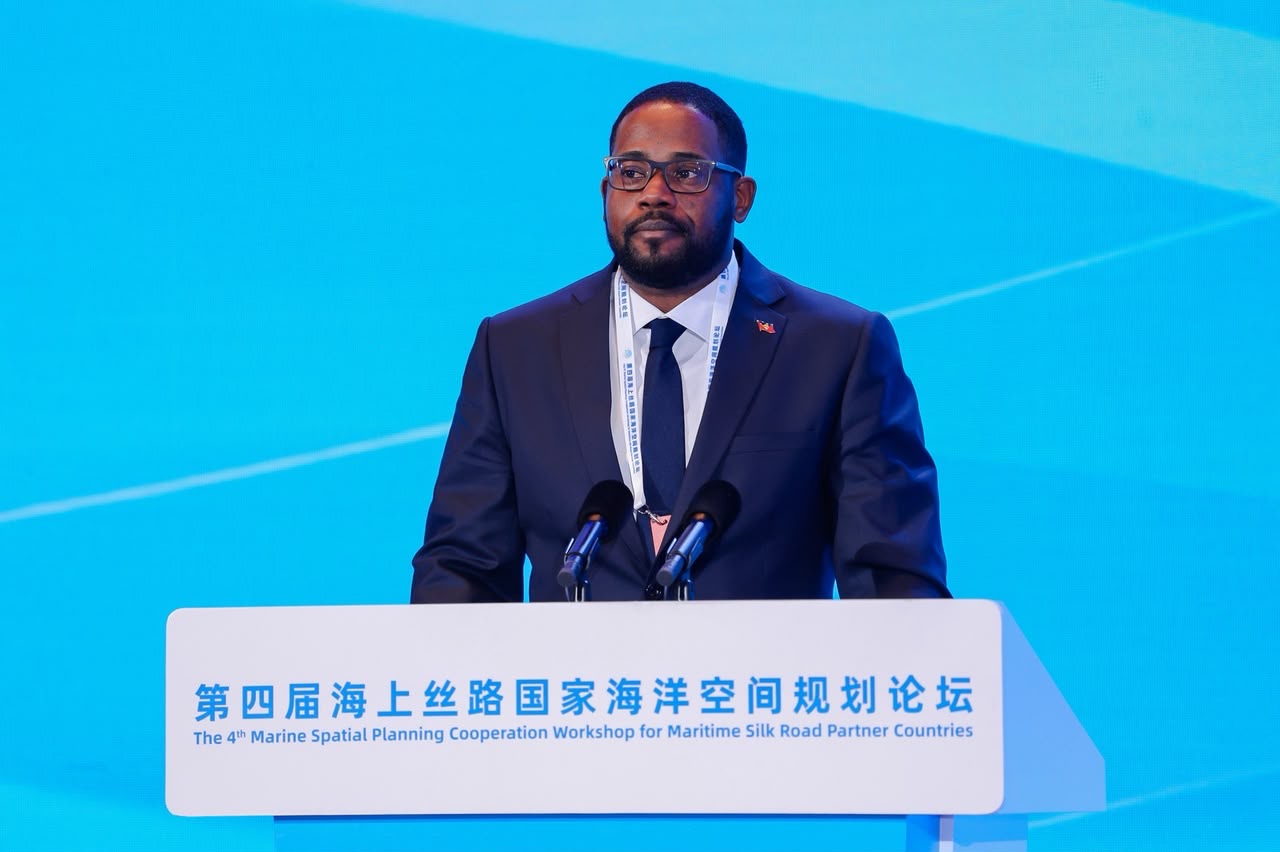
Against the backdrop of growing global attention to sustainable ocean management, small island developing states are stepping onto the international stage to advance collaborative solutions for marine conservation and economic growth. This week, Senator Kendra Chimberlain Beazer officially represented the Caribbean nation of Antigua and Barbuda at the fourth Marine Spatial Planning Cooperation Workshop for Maritime Silk Road Partner Countries, hosted by the China Oceanic Development Foundation (CODF). The event marked a key milestone in the country’s ongoing push to cement its role as a regional pioneer in responsible ocean governance and blue economy expansion.
The workshop brought together a diverse cohort of stakeholders, including leading ocean-focused research institutions, national government delegations, and specialized technical experts from across the Maritime Silk Road region. The core mission of the gathering was to accelerate collective progress on Marine Spatial Planning (MSP), a data-driven, science-backed framework designed to organize human activity in marine areas, cut down on conflicting uses of ocean space, and lay the groundwork for long-term ecological and economic ocean sustainability.
During her address to workshop participants, Senator Beazer outlined the substantial gains Antigua and Barbuda has made in rolling out MSP over recent years. This progress has been underpinned by a landmark technical cooperation agreement focused on blue economy development and marine spatial planning between the Caribbean nation and the People’s Republic of China. Backed by a $14 million USD development grant, the agreement has facilitated direct on-the-ground collaboration between Antigua and Barbuda’s national agencies and China’s National Ocean Technology Centre (NOTC). This partnership has significantly boosted the country’s institutional and technical capacity to map its extensive marine resource base, protect critical underwater cultural and ecological assets, and advance strategic planning for fast-emerging blue economy sectors ranging from deep-sea aquaculture and marine wave energy to blue carbon sequestration development.
Senator Beazer emphasized that for small island developing states like Antigua and Barbuda, which are disproportionately vulnerable to the impacts of climate change and ocean degradation, cross-border partnerships of this kind are indispensable. These collaborations not only support targeted action to protect fragile marine ecosystems but also strengthen the livelihoods of coastal communities that depend on healthy oceans for income and food security, while building overall national resilience against climate-related shocks.
Looking ahead, Antigua and Barbuda continues to strengthen its position as a regional leader in sustainable ocean management. By strategically leveraging inclusive global partnerships, the country is advancing its core national development priorities while working to preserve its irreplaceable marine natural heritage for generations to come.