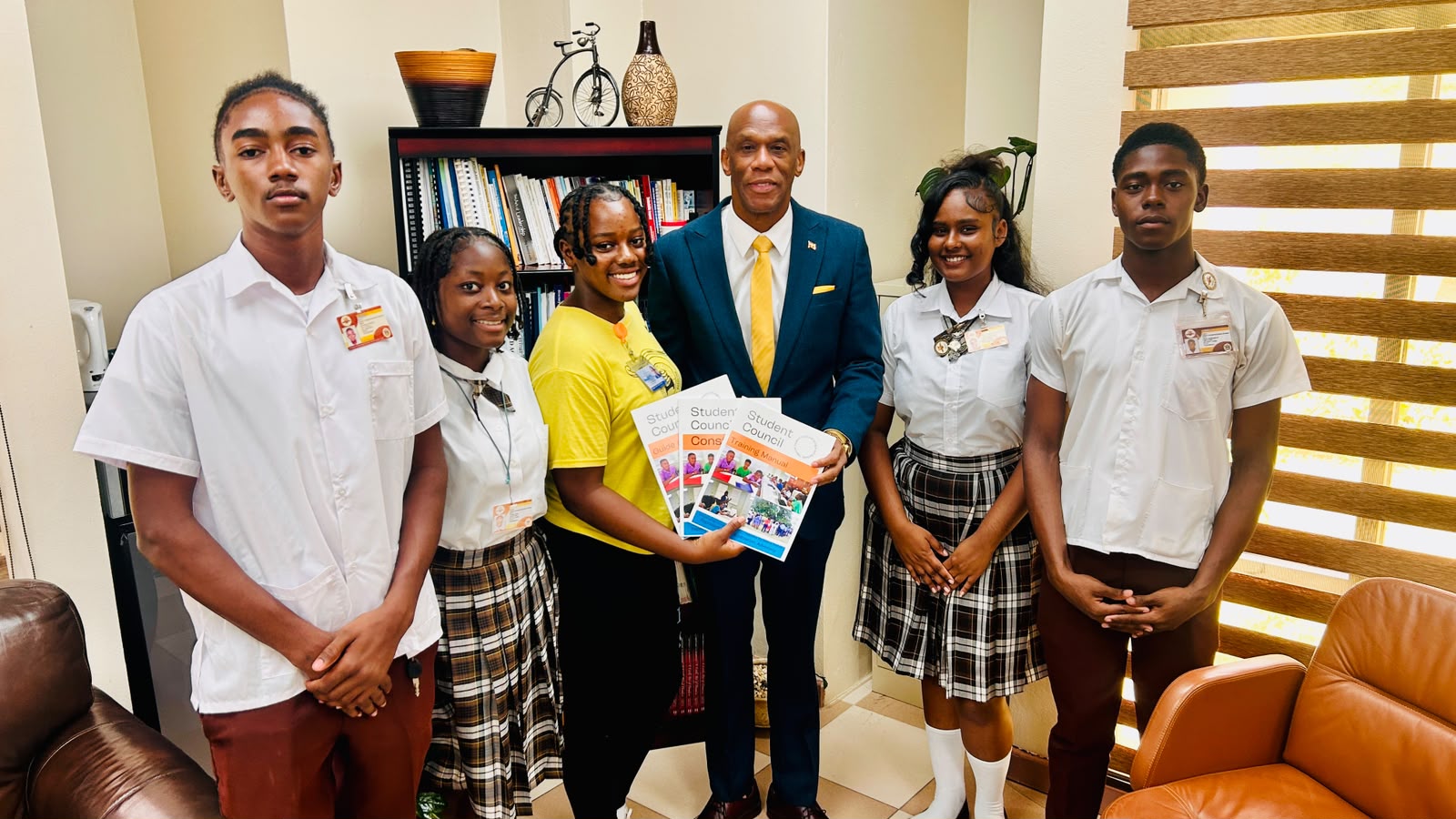
A landmark initiative to embed meaningful student leadership across Antigua and Barbuda’s entire education system has moved forward, as the National Student Council (NSC) officially launched a comprehensive suite of new governance and development resources for school-level student councils.
The launch marks a key milestone in the ongoing institutionalization of student governing bodies across the country’s education sector. Under the new initiative, every primary and secondary school in the nation will receive three core documents: the updated Constitution of the National Student Council, the newly created Student Council Guide and Regulations, and a dedicated Training Manual for emerging student leaders.
Each resource serves a distinct purpose to build a cohesive national framework for student governance. The NSC Constitution lays out the formal governing structure and operational rules for the country’s national student representative body, creating a clear foundation for coordinated national-level student advocacy. The new Student Council Guide and Regulations fills a longstanding gap by offering school administrators and student groups step-by-step, practical guidance covering every stage of a local student council’s work, from initial establishment and organizational structuring to day-to-day administration and long-term operations. The manual is designed to help local councils contribute meaningfully to education improvement at the school level. Completing the set, the Training Manual targets skill development for student leaders, outlining targeted modules to build the competencies needed to effectively serve their peers and school communities.
Collectively, the resources are designed to align students, teachers, and school administrators around a shared understanding of student councils’ core role, and to remove barriers to effective student participation in both school governance and broader education policy conversations. Prior to national distribution, the NSC formally presented the finalized document set to Antigua and Barbuda’s Ministry of Education, signaling official alignment on the initiative’s goals. Following the presentation, the resources are now set to be rolled out to every campus across the country.
Clare Browne, Director of Education for the nation, reaffirmed the Ministry of Education’s full commitment to advancing the development of student councils, growing student leadership capacity, and strengthening democratic institutional practice within the education system. Browne emphasized that the Ministry recognizes that student participation does not only benefit school communities—it also equips young people with critical life skills, including leadership, communication, and civic literacy, that are essential for active, informed engagement in broader society after graduation.
The NSC’s work on this initiative remains anchored in its three longstanding core pillars: Representation, Mobilization, and Advocacy. Through these guiding principles, the organization aims to amplify student voices across the education system, create space for genuine, meaningful youth participation in decision-making, and nurture a new generation of capable, socially responsible young leaders. Moving forward, the NSC will not stop at document distribution: the organization plans to continue partnering with individual schools, designated Lead Teachers, and local student representatives to deliver targeted skills training, technical support, and other assistance needed to strengthen school-based student councils and help them thrive.