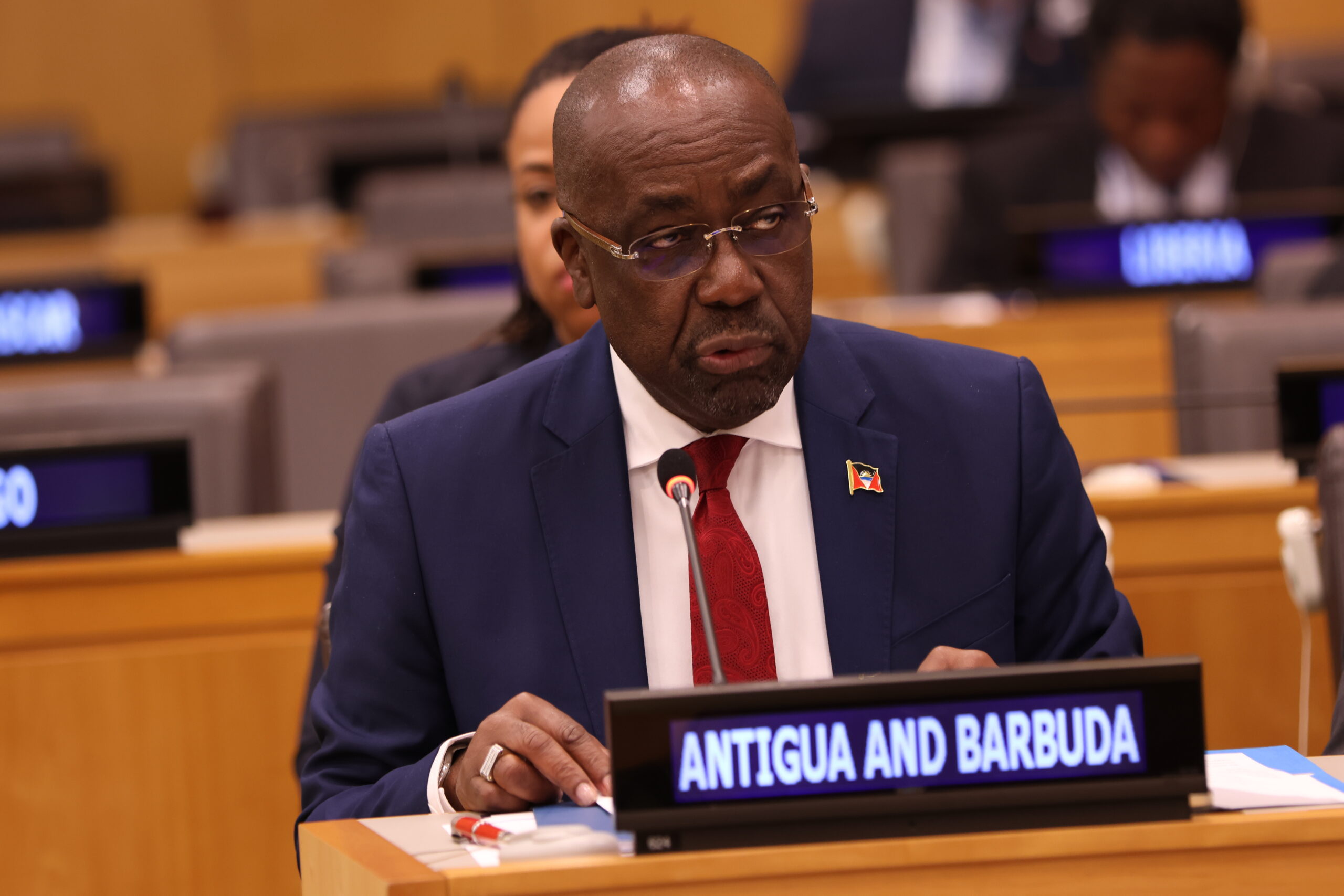
Against the backdrop of the 81st United Nations General Assembly convening in New York, a high-level dialogue between the African Union and the Community of Latin American and Caribbean States (CELAC) has brought renewed focus to South-South collaboration. At this gathering, Antigua and Barbuda’s Minister of Foreign Affairs, Greene, delivered a clear call for intensified practical partnership between Africa and the Caribbean, rooted in shared history and aligned against common global challenges.
CELAC, a bloc uniting 33 nations across Latin America and the Caribbean, has built a foundational partnership with the African Union that carries unprecedented strategic weight in today’s global landscape. Greene emphasized that this alliance creates a rare opportunity for African, Caribbean and Latin American nations to align their positions and speak with a unified, powerful voice on critical global issues, spanning inclusive development, climate finance reform, equitable trade frameworks, and more. What binds these regions together beyond policy coordination is a common legacy: generations of colonial rule and enslavement, alongside a shared urgent need to build tangible, mutually beneficial cooperation across trade, cross-border investment, technology transfer, and climate disaster resilience.
“Our CELAC-Africa partnership holds deep strategic significance,” Greene told attendees. “Together, our regions account for a substantial portion of the global population, endowed with abundant economic, human and natural resources. Even more importantly, we carry shared historical experiences, face overlapping development hurdles, and stand united in our commitment to building a far more equitable global order.”
Despite this strong foundation of shared values and aspirations, Greene stressed that common ground alone is not enough to deliver meaningful progress. He argued that the time for incremental dialogue has passed, and the global South must move quickly to translate goodwill into actionable, on-the-ground cooperation. The minister outlined a range of high-potential areas for mutual growth, noting that both regions stand to gain from deeper collaboration across trade and investment, cross-regional connectivity, technological innovation, sustainable agriculture, renewable energy expansion, education, public health, and the creative economy.
However, Greene also sounded a note of caution: tangible advancement will remain out of reach unless regional leaders confront the long-standing structural barriers that continue to stifle increased trade and investment flows between Africa, Latin America and the Caribbean. To turn his vision for collaboration into reality, Greene laid out a clear roadmap of core priorities for fellow leaders to advance, focused on strengthening practical ties and deepening institutional bonds across the three regions.
Key priorities identified in the roadmap include expanding air and maritime connectivity between African and CELAC nations, boosting regulatory and institutional coordination to cut red tape for cross-border trade and investment, expanding access to development funding and innovative financing tools for small and medium-sized enterprises (SMEs) and structurally vulnerable economies, and leveraging digital technology to better connect businesses, public institutions and regional markets.
Greene also placed particular emphasis on the urgent need to deepen partnership around climate resilience and sustainable development, highlighting the disproportionate vulnerability of Small Island Developing States like Antigua and Barbuda to the impacts of climate change, even though they contribute the least to global emissions.
Concluding his address, Greene reaffirmed Antigua and Barbuda’s unwavering commitment to growing the CELAC-Africa relationship, built on the core principles of mutual respect, solidarity, sovereign equality, and shared mutual benefit. “Let us seize this moment to deepen our partnership, amplify our collective voice within the multilateral system, and advance a development agenda that is more inclusive, more resilient, and far more responsive to the needs of all our people,” he said.