Six years have passed since COVID-19 brought global movement and daily life to a sudden, grinding halt. Today, much of the world has reclaimed its pre-pandemic rhythm: border checkpoints hum with cross-border travel, stadiums fill to capacity for concerts and matches, commercial jets crowd global skies, and face masks have largely vanished from public spaces. But the return of routine does not mean the pandemic’s work is finished.
What the world left unresolved after COVID-19 extends far beyond unfinished scientific research. It touches ethics, global public health institutions, and the enduring human experiences that continue to shape millions of lives. As of current counts, the World Health Organization has recorded more than 779 million confirmed COVID-19 cases and over 7 million confirmed deaths, a figure the agency itself acknowledges is far lower than the actual global mortality toll. Out of a global population of roughly 8.3 billion, almost no community escaped the virus’s reach.
Millions of people survived the initial infection, but never fully recovered. The WHO estimates that around 6% of people who developed symptomatic COVID-19 go on to experience Long COVID, a condition where persistent respiratory, neurological, cardiovascular and other symptoms can last for months or even years after infection. For these people, the pandemic is not a chapter of history—it remains an ongoing, daily burden that haunts their lives.
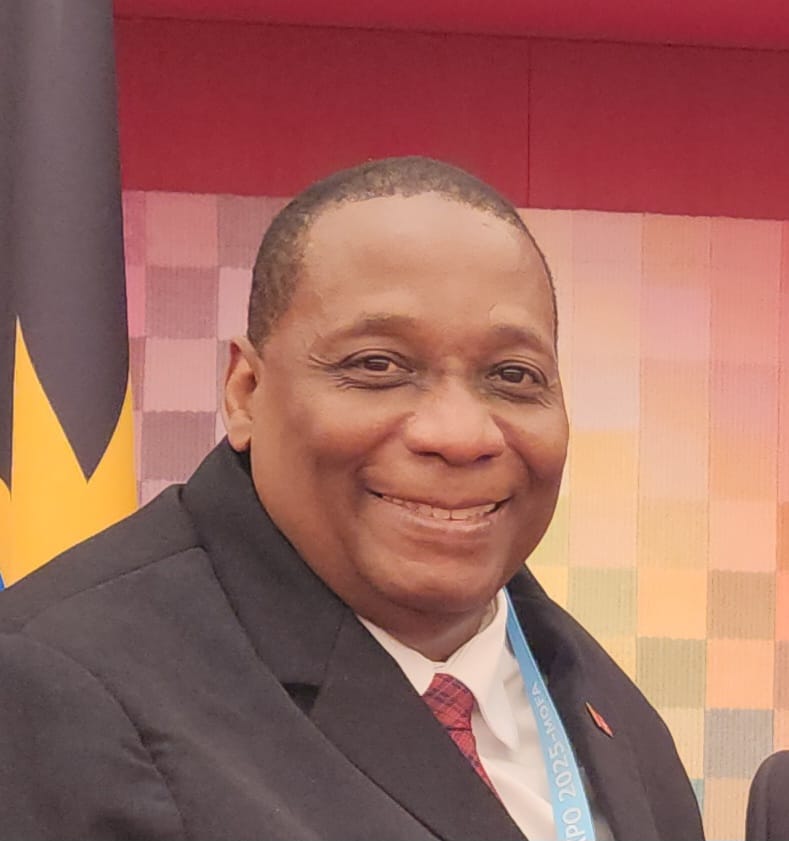
The author, Dr. Clarence E. Pilgrim, offers personal insight into the virus’s long-term psychological impact. The pandemic shrank his social circle, and left him with a persistent apprehension about even casual friendly handshakes—an instinct that remains with him to this day. After being exposed to the virus at work, he was immediately quarantined while waiting for a negative test result, a period of uncertainty that mirrored what millions experienced globally. The fear of falling ill, anxiety about unknowingly spreading the virus to loved ones, and new suspicion of close human contact reshaped how societies understood physical proximity. For a time, everyday gestures of connection—a handshake, a hug, an intimate conversation—became potential sources of danger.
SARS-CoV-2, the virus that causes COVID-19, has not disappeared. It continues to circulate among global populations and evolve into new variants. The WHO currently monitors emerging variants including XFG, NB.1.8.1, PQ.16.1.1, and BA.3.2. While the WHO declared the global public health emergency over in 2023, the virus itself remains a persistent presence. So too do the unresolved questions about where it originated.
A recent guilty plea from Dr. David Morens, a former senior advisor at the U.S. National Institute of Allergy and Infectious Diseases (NIAID), has reignited debates over institutional credibility around the origin question. Morens admitted to participating in efforts to evade U.S. federal public records requirements for documentation related to coronavirus research and official communications, including correspondence connected to a bat-coronavirus research grant that involved the Wuhan Institute of Virology.
These do not prove that SARS-CoV-2 leaked from a laboratory, nor do they implicate Dr. Anthony Fauci, NIAID’s former director, in any criminal activity. They do, however, confirm that relevant official communications were deliberately hidden from standard public transparency processes. This lack of openness leaves a core unanswered question: why?
The WHO’s current scientific assessment concludes that the bulk of available evidence points to a zoonotic spillover from an animal source. But critical information that would allow for a full, independent investigation remains unavailable to the global public. This includes early viral sequence data, full details about animals sold at Wuhan wet markets in the period before the first outbreak, and complete records of laboratory work and biosafety protocols at relevant research facilities. The only responsible stance on the origin question, Dr. Pilgrim argues, is to neither declare a laboratory origin proven nor dismiss it as an impossible conspiracy.
This same commitment to evidence and transparency must guide global conversations about the costs and benefits of COVID-19 vaccination, Dr. Pilgrim contends. The author himself chose to receive a primary COVID-19 vaccine series and a booster shot, citing his trust in WHO and the international public health community’s recommendations. Extensive clinical and real-world data confirms that vaccination drastically reduced rates of severe illness, hospitalization and death from COVID-19. But acknowledging these life-saving benefits does not require denying that some people experienced genuine adverse side effects.
Regulatory agencies across Europe, Africa, India and Russia reached a shared, evidence-based conclusion: COVID-19 vaccines delivered critical, life-saving protection, but ongoing safety monitoring was a non-negotiable requirement. European regulators confirmed rare cases of myocarditis and pericarditis linked to some mRNA vaccines. African public health authorities monitored rare blood clotting disorders. India officially recognized thrombosis with thrombocytopenia syndrome associated with adenovirus-vector vaccines, while continuing surveillance for other reported adverse events. Russia issued formal clinical contraindications for at-risk groups. Across vastly different regulatory systems, the core lesson was consistent: vaccination was not risk-free, and benefits and risks must be weighed together on an ongoing basis.
It is possible, Dr. Pilgrim argues, to hold two truthful positions at once: that COVID-19 vaccines saved millions of lives, and that some people suffered harm from vaccination. Equally, it is possible to recognize confirmed vaccine injuries without claiming every unexplained illness or death that occurred after vaccination was caused by the vaccine. These are not contradictory stances—they are the minimum requirement for intellectual honesty.
In the United States, more than 11,000 claims alleging COVID-19 vaccine injury or death had been filed through the federal vaccine injury compensation program by July 2026. Filing a claim does not prove causation, and many claims do not meet the program’s evidentiary standards. Even so, a number of vaccine-related injuries have been officially confirmed by the program. For people who have experienced scientifically verified harm, they deserve more than to be reduced to a statistic in a global public health success story. Where treatment is possible, care should be provided. Where rehabilitation can improve outcomes, it should be made accessible. Where responsibility is confirmed, fair compensation is owed. Human dignity, Dr. Pilgrim emphasizes, should never be determined by how common an injury is.
This same balanced approach applies to conversations about rising global rates of cardiovascular disease, which some have incorrectly attributed entirely to widespread vaccine injury. The WHO has long identified cardiovascular disease as the leading cause of death globally, a reality that predates the COVID-19 pandemic by decades. But that does not mean there are no legitimate questions to explore. COVID-19 infection itself is known to damage the cardiovascular system, Long COVID can increase the risk of chronic cardiovascular illness, pre-existing risk factors remain the leading driver of most cases, and pandemic-related disruptions to routine healthcare left many conditions untreated. Rare vaccine-associated cardiovascular complications have also been scientifically documented. The question researchers need to answer is not whether vaccines caused all post-pandemic cardiovascular disease, but how much of the current burden can be traced to each contributing factor. To date, there is no reliable global data that fully answers that question, and that gap should spur more research—not unfounded speculation.
Looking ahead, modern history makes clear that another global pandemic is not a question of if, but when. Major respiratory pandemics struck the world in 1889–1890, 1918, 1957, 1968, 2009, and 2019, with no consistent interval between events, making accurate prediction impossible. Even so, it is entirely plausible that another pandemic will occur within the lifetime of most people alive today.
The true reckoning the world needs to complete now is not about vindication for any single government, scientist, institution or vaccine. It is about whether humanity can learn enough from this pandemic to protect everyone better when the next one arrives. This includes the majority who will benefit from effective new medical interventions, the small minority who may experience genuine harm, the most vulnerable communities, and future generations that will inherit the global public health systems we build today.
Progress that saves millions of lives but abandons the small number of people who experience genuine harm is incomplete. Equally, concern for people injured by vaccines cannot justify rejecting life-saving medical interventions that have benefited billions. The higher moral and public health obligation is to pursue both: broad protection and accountability for harm, scientific advancement and respect for human dignity, strong public health institutions and radical transparency.
Dr. Pilgrim notes that he trusted the international public health system enough to get vaccinated and boosted. That trust, he argues, should never require silence about unresolved questions or unaddressed harm. Science gains its authority from open evidence, not blind loyalty. Public health institutions earn their legitimacy through radical transparency, not secrecy. Leaders earn public confidence through taking accountability when things go wrong, not deflecting criticism.
The millions of people who died from COVID-19 cannot demand answers from global institutions. But the living can. Before the next pandemic tests humanity’s collective capacity, we have a responsibility to get clear about what went right, acknowledge what went wrong, repair the harm that can still be fixed, and build systems that are designed to protect both the many and the few.
When the next pandemic comes, the global response must not only be faster than it was in 2020—it must be wiser, fairer, more transparent, and centered on the common good of all people.
*Disclaimer: The views expressed are those of the author alone.*